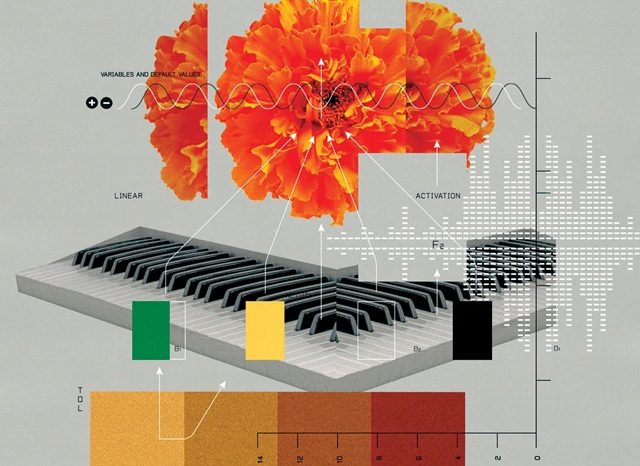
Artificial intelligence, once a far-off dream discussed in stuffy lecture halls, is now making chart-worthy beats. According to a recent deep dive from MIT Technology Review, new AI models—especially diffusion-based systems—are creating entire songs from scratch, posing profound questions about creativity, authorship, and the future of human expression.
Almost 70 years after the historic 1956 Dartmouth Conference, where the term artificial intelligence was first coined, researchers may finally be realizing one of the group’s most elusive dreams: machine creativity. Back then, the idea that machines could exhibit originality was largely theoretical. Today, diffusion models—sophisticated AI systems capable of transforming random noise into highly detailed media—are generating not just realistic images and videos, but full-fledged musical tracks that can tug at your emotions.
This new wave of AI is redefining what it means to make music. Companies like Udio and Suno are leading the charge, using massive datasets and advanced algorithms to build tools that allow anyone—regardless of musical background—to generate professional-quality songs. Some of these AI-created tracks are indistinguishable from those made by human artists, while others push the boundaries of sound into surreal, otherworldly territory.
And listeners? Many don’t seem to mind. Suno boasts over 12 million users and has partnered with industry heavyweights like Timbaland. Udio, backed by major investors including Andreessen Horowitz and musicians Will.i.am and Common, is attracting growing attention as well. These platforms are empowering a new generation of creators—prompt-based artists who blend creative direction with algorithmic magic.
But this surge of AI-generated music is not without controversy.
Major record labels—including Universal and Sony—have launched lawsuits against both Suno and Udio, claiming the models were trained on copyrighted songs without permission and that the outputs closely mimic human compositions. In one case, a song dubbed “Prancing Queen” was called out for resembling the style of ABBA. The companies behind these AI tools argue that their models are designed to assist human creativity and that training on publicly available data constitutes “learning,” not infringement.
Legally and philosophically, this debate dives deep. What defines originality in the age of AI? Is a song “created” if it results from a statistical remix of thousands of prior human works? And when a song generated by AI evokes real emotion, does it matter whether a person or an algorithm composed it?
As MIT Technology Review explores, this isn’t just a music industry dilemma—it’s a mirror held up to human creativity itself.
The music generation process for these models mirrors how diffusion systems work in image generation. A model starts with pure noise and gradually reshapes it into a complex waveform—a visual representation of a song. The output reflects not only the quality of the training data but also the specificity and artistry of the text prompts used to guide generation. In other words, the AI “composer” is also part prompter, part engineer, part data curator.
But are these machines really being creative, or are they simply mimicking the past?
Anthony Brandt, a composer and professor at Rice University, argues that true creativity involves amplifying the anomaly—leaning into the unexpected, the quirky, the emotional. Beethoven, for example, didn’t just make harmonious music—he played with jarring notes and made them meaningful. That kind of intentionality, Brandt suggests, remains uniquely human.
Still, even professional musicians and researchers struggle to distinguish between human and AI music. In one experiment conducted by MIT Technology Review, staffers took a quiz to identify which of 12 songs were AI-generated. The average score was just 46%. Even music experts were often fooled, especially when the AI tackled instrumental or classical genres.
The U.S. Copyright Office recently released guidance allowing for the registration of AI-assisted works, provided there’s significant human contribution. That may pave the way for a new kind of collaboration between artist and algorithm—a partnership where machines provide the canvas and humans add the nuance.
As AI continues its march into the heart of music, the question isn’t just whether machines can be creative—but whether we’re ready to listen without knowing who (or what) is performing.
One thing is clear: the age of AI music isn’t coming. It’s already playing.