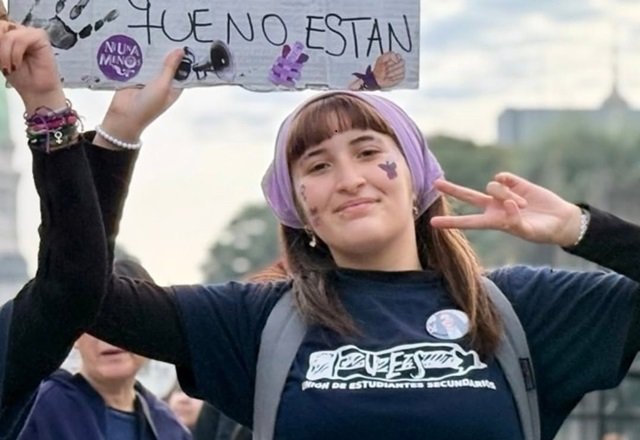
Thousands of demonstrators gathered across Argentina on June 3 as the feminist collective Ni Una Menos led nationwide marches marking 11 years since its founding, renewing calls for justice for victims of gender-based violence and stronger state protection systems. The mobilizations, centered in Buenos Aires but echoed across multiple provinces, turned public squares into spaces of remembrance, protest, and political demand.
The demonstrations were driven by growing concern over persistent femicide rates and what activists describe as insufficient institutional response to gender violence. Participants read public statements honoring victims while demanding expanded protective policies, faster judicial action, and coordinated national strategies between municipal and provincial governments. Organizers emphasized that legal and social systems continue to fail many victims, particularly those facing domestic abuse and economic dependency.
A key focus of the protest was the demand for stronger state intervention in cases of economic violence, particularly unpaid child support, which activists described as a structural mechanism that deepens inequality and traps women in vulnerable situations. The movement argued that without financial independence and enforcement of legal obligations, many women remain unable to escape abusive environments. Protest leaders also urged judicial reform, insisting that courts must consistently apply a gender-sensitive framework to prevent re-victimization during legal proceedings.
The mobilizations also highlighted recent violent cases that reignited public anger, with marches in cities such as Córdoba, Rosario, Mar del Plata, La Plata, and Bariloche drawing large crowds. In Córdoba, families of victims played a central symbolic role in leading demonstrations, while in Rosario unions and student groups joined forces to demand safer public spaces, linking gender violence to broader issues of urban insecurity and economic precarity. In Bariloche, protesters stressed the lack of shelter infrastructure and emergency resources in remote regions, underscoring geographic inequality in access to protection services.
Alongside street demonstrations, organizations presented alarming statistics on gender-based killings in the country. Reports cited thousands of femicides over the past decade, with hundreds recorded in recent years, reinforcing activist claims that violence remains structurally entrenched. Data presented by monitoring groups, including the Lucía Pérez Observatory, pointed to continued high rates of femicide and transfemicide, fueling demands for expanded prevention programs and greater state accountability.
The protests also unfolded against a politically charged backdrop involving the government of President Javier Milei, whose administration has faced criticism from feminist organizations over its approach to gender policies and prevention programs. Activists argue that budget constraints and institutional restructuring have weakened protections, while government supporters claim that crime statistics show improvement. This tension has intensified the debate over how gender violence is addressed at the national policy level.
As night fell across multiple cities, organizers pledged to continue mobilization until concrete budget commitments and structural reforms are implemented. For the movement, the anniversary was not only a commemoration but a renewed declaration that public pressure will remain central to demanding justice, institutional accountability, and long-term transformation of the systems that perpetuate gender-based violence in Argentina.