The unfolding political violence in Bangladesh is no longer a purely domestic matter. It is increasingly a regional security concern with direct implications for Sri Lanka, particularly in relation to maritime security, refugee preparedness, communal harmony, and strategic diplomacy within South Asia. Developments in Dhaka now resonate far beyond Bangladesh’s borders, underscoring how interconnected political stability has become in the region.
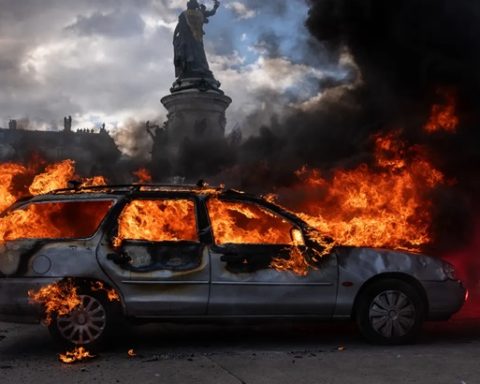
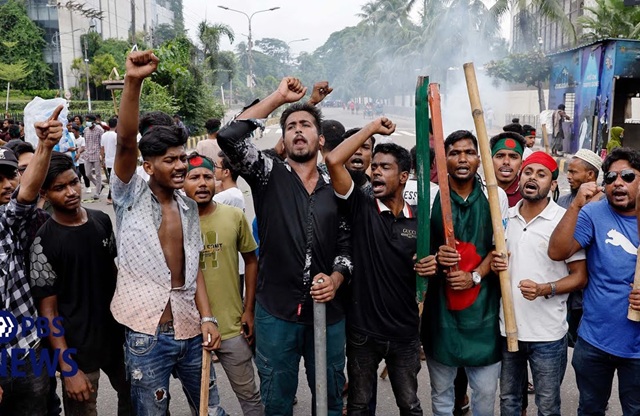
The killing of student wing leader Sharif Osman Hadi during an election-related campaign in Dhaka has ignited widespread unrest. What followed—street violence, attacks on media institutions, allegations that suspects escaped across borders, and escalating diplomatic recriminations—points to a deeper crisis of governance and democratic transition. These events are not isolated incidents but symptoms of an increasingly fragile political environment.
Bangladesh is navigating a delicate transition following the exit of former Prime Minister Sheikh Hasina and the installation of an interim administration. The death of Sharif Hadi has acted as a catalyst for mass mobilisation, but it has also triggered violence, arson, and intimidation, particularly targeting journalists and minority communities. For Sri Lankan observers, this trajectory feels uncomfortably familiar. History shows that when political legitimacy is contested and street power supplants institutional processes, violence can escalate rapidly. The warning signs—polarisation, breakdowns in law and order, and erosion of public trust—are clearly visible. While this does not yet amount to the collapse of democracy, it is unmistakably a moment in which democracy is under severe strain.
Relations between India and Bangladesh have deteriorated sharply amid the unrest. Dhaka has alleged that individuals linked to the killing fled across the border into India and has formally demanded the extradition of Sheikh Hasina, who is believed to be in Indian territory. India, for its part, has voiced serious concern over attacks on Hindu minorities in Bangladesh and the security of its diplomatic missions. Border vigilance has been intensified, and diplomatic rhetoric on both sides has hardened. For Sri Lanka, these tensions matter profoundly. Regional instability in South Asia rarely remains contained within national borders, and a breakdown in relations between two major neighbours weakens collective regional security cooperation. Such instability also risks creating strategic vacuums that external powers and non-state actors may seek to exploit.
A particularly worrying aspect of the current crisis is the visible involvement of Islamist-aligned political groups, including networks linked to Jamaat-e-Islami, in influencing or leading sections of the protests. Reports of attacks on Hindu communities have further inflamed sentiment within India and among international observers. This should not be misinterpreted as a reflection of Bangladesh’s Muslim population, which is overwhelmingly moderate. Rather, it demonstrates how periods of political chaos allow radical elements to hijack legitimate grievances for their own ends. Sri Lanka learned this lesson painfully after the Easter Sunday attacks, when extremism flourished amid disorder, perceived injustice, and weakened state control.
For Sri Lanka, the implications are practical as well as strategic. Refugee and displacement scenarios cannot be dismissed. Sri Lanka has previously been a limited destination for Bangladeshi migrants and refugees, and if violence escalates or the electoral process collapses, maritime displacement across the Bay of Bengal becomes a plausible risk. This does not call for alarmism, but it does demand sober preparedness and contingency planning.
Maritime security also assumes heightened importance in such a context. Irregular maritime movements—whether involving refugees, human traffickers, or extremist operatives—pose tangible risks. Strengthening coastal surveillance, naval patrols, and intelligence coordination across the Indian Ocean should be viewed as prudent preventive measures rather than hostile acts.
There are also sensitive domestic implications. External Islamist narratives and regional communal polarisation can spill over rapidly through social media. Sri Lankan Muslims, who have consistently rejected violence and extremism, must not be unfairly stigmatised because of events unfolding elsewhere. The responsibility lies squarely with the State to prevent the importation of extremist ideologies, to protect local Muslim communities from backlash, and to strengthen community policing and counter-disinformation efforts. Both Bangladesh and India are now engaged in an intense blame game across digital platforms, where disinformation, emotional mobilisation, and communal messaging travel far faster than verified facts. Sri Lanka, still recovering from its own social media-driven crises, must remain vigilant. Monitoring foreign political narratives that could inflame domestic tensions is now a core national security task.
Sri Lanka’s long-standing foreign policy tradition—non-aligned, pragmatic, and oriented towards regional stability—places it in a relatively strong position. Colombo should maintain diplomatic neutrality, engage both India and Bangladesh quietly, and focus on strengthening internal resilience rather than reacting publicly or impulsively. This is not a moment for taking sides, but for anticipating consequences and safeguarding national interests.
Bangladesh’s crisis is a reminder that democracy is sustained not by elections alone, but by strong institutions, inclusive politics, and restraint by all actors. For Sri Lanka, the message is clear: instability anywhere in South Asia eventually affects everyone. Preparedness, not panic, remains the most effective response. Observing developments in Bangladesh is therefore not an exercise in detached curiosity, but a necessary process of learning, anticipation, and protecting Sri Lanka’s own fragile peace.