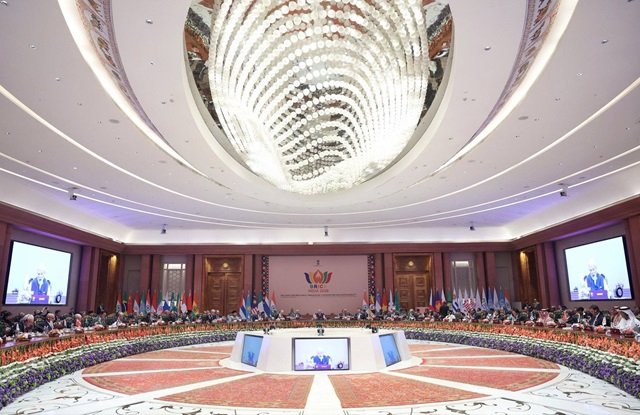
Multilateral summits rely as much on symbols as on official statements. Elements such as handshakes, seating arrangements, guest lists, press conferences, and even dinner menus all play a significant role in diplomacy. The 2026 BRICS Summit in New Delhi provided India with an opportunity to position itself as a vital link between the Global South and major world powers.
Beneath the summit’s polished exterior, diplomatic tensions were evident. Xi Jinping interacted cautiously with Narendra Modi, while Lula da Silva was absent, and Abu Dhabi’s Crown Prince left early. Saudi Arabia had a ministerial-level representation, and there was an awkward media exchange with Malaysia’s Anwar Ibrahim. These moments revealed the limitations of the summit’s carefully crafted images, emphasizing that effective diplomacy relies more on uniting varying interests than on the grandeur of the setting.
Multipolar Realities and Structural Frictions
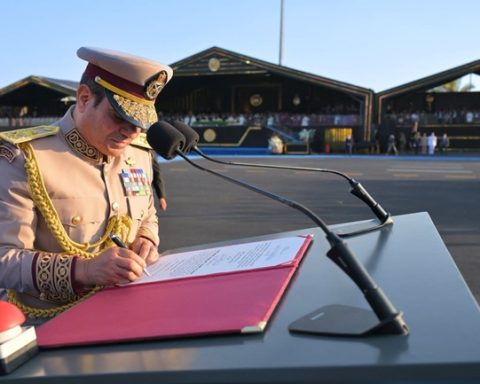
The summit highlighted a stark contrast between images of unity and the realities of multipolar politics. Modi was photographed alongside Xi Jinping and Vladimir Putin in strategically staged pictures, including one where they clasped hands. Nevertheless, this should not be interpreted as a genuine strategic partnership. Xi’s trip marked his first visit to India in seven years, and while both countries are working on historical border disputes, their interactions suggested a careful stabilization rather than genuine trust. It is worth mentioning that Xi did not attend Modi’s gala dinner, which was explained as being due to tiredness instead of a diplomatic slight.
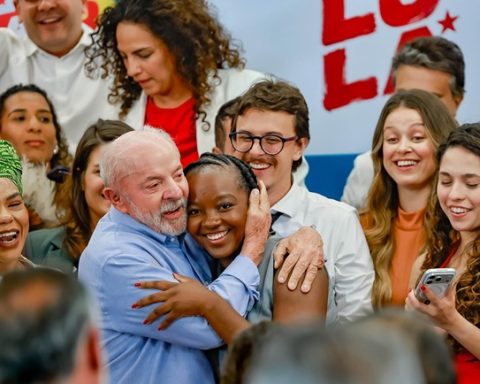
The attendance pattern complicated India’s effort to portray BRICS as a representative Global South coalition. Brazilian President Lula did not attend, with Foreign Minister Mauro Vieira representing Brazil. Saudi Arabia was represented by Foreign Minister Prince Faisal bin Farhan, and Abu Dhabi Crown Prince Sheikh Khaled bin Mohamed attended but left before the gala dinner. While not necessarily diplomatic rebukes, these absences diluted the optics of a leader-level gathering.
A second problem arose during media diplomacy when Malaysian Prime Minister Anwar Ibrahim resisted an Indian anchor’s attempt to label Pakistan’s actions as “state terrorism,” insisting that such claims need evidence. This exchange highlighted the risk of using international media engagements to further domestic political narratives. When a summit’s press environment turns into a platform for bilateral point-scoring, the host’s diplomatic message may be overshadowed by the questions posed.
The declaration highlighted that despite India’s close ties with Israel, BRICS issued strong statements on Gaza, opposing forced displacement and advocating for humanitarian access and Palestinian rights. This wasn’t just an Indian policy document; it reflected a consensus from a diverse coalition, showing that India can influence the agenda within the autonomous Global South without dominating the political narrative.
Protocol, Food Politics and Ideology
The vegetarian gala controversy may seem minor compared to larger issues, but it highlights important diplomatic details. The event featured only vegetarian Indian dishes like paneer lababdar and millet pulao. Critics, including Rahul Gandhi, argued that this choice overlooks India’s diverse culinary identity, noting that many Indians eat meat. In contrast, the government defended the menu as a celebration of India’s rich vegetarian heritage.
Serving vegetarian food is not inherently undiplomatic; India has a rich vegetarian culinary heritage that can be showcased elegantly. The issue arises when cultural representation turns into cultural prescription. A diplomatic banquet should accommodate diverse guests rather than solely reflect the host’s preferences. Hospitality becomes soft power when guests see themselves in it; otherwise, it may appear as cultural projection rather than pride.
The controversy reflects a broader tension between domestic ideological signaling and international inclusivity. A pluralistic country can celebrate vegetarian traditions while acknowledging its diverse non-vegetarian culture. At a summit with China, Russia, Brazil, Southeast Asia, the Gulf, and Africa, offering more dietary choices would have been simpler and more diplomatically inclusive.
The New Delhi summit was not a diplomatic failure, as India achieved a consensus declaration and facilitated high-level engagements, positioning itself at the center of a multipolar forum. However, it highlighted the limitations of performative diplomacy, emphasizing that true soft power arises from inclusivity rather than image control. The key lesson for New Delhi is that credibility in multilateralism comes from managing differences rather than hiding them. As BRICS diversifies, effective summit diplomacy will rely on skilled facilitation rather than a dominant national narrative.