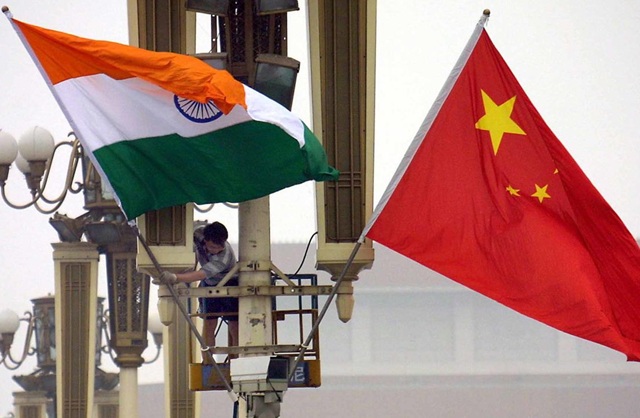
Beijing and New Delhi, the two largest and most populous players in the developing world, are intensifying their competition for leadership within Global South-focused multilateral platforms such as the Shanghai Cooperation Organisation (SCO) and Brics. A recent in-depth report by the South China Morning Post reveals how deep-rooted disagreements and geopolitical rivalries are testing the limits of these coalitions’ solidarity and cooperation.
At the heart of the matter lies a shared aspiration between China and India: to shape a multipolar world order that amplifies the voice and agency of developing countries. But while both nations publicly advocate Global South unity, their differing strategies—and competing national interests—are increasingly pulling these alliances in opposite directions.
Disagreements Surface at the SCO Defence Summit
Tensions came to the forefront at the SCO defence ministers’ meeting in Qingdao, China, in June 2025. It was Indian Defence Minister Rajnath Singh’s first visit to China since the deadly 2020 Galwan Valley clash, and the first high-level encounter between Indian and Pakistani officials since a recent terror attack in Kashmir that killed dozens of Indian tourists.
According to the South China Morning Post, the meeting concluded without a joint statement—an unusual outcome for such gatherings. India reportedly objected to the wording on terrorism, which omitted references to the April attack in Kashmir but included mentions of unrest in Pakistan’s Balochistan province, where Islamabad accuses New Delhi of backing separatists.
China, which chaired the meeting, declared it a success. But Indian media claimed Beijing had included language biased against India, disregarding its concerns. Analysts see this as a sign of deeper frictions that threaten to undermine China’s broader strategy of leading a united Global South.
A Contest for Global South Leadership
China has long positioned itself as a champion of the developing world, using platforms like the SCO and Brics to denounce Western hegemony and promote a new world order. But India is pushing back with its own vision of South-South cooperation.
Since 2023, India has hosted a series of “Voice of the Global South” summits, gathering more than 100 countries—most of them non-G20 states. Notably, China has not been invited. India frames the initiative as an inclusive platform rooted in a shared colonial past and focused on sustainable development, digital infrastructure, and energy partnerships.
While China’s approach leans on large-scale initiatives like the Belt and Road Initiative (BRI), which has made major inroads across Africa, Asia, and Latin America, India has focused on smaller, consensus-driven programs such as the International Solar Alliance and Digital Public Infrastructure. Experts cited by the South China Morning Post describe this as a battle between China’s “Beijing Consensus” and India’s “Mumbai Consensus.”
Rivalry Within Brics and Beyond
The competition isn’t limited to the SCO. India also refused to support China’s Belt and Road Initiative in a virtual Brics summit it hosted in 2023, leaving the group’s economic development roadmap unsigned. India has also voiced opposition to the proposed Brics common currency—a key item on China’s and Russia’s agenda to reduce reliance on the US dollar.
According to Zhang Jiadong, director of the Centre for South Asian Studies at Fudan University, these tensions reflect the natural limitations of cooperation between two countries that both prize strategic autonomy. “Without their cooperation on global issues, the group is unlikely to achieve much,” Zhang told the South China Morning Post.
Ideological Differences and Regional Divisions
The SCMP report also highlights broader divisions within the Global South itself. While many developing countries oppose Western unilateralism, they do not always align on key issues like terrorism or economic policy. For example, after the recent Pahalgam terror attack in Kashmir, few Global South nations rallied behind India, underlining New Delhi’s struggle to build consensus within the bloc.
Amit Ranjan of the National University of Singapore notes that “China and India aspire to lead the Global South, but separately.” Their divergent worldviews and unresolved bilateral tensions make unified leadership difficult.
Cooperation or Coexistence?
Despite these differences, scholars urge against interpreting the rivalry as purely antagonistic. Min Ye, a professor at Boston University, described the China-India tension as “a manifestation of peaceful coexistence,” not zero-sum hostility. Multilateral platforms like the SCO, she argues, serve more as arenas for dialogue and competition than cohesive power blocs.
Even Chinese analysts recognize the limitations of these institutions. “The Global South is more of a concept than a coalition,” said Zhang of Fudan University. “Its influence depends on which vision gains broader international acceptance.”
The Road Ahead
According to the South China Morning Post, both China and India are recalibrating their approaches. China is dialing back expectations of immediate breakthroughs, focusing instead on building trust and economic linkages. India, meanwhile, continues to expand its diplomatic outreach to Africa and Southeast Asia as it tries to carve out a distinct leadership identity.
For now, the Global South remains a contested space—united by common grievances, but divided by competing ambitions. Whether China or India ultimately emerges as its leading voice may depend less on grand strategies and more on which nation can build lasting, inclusive partnerships in an increasingly fragmented world.