by Our Foreign Affairs Editor
Go to Kosovo today and you’ll meet men in their twenties named Tonibler—a single word, a single name, bestowed by grateful parents who wanted to honour the man they believed had saved their nation. It’s a peculiarity of postwar identity: a name as a gesture of political devotion. Tony Blair may have fallen from grace elsewhere, but in Kosovo he remains something of a secular saint. And so the question now being asked, not entirely in jest, is whether the maternity wards of Gaza and Tel Aviv will soon ring with the cries of newborns named Donald.
It would be the ultimate tribute to a man who lives for adulation. And Donald Trump, make no mistake, is basking in it. He has the look of a man who believes he has bent history to his will. To his supporters, and even to some of his critics, the sight of him striding across the tarmac in Tel Aviv, declaring “the war is over”, was the fulfilment of a prophecy he’s been reciting since his first campaign: that only he could make the deal everyone else had failed to deliver.
But diplomacy, unlike a property deal, is never sealed with a single handshake. For all the triumphalism surrounding the ceasefire, the mass prisoner exchange, and the images of hostages returning home, this moment is less an ending than an uncertain beginning. The Trump-brokered “Peace for Eternity” plan—twenty points long and thick with American ambition—promises a technocratic authority to govern Gaza, an eventual Israeli withdrawal, and a process for Hamas’s disarmament. Lofty aims, all of them. But in the dusty offices of Ramallah and the shadowed corridors of the Knesset, the details already look as fragile as parchment in the wind.
Those who have watched this story unfold for decades know the choreography well. Tony Blair, when he took on the thankless task of mediating for the Quartet in the mid-2000s, used to say that everyone already knew what a deal would look like. “It’s not about the map,” he told one British journalist on a tour of the West Bank. “It’s about the moment.” You needed the stars to align, the leaders to take a risk, the public to be ready to forgive. Bill Clinton thought he had that moment once, at Camp David, until Yasser Arafat blinked and Benjamin Netanyahu turned obstruction into an art form.
Now, after years of stalemate and bloodshed, Trump has found the constellation that eluded others. He has done it partly by force of personality—the relentless self-belief, the transactional instinct, the absence of doubt that unnerves diplomats and disarms strongmen. But he has also benefited from timing. A year ago, Netanyahu was untouchable, buoyed by hawkish rhetoric and military might. Then came Gaza’s devastation, international condemnation, the disastrous missile strike on the Hamas mission in Qatar, and a sense of isolation so deep that even allies began to flinch. Trump spotted the weakness. He leaned in. And when he did, Netanyahu blinked.
The result is a deal that looks, in essence, not dissimilar to the one Joe Biden floated a year earlier and saw crumble in his hands. Trump will not care about that comparison. Politics, as he understands it, is about owning the moment, not the method. And in this moment, the world’s cameras are on him.
But the questions that follow are legion. Who will rebuild Gaza’s obliterated infrastructure, and with what money? Who will guarantee security in a strip that has known little but war? How will Hamas, bruised but unbowed, be persuaded—or compelled—to give up its weapons? And will Israel, even under international pressure, truly loosen its grip?
History offers both warning and hope. The Good Friday Agreement in Northern Ireland was hailed as a miracle in 1998, and in a sense it was. Yet the miracle was not the signing of the accord, but the work that followed: the policing reforms, the prisoner releases, the uneasy cohabitation of enemies in government offices. Blair, Clinton, and their teams understood that peace was not an act but a process. Decades on, it remains imperfect but intact.
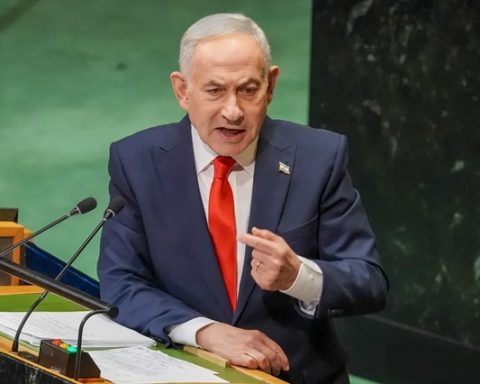
Trump’s triumph, for now, is that he has managed to stop the guns and free the hostages. But sustaining peace requires patience, attention, and humility—qualities not often associated with the man in the red tie. Those close to him admit he can fixate on a cause with ferocious energy, only to drop it the next week for something shinier. The question haunting Washington, Jerusalem, and Cairo alike is whether this president, so attuned to applause, will still care when the cheering fades.
Perhaps a child named Donald will indeed be born in Gaza City or Sderot this year, his parents daring to hope that the man whose name he bears delivered them from war. Perhaps not. Names, like peace, are symbols—fragile, provisional, easily broken. What matters is whether this deal, this improbable convergence of ego and exhaustion, can hold long enough to make those names mean something more than a passing headline. For now, the world watches, waiting to see if the dealmaker can become, for once, a builder of something that lasts.