The landscape of global conflict is undergoing a drastic change. The principle of military superiority over centuries was based on a simple formula: the size of the population, the richness of the treasury, and the sheer mass of tanks, aircraft, ships, submarines, land-based missiles, and infantry. Nevertheless, the war between Ukraine and Russia, and the tensions between Iran and the US/Israel, have broken this historic calculus. Now, power is gauged by who is more intelligent in the use of technology. An insurgent group, or even a non-state actor with inexpensive drones, cyber weapons, and ingenuity, can drain a superpower.
The current conflicts have reallocated power: mass and stockpiles are no longer a guarantee of success. Although the conventional superiority of Russia in armor, aircraft, and GDP is overwhelming, Ukraine has countered it with rapid technological innovation. By transforming economical, mass-market drones into precision strike devices, Ukraine has destroyed multimillion-dollar tanks and evaded advanced air defenses. Similarly, cheap naval drones have challenged Russia’s dominance in the Black Sea. Coupled with Starlink by SpaceX to maintain connectivity and conduct strategic cyber operations against Russian logistics, the war demonstrates that being fast, flexible, and technologically smart with cost-effective tools is more important than conventional military size and wealth.
A similar imbalance characterizes the Iran–US/Israel conflict. Iran has demonstrated that heavy costs can be imposed even without a strong air force or navy. It has deployed swarms of low-cost Shahed-136 kamikaze drones—propeller-powered UAVs estimated to cost between $20,000 and $50,000 each. These platforms have compelled Israel and the US to rely on their stockpiles of Patriot missile systems and other high-end interceptors, each costing between $2–4 million.
The economics are stark: a single inexpensive drone can be shot down, but US/Israel missile stockpiles are depleted rapidly and may run out if the conflict prolongs. Even symbols of US naval power, such as aircraft carriers and nuclear submarines, are increasingly seen as vulnerable when drones can be launched from small boats or remote locations in the Red Sea or the Persian Gulf.
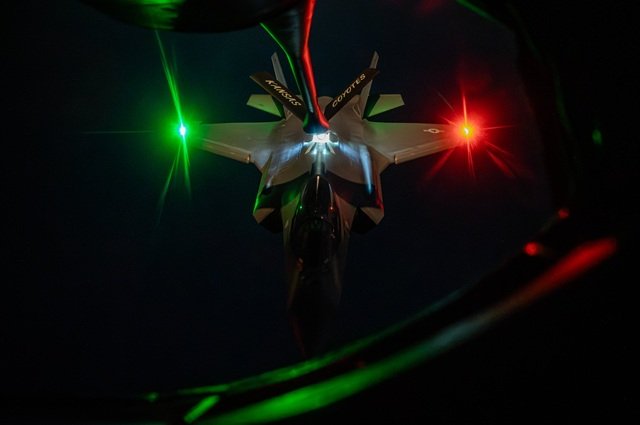
This is the hallmark of modern warfare cost asymmetry. Multi-layered advanced systems such as Iron Dome or Patriot are effective against limited threats but struggle against saturation attacks involving dozens of low-cost drones. Cyber warfare adds another dimension, allowing attackers to blind radars, spoof GPS, or cripple power grids without firing a shot. High-value assets such as carrier battle groups or the F-35 become prime targets for persistent, low-cost attack systems.
There are five trends that will shape the future of war. First, the development of inexpensive autonomous systems—drones, loitering munitions, and underwater vehicles—will make battlefields more transparent and lethal. Second, artificial intelligence will move from the background to the forefront, with swarms capable of making decisions faster than humans can respond. Third, cyber and electronic warfare will likely serve as the first strike in any conflict, aiming to blind, deceive, or paralyze the enemy before kinetic operations begin. Fourth, space will become a domain of warfare; satellites that provide targeting, navigation, and communication will themselves become targets. Fifth, and perhaps most significantly, the barrier to entry will continue to fall. Non-state actors, middle powers, and even wealthy individuals will gain capabilities once reserved for superpowers.
This reality necessitates a paradigm shift in military thinking. Countries that continue investing solely in legacy platforms—more tanks, more manned aircraft, more fleets—risk being outmaneuvered. Instead, investment should focus on resilient and distributed networks: inexpensive sensors, AI-driven command systems, rapid drone production, and cyber resilience. Military training must emphasize adaptability, improvisation, and technological fluency rather than rigid adherence to doctrine. Alliances will remain important, but increasingly for shared data, satellite bandwidth, and production capacity rather than manpower alone.
The conflicts in Ukraine and the Middle East are not exceptions; they are previews. Future wars may not be determined by the largest military, but by the ability to sustain the highest rate of technological innovation. With access to low-cost technologies, even smaller states can challenge superpowers. The decisive advantage in this new era lies with those who view warfare as a software-centric challenge rather than a hardware-dominated one. Today’s conflicts foreshadow a future in which aircraft carriers and nuclear submarines, long symbols of power, may become increasingly vulnerable to swarming drones and hypersonic weapons. The future of warfare will not be determined by the size of a budget, but by the speed of innovation.