Chinese authorities have launched a major crackdown on scams targeting the upcoming national college entrance examination, or gaokao, with a special focus on those fraudulently claiming that artificial intelligence (AI) can predict exam questions.
The Ministry of Education, the Cyberspace Administration of China, and the Ministry of Public Security jointly announced a sweeping campaign on Friday to investigate and eliminate “illegal and harmful information” circulating online ahead of the exams, which run from June 7 to June 10.
The gaokao is often described as a life-defining exam for Chinese students, with scores determining university placement and future academic paths. This year, over 13.3 million candidates are set to sit for the exam, according to ministry figures.
Authorities are alarmed by a growing online market of so-called “AI-enhanced” mock exams, which sellers claim can forecast up to 80% of actual test questions. These materials, some priced as high as 400 yuan (US$56) each, are reportedly being promoted on social media and livestreaming platforms. State broadcaster CCTV reported that some vendors are even bundling packages and offering discounts to entice desperate students and parents.
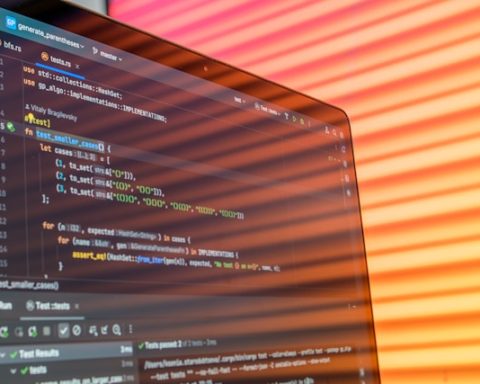
One such vendor, operating under the pseudonym “Teacher Wu,” advertised his AI-generated mock tests for 398 yuan per subject. He claimed to use ChatGPT and Chinese AI platform DeepSeek to analyze past gaokao papers and extract high-frequency topics to create questions with high predictive value.
However, leading Chinese AI companies including DeepSeek, Doubao, Yuanbao, Tongyi Qianwen, and Kimi told the South China Morning Post that they are unable to predict future gaokao questions, which are classified as state secrets.
Experts have dismissed these AI-based claims as deceptive. “It’s not that AI or tutors are accurately predicting questions, but rather that the gaokao follows certain patterns,” said Chen Zhiwen, a member of the National Education Examination Steering Committee. He described the AI-driven prediction trend as a “marketing gimmick.”
Authorities emphasized that the crackdown will not only target fake AI predictions, but also broader forms of exam fraud, including leaking test content, spreading rumors, selling fake model answers, organized cheating, and enrollment scams.
As the gaokao approaches, officials urge students and families to remain vigilant and avoid falling victim to scams that exploit the pressure and anxiety surrounding one of China’s most consequential academic milestones.