China’s ascent as a global power has reshaped not only economic and political dynamics but also the international arms trade. Over the past several decades, China has steadily expanded its military capabilities and strategic ambitions, pairing domestic modernization with an outward push into global defense markets. Yet in the Middle East, this expansion tells a more nuanced story—one of ambition constrained by geopolitics, competition, and caution. According to analysis published by The Institute for National Security Studies, Beijing’s defense exports to the region remain relatively modest but strategically significant, with important implications for Israel.
China’s military rise has been guided by long-term strategic goals articulated by President Xi Jinping, including full military modernization by 2035 and the establishment of a world-class armed force by 2049. Defense exports play a central role in this vision, allowing China to strengthen its domestic arms industry, expand technological capabilities, and deepen ties with foreign partners. However, despite these ambitions, its footprint in the Middle East has remained limited compared to dominant players like the United States.
Historical data shows that Chinese arms exports to the region peaked in the 1980s, particularly during the Iran–Iraq War, when Beijing supplied weapons to both sides. Since then, exports have steadily declined. Between 2016 and 2025, Chinese defense sales to the Middle East accounted for only a small fraction of its global exports—just 4 percent—while US exports to the region dwarfed them by a factor of roughly 170.
Even so, China has carved out a niche in specific sectors, particularly in unmanned systems. Armed drones have become a key entry point into regional markets, especially among Gulf states. Countries such as Saudi Arabia, United Arab Emirates, and Egypt have all procured Chinese UAV platforms, including the Wing Loong series. These systems gained traction in part because the United States had previously restricted exports of similar technology, creating an opportunity for Beijing to step in.
Saudi Arabia has emerged as China’s largest regional customer, investing heavily in drones and missile-related technologies. Reports in 2026 indicate potential large-scale local production of advanced Chinese UAVs, signaling a deepening defense relationship. The United Arab Emirates has also integrated Chinese systems into its military, while Egypt has pursued a mix of UAV acquisitions and domestic production partnerships.
In contrast, China has exercised notable restraint in its defense dealings with Iran, despite longstanding strategic ties. Since the 2015 nuclear agreement, no major arms deals have been confirmed, reflecting Beijing’s effort to avoid triggering tensions with Washington or jeopardizing relationships with Gulf states. Instead, China’s support has largely taken indirect forms, such as supplying materials and components used in weapons production.
This cautious approach underscores a broader strategy. China appears to prioritize stable, US-aligned markets with strong purchasing power, rather than engaging directly with conflict zones or sanctioned states. By doing so, it minimizes political risk while attempting to penetrate lucrative defense markets traditionally dominated by Western suppliers.
At the same time, the Middle East presents structural challenges. The region is often described as a “captive market,” where military systems, doctrines, and logistics are deeply intertwined with long-term suppliers—primarily Western countries. This entrenched ecosystem makes it difficult for new entrants like China to gain significant market share, particularly in high-end sectors such as fighter aircraft.
Nevertheless, shifting geopolitical dynamics could open new opportunities. Ongoing conflicts in the region are expected to drive increased demand for defense imports. Countries seeking to diversify suppliers—or to gain leverage in negotiations with the United States—may turn to China as an alternative. However, Washington has made clear that procurement of Chinese systems could complicate defense cooperation, particularly due to interoperability concerns.
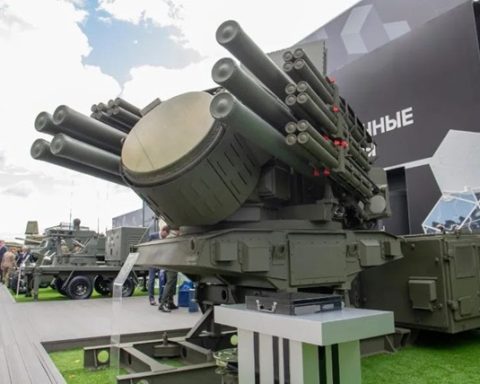
Another factor shaping the landscape is the weakening of Russia as a major arms supplier following the war in Ukraine. Production constraints and delivery delays have eroded Moscow’s reliability, creating a potential opening for Beijing to step in with competitive pricing and availability. In sectors like air defense and radar systems, Chinese offerings are already being marketed as alternatives to Russian platforms.
The performance of Chinese weapons in real-world conflicts will also be critical. Recent clashes, including those involving India and Pakistan, have provided early tests of Chinese systems in combat conditions. While some results have been encouraging, others have raised doubts about reliability and effectiveness. These battlefield outcomes could significantly influence future export prospects.
For Israel, these developments carry both risks and strategic considerations. While China’s direct arms sales to hostile actors remain limited, the indirect transfer of technology and materials—particularly to Iran—raises concerns about proliferation. Weapons based on Chinese designs have already appeared in the hands of groups like Hezbollah and Hamas, often via intermediaries.
Looking ahead, the possibility that Iran could turn to China to rebuild its military infrastructure after ongoing conflicts adds another layer of complexity. Such cooperation could accelerate Tehran’s capabilities, potentially altering the regional balance of power.
Despite these risks, China’s overall approach remains measured. Its defense export strategy reflects a balancing act between ambition and caution—seeking to expand influence without provoking backlash or jeopardizing broader geopolitical interests. This calculated posture has limited its impact so far but leaves room for future growth.
For Israel, the challenge lies in navigating this evolving landscape. Analysts from The Institute for National Security Studies suggest that Jerusalem should closely monitor Chinese defense activities, particularly in relation to technology transfers and regional partnerships. At the same time, maintaining strong ties with the United States and investing in technological superiority will remain central to Israel’s strategic posture.
China’s role in the Middle Eastern arms market is still emerging. While it has yet to rival Western dominance, its targeted advances—especially in unmanned systems—signal a long-term strategy that could reshape regional dynamics. Whether Beijing becomes a major player or remains a secondary force will depend on its ability to overcome structural barriers, prove the reliability of its military technologies, and navigate the complex politics of one of the world’s most volatile regions.