The apparent start of China’s annual closed-door Beidaihe retreat has once again drawn attention to one of the country’s most secretive political traditions, as heightened security, an extended absence of senior leaders from public view and signs of high-level meetings have prompted renewed speculation over policy priorities, military reform and personnel decisions. Although Beijing never officially confirms the gathering, observers say this year’s discussions are likely to focus on tightening Party discipline, preparing for an important October meeting and addressing mounting economic challenges ahead of a major Communist Party congress next year.
China’s political leadership appears to have begun its annual summer retreat in the coastal resort of Beidaihe, an event that has long occupied a unique place in the country’s political calendar despite the absence of any official acknowledgement from Beijing.
The annual gathering is traditionally conducted behind closed doors, with the Chinese government consistently declining to confirm that it takes place. Nevertheless, developments in Beidaihe have for years been closely monitored by analysts seeking clues about the priorities and internal dynamics of China’s leadership.
This year, the clearest indication that the retreat has commenced came from a meeting on Monday between President Xi Jinping’s chief of staff, Cai Qi, and a group of scientists in the resort town of Beidaihe. The meeting has been widely interpreted as signalling the beginning of the traditional leadership retreat, even though no formal announcement has been made by the Chinese authorities.
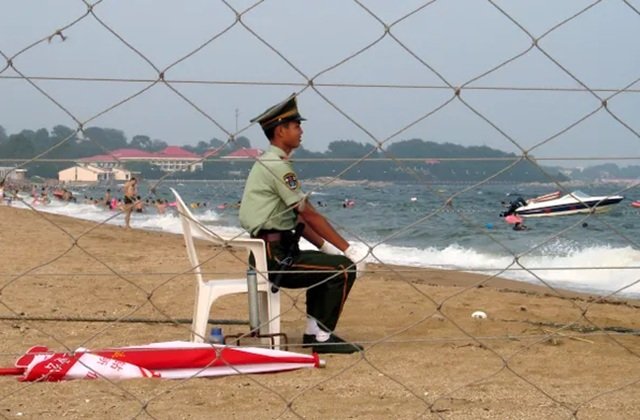
Located around one-and-a-half hours from Beijing by high-speed rail, Beidaihe has long served as a secluded venue for senior Communist Party leaders. Every summer, the extended absence of China’s top leadership from public appearances, combined with heightened security measures throughout the coastal resort, fuels speculation about personnel decisions and potential power struggles within the upper ranks of the Communist Party.
Chinese state media have compared Beidaihe to Camp David, the retreat used by the President of the United States, or the Russian resort of Sochi, portraying it as a place where senior leaders gather away from the public eye. Yet unlike those locations, the Chinese government maintains complete silence over the event, preserving the aura of secrecy that has surrounded the retreat for decades.
Historically, the Beidaihe meeting was regarded as an important opportunity for serving and retired Communist Party officials to negotiate personnel appointments and policy questions behind the scenes. The retreat offered influential current and former leaders a forum through which they could continue shaping political developments away from public scrutiny.
According to observers, however, the significance of the gathering has evolved under President Xi Jinping. Jean Christopher Mittelstaedt of the University of Zurich told Reuters that Xi had fundamentally altered the political balance surrounding the event.
“Xi war sehr erfolgreich darin, den Einfluss der Älteren zurückzudrängen, sodass das Treffen im letzten Jahrzehnt an Bedeutung verloren hat,” Mittelstaedt said. He added that Xi’s concentration of political authority had narrowed the space for genuine negotiations during the retreat, reducing the influence once exercised by retired senior figures.
Although the gathering may no longer play the decisive political role that it once did, observers believe this year’s discussions are nevertheless expected to address several important issues confronting the Chinese leadership.
Among the priorities is preparation for a significant Communist Party meeting scheduled for October, where tougher Party discipline is expected to be a central theme. The leadership is also facing increasing economic headwinds at home, adding further importance to internal deliberations over future policy direction.
Personnel matters are likewise expected to feature prominently. Preparations are underway for the 21st Communist Party Congress next year, where a substantial government reshuffle is anticipated. As a result, this year’s Beidaihe discussions are widely viewed as an opportunity to consider leadership arrangements ahead of one of the Party’s most important political milestones.
Even before the apparent start of the retreat, Xi Jinping had publicly emphasised another priority: strengthening discipline within the military through an intensified anti-corruption campaign.
Speaking on Friday during a meeting of the Politburo, China’s highest decision-making body, Xi called on the Communist Party leadership to intensify its campaign against corruption within the armed forces.
“The weapons must always obey the command of the Party,” Xi said, reinforcing the Party’s longstanding principle of maintaining political control over the military.
Xi also called for the establishment of an intelligent military system making greater use of unmanned technologies and cyber systems, according to the state news agency Xinhua. He stressed that combat effectiveness should remain the principal benchmark for military modernisation. His remarks were delivered one day before the 99th anniversary of the founding of the People’s Liberation Army.
The anniversary comes amid an expanded anti-corruption drive within China’s military establishment. While the campaign reflects Xi’s emphasis on Party discipline and institutional control, it has also attracted external assessment regarding its broader impact.
According to a February report by the London-based International Institute for Strategic Studies (IISS), the anti-corruption campaign targeting senior military officers has affected combat readiness and resulted in serious shortcomings within the army’s command structure.
These developments form part of the broader backdrop against which this year’s Beidaihe retreat is taking place. As the Communist Party prepares for key political meetings in the months ahead, confronts mounting domestic economic pressures and advances military reforms, the annual gathering continues to attract close attention despite remaining officially unacknowledged.
The enduring secrecy surrounding Beidaihe ensures that speculation inevitably fills the information vacuum left by Beijing’s silence. Yet the combination of Xi Jinping’s continued emphasis on Party discipline, military modernisation and anti-corruption efforts, together with preparations for major political events in the coming year, suggests that the discussions taking place behind the resort’s tightly guarded boundaries remain closely connected to the future direction of China’s political leadership and governance.