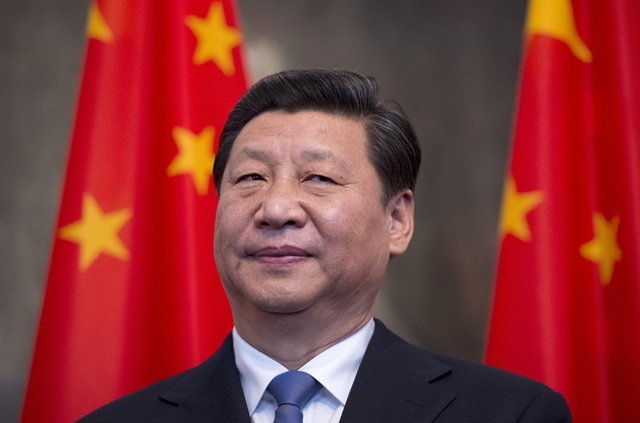
China today represents not only a strategic challenge to the US‑led, rules‑based international order but also a profound test for democracy itself. For many smaller nations, Beijing’s rapid transformation from poverty to sustained economic growth has become a source of admiration. The danger, however, lies in this economic respect evolving into an endorsement of China’s governance model. In this sense, China stands as both a “near peer” competitor to the United States and a rival to the Western‑led democratic ecosystem.
Sri Lanka once openly expressed interest in adopting governance lessons from China during Mahinda Rajapaksa’s tenure — a telling indication of how Beijing’s influence extends beyond economics. Even within Sri Lanka’s business community, debates over governance mirror the political divisions shaping the nation’s future.
At a panel hosted by the Sri Lanka–Korea Business Council, Aroshi Nanayakkara — CEO of a global consulting firm and former chairperson of the Sri Lanka Institute of Directors — openly challenged Sri Lanka’s governance model. She asked whether a system defined by short electoral cycles and changing mandates can truly deliver the long‑term vision needed for economic transformation.
“I’m going to challenge: is democracy the right way to go? Every five years when you have a new president and a whole new parliament, how are you going to maintain that vision for a country?” Nanayakkara asked.
This sentiment finds echoes in Sri Lanka’s political sphere. Tilvin Silva, the powerful general secretary of the Janatha Vimukthi Peramuna (JVP), has argued that long‑term governments are essential for national transformation. In his view, countries such as Singapore and China required 10 to 20 years to reshape their societies. “It takes years to change the entire society. We need to protect the government until we achieve the objectives of forming the government. We cannot finish the work within five years,” Silva declared.
Such statements illustrate how China’s governance model is influencing democratic nations that traditionally uphold liberal principles. Beijing’s example challenges Western notions of human rights and democracy by demonstrating that economic development can occur without them.
During the Cold War, the Soviet Union posed an ideological challenge to the United States. China’s approach is subtler. While it remains the one‑party communist state, Beijing does not export ideology in the traditional sense. Instead, it indirectly inspires smaller nations through its economic success, offering an alternative governance model. This is China’s quiet tactic.
Officially, China champions a foreign policy of non‑interference. In practice, however, Beijing frequently involves itself in the internal affairs of smaller states. Nepal offers a vivid example. In July, Chinese Ambassador Zhang Maoming intervened to halt an academic conference on Tibetan studies scheduled at Kathmandu University in collaboration with the International Association for Tibetan Studies (IATS). The university withdrew as host after government instructions “not to proceed,” following Chinese concerns that the event might provide a platform for critics of Beijing’s rule over Tibet.
More than 700 scholars from 39 countries had already booked flights and hotels for the conference, including participants from Chinese institutions. The seminar was set to cover Tibetan history, language, religion, philosophy, art, and culture. Yet China’s pressure prevailed, underscoring how its “One China Policy” can override sovereign decisions in smaller states.
Nepal’s situation is further complicated by its Tibetan refugee population. Once a major transit route for Tibetans traveling to India — home to the Dalai Lama in exile — Nepal remains highly sensitive to Beijing’s demands. In July, the government permitted Tibetan refugees to celebrate the Dalai Lama’s birthday but banned the Tibetan anthem, rallies, slogans, and statements from the exile administration. Similarly, Sri Lanka rejected the Dalai Lama’s request to worship at the Temple of the Tooth in Kandy and at the Mahabodhi tree in Anuradhapura, fearing Chinese hostility. These examples raise a pressing question: is this truly China’s policy of non‑interference?
The contradictions are striking. While Beijing forced Nepal to cancel a Tibetan studies conference, the Chinese University of Hong Kong (CUHK LAW) has simultaneously permitted collaboration with the U.S.-based Transnational Government of Tamil Eelam — a group advocating for a separate Tamil state in Sri Lanka. According to the university’s announcement, the project will examine ongoing political and legal discourses surrounding the development of an independent Tamil state within the Democratic Socialist Republic of Sri Lanka. It aims to provide an objective academic assessment of the legal challenges facing the creation of such a state. This duality illustrates how China manipulates its principle of non‑interference: stepping into the internal affairs of nations when its strategic interests demand it, yet turning a blind eye to other movements when they align with its long‑term “wolf warrior” ambitions.
China’s growing influence in small countries thus extends far beyond trade and infrastructure. It shapes debates on governance, challenges democratic norms, and pressures sovereign states to align with Beijing’s priorities. For nations like Sri Lanka and Nepal, the dilemma is stark: economic partnership with China brings development opportunities, but it also risks eroding democratic values and independent decision‑making.
As China continues to expand its global footprint, small democracies face a critical test. Will they safeguard their democratic institutions and human rights traditions, or will they drift toward governance models inspired by Beijing’s success? The answer will determine not only their political futures but also the resilience of democracy in the developing world.