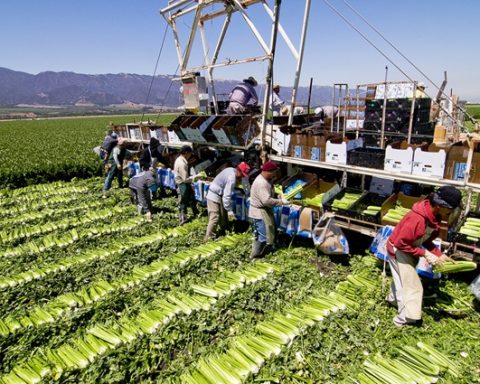
In 1985, a young Communist Party official named Xi Jinping led a delegation from Zhengding to Iowa, the heartland of American agriculture, to study local farming practices. Among those who welcomed him was Luca Berrone, then in his twenties and working in the office of Terry Branstad. Berrone helped organise the trip, arranging farm visits, accommodation, and even a homestay with an American family. At the time, neither man could have foreseen how significant that initial encounter would become decades later, nor how it would underscore the enduring, if delicate, threads linking citizens across two global powers.
The story resurfaced in 2011 when Branstad visited China as the US ambassador and reminded Berrone of the young Chinese official they had hosted in Iowa. Xi reportedly told Branstad that he remembered the trip vividly and requested that Branstad send his regards to Berrone. What struck Berrone most was that Xi had kept his original business card from the visit, a tangible memento of a first impression that had clearly left an impression on the future leader. The Times UK reported that this simple act of retention marked the beginning of a personal connection that has persisted for decades, surviving the peaks and troughs of US-China diplomacy.
Berrone recalls the Iowa visit as both eye-opening and intimate. “These five people stuck out in my memory amazingly well,” he said. Xi and his delegation were experiencing their first time outside China, staying with local families and encountering American culture firsthand. For Berrone, the encounter offered not just hospitality but a glimpse into the human side of a nation often viewed through political and economic lenses. The experience also cemented his lifelong commitment to fostering cross-cultural understanding, a principle he has pursued despite rising political tension in later years.
Over the following 25 years, Berrone pursued a business career in Iowa while Xi climbed the ranks of the Chinese Communist Party, eventually becoming China’s president. Yet the personal dimension of their relationship endured, culminating in public acknowledgment in the form of a Chinese New Year greeting card. In it, Xi underscored the importance of “people-to-people relations,” a concept formally institutionalized by China through the Chinese People’s Institute of Foreign Affairs, emphasizing the role of individual ties in strengthening national relationships. Xi specifically mentioned Berrone, Branstad, and other friends from the 1985 trip, highlighting the enduring influence of grassroots engagement on international diplomacy.
Berrone told The Times UK that he remains a staunch believer in the value of these personal connections, even as US-China relations have grown more strained. “Obviously, a lot depends on what your political spectrum is,” he said, reflecting on the partisan debate over the bilateral relationship in the United States. “My position is that I want to continue to foster the relationship and build on that friendship.”
Xi’s perspective, however, is harder to gauge. In 1985, China was emerging from the turbulence of the Cultural Revolution and was cautiously opening to the world under the reformist policies of Deng Xiaoping. Young cadres like Xi were exposed to Western practices and ideas, but the country’s broader perception of America was complicated, blending admiration for progress with lingering suspicion. Xi’s own father, Xi Zhongxun, had returned to political prominence as a reformist member of the Politburo, providing a model of cautious engagement with the West. Despite his later consolidation of political power and tightening of public debate, Xi’s meticulous nature remains a thread linking his early experiences with Berrone to his current governance style.
The small, personal details of their initial encounter—Berrone driving Xi from the airport, showing him local farms, arranging a homestay—take on outsized significance in hindsight. They illustrate how seemingly minor interactions can ripple across decades, influencing mutual perceptions and serving as touchstones in times of geopolitical strain. For Berrone, the gesture of Xi preserving a business card symbolized not just personal memory, but also a recognition of the human dimension in international affairs, something he has tried to amplify in his own advocacy.
Today, amid renewed scrutiny of US-China ties, the story serves as a reminder that diplomacy is not only conducted at the level of presidents, policies, and treaties, but also through individual acts of hospitality, attention, and trust. While the political landscape can shift rapidly, Berrone’s enduring friendship with Xi stands as testament to the power of human connections in bridging divides, even between the world’s most powerful and complex nations.
Decades after that first Iowa encounter, the friendship continues, quietly influencing perceptions and providing a model for how engagement, patience, and personal rapport can complement formal diplomacy. As Berrone reflects on the lasting bond, he underscores a broader lesson: amid economic rivalry and political friction, the future of US-China relations may ultimately hinge on the very personal ties forged in small towns and faraway fields, just as they were on a spring day in Iowa in 1985.