DER SPIEGEL’s reconstruction of the life of Abdul Ballout reveals how a Berlin-born German citizen, known to authorities long before the attack, progressed from local football pitches to violent Islamist extremism, exposing difficult questions about radicalisation, rehabilitation and the limits of democratic security measures.
The fatal attack on Berlin’s Christopher Street Day (CSD) celebrations has become more than another terrorist incident in Germany. It has evolved into a national examination of how a young man born and raised in the German capital, known to police and intelligence agencies for years, ultimately carried out one of the country’s most devastating recent Islamist attacks. Based on extensive reporting by DER SPIEGEL, the case of Abdul Ballout presents a portrait of radicalisation that unfolded not on the margins of German society but within it.
Ballout’s story ended on a Sunday evening in Berlin’s Burgwallschanze allotment colony in the Spandau district. Approximately 20 hours after driving a rented white Citroën SpaceTourer into crowds attending Christopher Street Day celebrations and subsequently attacking people with a bladed weapon, heavily armed police surrounded an unused garden plot where he had taken refuge. Acting on information reportedly provided by people close to his family, officers attempted to arrest him. According to investigators, Ballout charged at police with a knife, prompting officers to open fire. Struck by three bullets, he died at the scene despite attempts to resuscitate him.
His death closed the final chapter of a life that had begun only 21 years earlier in Berlin. It also intensified a debate that has spread well beyond the immediate investigation, focusing on the effectiveness of Germany’s counterterrorism policies, judicial decisions and deradicalisation efforts.
On the evening of the attack, Ballout deliberately drove the rented vehicle into pedestrians gathered near Berlin’s Tiergarten during celebrations marking Christopher Street Day, one of Germany’s largest LGBTQ community events. After crashing the vehicle into a tree, he reportedly exited and began stabbing bystanders, killing a woman from Poland and injuring more than 30 others, several of them seriously, before fleeing on foot. Investigators later recovered a video from his mobile phone in which he pledged allegiance to the Islamic State (IS) shortly before carrying out the attack.
The attack immediately prompted familiar questions about how another act of Islamist terrorism could occur despite extensive counterterrorism resources. Yet Ballout’s case differed from several previous attacks in Germany. He was not an asylum seeker or recent arrival. Born in Berlin in 2005 to Lebanese parents, he held only German citizenship, attended local schools, played football in neighbourhood youth competitions and grew up in the multicultural district of Tiergarten.
As DER SPIEGEL’s reporting shows, this background has reshaped the public discussion. Rather than focusing on migration or asylum policy, attention has turned towards domestic radicalisation, judicial sentencing and whether existing legal tools are sufficient to manage individuals already identified as posing serious security risks.
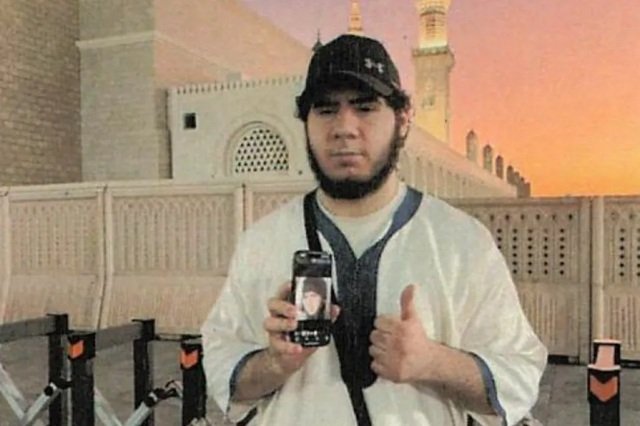
By January 2026, Berlin’s State Criminal Police Office had officially classified Ballout as a “Gefährder” — an individual considered capable of committing politically motivated acts of serious violence. Long before that designation, he had accumulated a record of criminal behaviour. As a teenager he was convicted over assaults and robbery-related offences, completed community service and later sought vocational training as a motor vehicle mechanic.
Around the same period, however, his religious outlook became increasingly intertwined with extremist networks. Court documents cited by DER SPIEGEL indicate that he regularly attended religious instruction several times each week, while Germany’s domestic intelligence service first became aware of him through contacts with an Islamist youth group involved in public proselytising under the name “Way of Truth”. Later travels to Mecca and Medina reportedly deepened his ideological commitment, while investigators believe further radicalisation occurred through online propaganda and personal contacts.
His embrace of Islamic State ideology became increasingly visible. During 2024 he reportedly shared IS propaganda on Instagram, including material glorifying attacks and praising the organisation’s fighters. Investigators also found that he displayed a hand-painted IS flag in his bedroom. Police searched his residence and provided information about an extremism prevention counselling service, which Ballout indicated he might contact.
His personal life simultaneously deteriorated. He lost his employment in the private security sector after failing to obtain renewal of the security clearance necessary for the job. He subsequently relied on social welfare. His marriage, conducted under Islamic law to a woman from Salzburg whom he had met through Instagram, also ended after less than a year.
By 2025, according to investigators cited by DER SPIEGEL, Ballout sought not merely to support IS online but to join the organisation directly. Travelling via Türkiye to Lebanon, he allegedly attempted through Telegram to establish contact with people he believed could facilitate his entry into Syria. Lebanese authorities arrested him before he reached IS-controlled areas and later informed German intelligence services about communications indicating his intention to join the group. They also reported that he had adopted the nom de guerre “Abu Ibrahim al-Qahtani”.
Ballout denied involvement in terrorist planning while detained in Lebanon, telling German embassy officials that he merely felt “admiration and empathy” for the Islamic State. A Lebanese military court sentenced him to three months’ imprisonment for incitement to religious and sectarian conflict before he returned to Germany at the end of 2025, where he was immediately arrested upon arrival.
German prosecutors accused him of preparing a serious act of violence endangering the state based on his attempt to join the Islamic State. They sought a prison sentence of almost three years. Instead, the Tiergarten District Court imposed a juvenile sentence of one year and ten months while employing a provision unique to German juvenile law that effectively offered Ballout a final opportunity to demonstrate rehabilitation before a decision on probation.
The court’s decision has since become one of the most contested aspects of the case. During proceedings, Ballout distanced himself from extremism and violence, leading to his release on 12 May 2026. He was instructed to participate in deradicalisation sessions conducted by the Violence Prevention Network. According to the organisation, however, he attended only two meetings before counsellors questioned whether he possessed sufficient willingness to engage meaningfully. A third appointment had been scheduled for the Monday following the attack.
Security agencies nevertheless continued treating him as a high-risk individual. DER SPIEGEL reports that specialists at Germany’s Joint Counter-Terrorism Centre repeatedly reviewed his case and assessed him as presenting a high threat level. Police monitored his movements after his release, intercepted his communications, installed surveillance equipment near his home and retained his passport to prevent further attempts to travel abroad. When surveillance footage appeared to show him carrying what resembled a firearm, officers searched his family’s apartment, ultimately discovering only a toy water pistol. Finding no immediate evidence of attack preparations, authorities gradually reduced the intensity of surveillance.
The case has consequently fuelled debate about whether existing legal mechanisms are capable of managing individuals who demonstrate sustained extremist intent while remaining within the protections afforded by the rule of law. Proposals now under discussion include broader use of electronic monitoring, tougher sentencing for convicted extremists and stronger supervision of individuals designated as security threats.
DER SPIEGEL’s reporting also highlights the broader social dimension of Ballout’s radicalisation. Friends recalled playing football with him as a child, while his father reportedly warned him in 2025 that he was “on the wrong path”. Family members, teachers, counsellors and deradicalisation specialists all appear to have attempted intervention at different stages. Yet none succeeded in reversing his ideological trajectory.
Extremism researcher Sina Tultschinetski told DER SPIEGEL that radicalisation can affect individuals regardless of where they live or the communities from which they come, with risks increasing where social cohesion weakens and factors such as poverty, isolation, disrupted life circumstances and psychological difficulties create vulnerabilities that extremist movements are able to exploit.
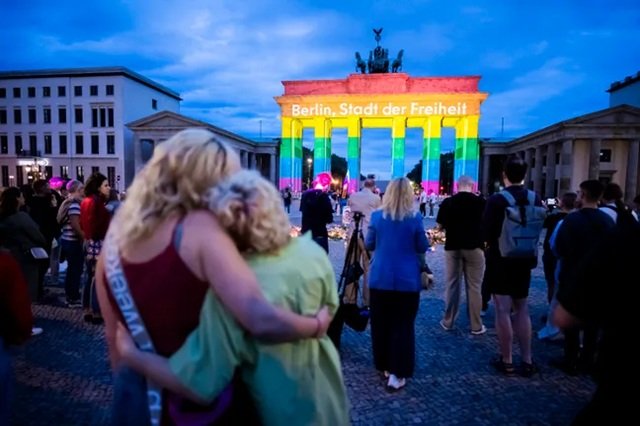
As mourners gathered at the attack site in the days after the tragedy, placing flowers, candles and rainbow flags along the route taken by the attacker, the memorials reflected both grief and resilience. Messages declaring “You are not alone” and “The struggle continues” underscored the determination of Berlin’s LGBTQ community to defend the values of acceptance and freedom that Christopher Street Day represents.
For Germany, however, the case of Abdul Ballout leaves a more enduring question. It demonstrates that contemporary Islamist terrorism is not solely a challenge associated with cross-border movements or foreign conflicts. As reconstructed through DER SPIEGEL’s investigation, it can also emerge from within the heart of a liberal democratic society, testing not only the effectiveness of security institutions but also the resilience of the communities they seek to protect.