What began as an aggressive plan to confront Mexican drug cartels has transformed into a far-reaching and lethal military campaign in the Caribbean Sea and eastern Pacific, driven in large part by President Donald Trump’s homeland security adviser Stephen Miller, according to current and former U.S. officials. The effort, originally framed as a way to curb narcotics trafficking and reduce migration, has resulted in dozens of U.S. strikes on suspected smuggling boats and the deaths of nearly 100 people, many of whose identities remain unknown.
In the early months of Trump’s second term, Miller and senior administration officials discussed launching a renewed “war on drugs” by directly targeting cartels operating in Mexico. Officials believed weakening cartel power would reduce both drug flows and migrant crossings, delivering early political victories. But as Mexican military operations intensified and curtailed cartel activity across the border, the White House found itself searching for another arena. Attention soon shifted southward, toward the Caribbean and Venezuela, where officials saw fewer constraints and a chance to merge counternarcotics goals with a long-standing ambition to oust Venezuelan President Nicolás Maduro.
By early September, the United States had embarked on a campaign that senior officials acknowledge is unprecedented: the routine use of lethal military force against alleged drug smugglers far from any traditional battlefield. According to reporting by The Washington Post, the operations were authorized through a classified presidential directive signed July 25 and a subsequent Pentagon execute order issued Aug. 5. Together, these documents granted the military authority to use deadly force against two dozen foreign criminal groups that the administration labeled “designated terrorist organizations,” a term many legal experts say has no grounding in U.S. or international law.
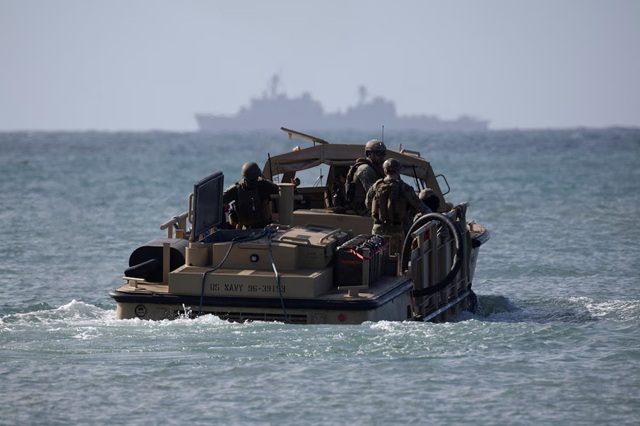
Miller played a central role in shaping the directive, pushing for broad authorities and rapid results, current and former officials said. The directive laid the foundation for strikes carried out by U.S. forces, including MQ-9 Reaper drones, against boats suspected of carrying narcotics. Since Sept. 2, the military has struck at least 26 vessels, killing at least 99 people, according to officials familiar with the operations. The Pentagon has not publicly identified most of those killed, and lawmakers say intelligence about the victims’ roles is often incomplete.
The legal framework underpinning the campaign has alarmed former military lawyers and national security experts. The execute order allows targeting based on “reasonable certainty” that adult males aboard a vessel are affiliated with one of the designated groups, rather than requiring positive identification. While the order calls for “near certainty” that civilians are not present, critics argue that the standards mirror the controversial “signature strikes” used during the post-9/11 war on terror, but without congressional authorization or a clearly defined armed conflict.
Todd Huntley, a former military lawyer who advised U.S. Special Operations forces, told The Post that the campaign stretches international law to the breaking point. Other experts warned that equating suspected smugglers with enemy combatants erases the line between warfare and law enforcement. Sen. Mark Kelly of Arizona, who reviewed a Justice Department Office of Legal Counsel memo justifying the strikes, said the administration’s argument likens drug trafficking groups to an invading foreign force.
The first strike, on Sept. 2, became emblematic of the controversy. Trump claimed the military had killed 11 “positively identified” members of the Venezuelan criminal group Tren de Aragua. Subsequent briefings to lawmakers, however, acknowledged that only one of the victims was confirmed as a member, with the rest labeled affiliates. Family members of those killed told The Washington Post that the men were fishermen involved in smuggling but had no ties to the gang, underscoring concerns that low-level couriers are being swept into a campaign designed for terrorists and battlefield commanders.
As the summer wore on, the counternarcotics effort increasingly overlapped with the administration’s pressure campaign against Maduro. Secretary of State Marco Rubio doubled the reward for information leading to the Venezuelan leader’s arrest, while U.S. forces seized vessels and, most recently, an oil tanker off Venezuela’s coast. Trump has openly hinted that the strikes could expand to other countries, including Colombia, declaring that anyone involved in producing or selling drugs into the United States is “subject to attack.”
Despite the administration’s claims of success, analysts note that Venezuela is not a major source of fentanyl, the synthetic opioid driving overdose deaths in the United States. Many of the boats targeted were operating routes bound for non-U.S. markets, raising further questions about the strategic logic of the campaign. Critics worry that the buildup of U.S. military power in the region could be laying the groundwork for a broader confrontation with Caracas, one that would further blur legal boundaries and risk civilian lives.
For now, the strikes continue, largely shielded from public scrutiny. Lawmakers say they have yet to receive copies of the execute order or full details of the targeting process. As The Washington Post has reported, the administration is pressing ahead with a lethal strategy that repurposes the language and tools of the war on terror for a fight against drug trafficking, a shift that may have lasting consequences for U.S. law, foreign policy and the meaning of armed conflict itself.