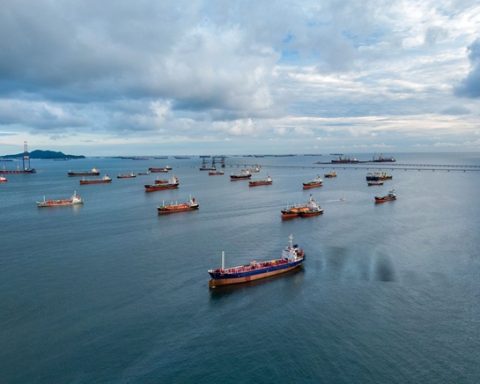
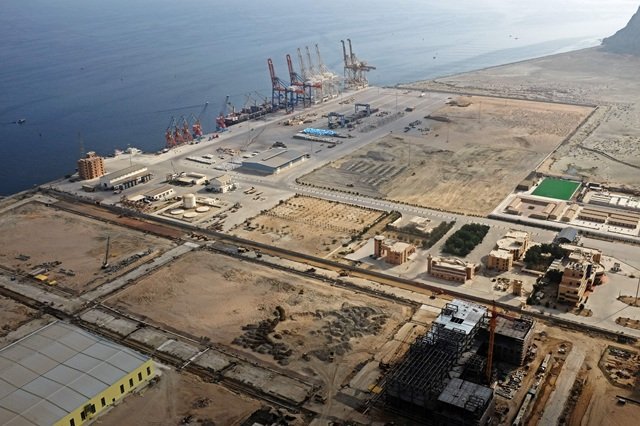
The emerging maritime partnership between Pakistan’s Gwadar Port and Oman’s Sohar Port deserves attention far beyond the language of bilateral diplomacy. Pakistan and Oman are discussing an arrangement that would designate Gwadar and Sohar as sister ports, opening avenues for cooperation in port operations, professional training, shipping incentives, logistics, warehousing, fisheries and investment. At a time when international commerce is increasingly shaped by supply-chain diversification and maritime resilience, the initiative presents Pakistan with an opportunity to translate one of its greatest structural advantages, its geography, into deeper regional economic integration (Jamal, 2026).
The international context makes such cooperation particularly relevant. According to UN Trade and Development, more than 80 percent of goods traded globally by volume move by sea. UNCTAD also estimates that around 70 percent of world trade by value is seaborne, demonstrating that maritime connectivity remains one of the foundations of the global economy (UNCTAD, 2024; UNCTAD, 2025). For Pakistan, therefore, strengthening ports and maritime partnerships should not be viewed simply as infrastructure policy. It is an increasingly important part of economic diplomacy, trade policy and long-term regional integration.
Recent changes in global shipping reinforce this argument. UNCTAD reported that maritime trade expanded by approximately 2.2 percent in 2024, while geopolitical disruptions caused vessel ton-miles, which measure both cargo volumes and the distances travelled, to increase by nearly 6 percent. Maritime trade growth was subsequently projected to slow to approximately 0.5 percent in 2025, reflecting an international environment in which longer routes, shifting commercial patterns and rising transport costs have encouraged governments and companies to reconsider the resilience of their supply chains (UNCTAD, 2025). These trends increase the strategic relevance of countries capable of providing reliable connections between major economic regions.
Pakistan occupies such a position. Its coastline opens directly onto the Arabian Sea, while its territory sits between South Asia, western China, Central Asia and the Gulf. Gwadar adds another dimension to this geography because Pakistan envisions the port as a gateway not only for its own economy but also for landlocked Central Asian states, western China and Afghanistan. The Gwadar Port Authority explicitly describes the port as complementary to Karachi Port and Port Qasim and identifies regional transit and transshipment as part of its long-term mission (Gwadar Port Authority, 2026).
The significance of Gwadar becomes clearer when viewed alongside developments around the Strait of Hormuz. U.S. Energy Information Administration data show that approximately 20.9 million barrels of petroleum liquids per day passed through the Strait during the first half of 2025. That represented roughly 20 percent of global petroleum liquids consumption and about one quarter of all internationally traded maritime oil. Approximately 11.4 billion cubic feet of liquefied natural gas per day, representing more than 20 percent of global LNG trade, also passed through the Strait during the same period (U.S. Energy Information Administration, 2026).
Those figures illustrate why maritime diversification has become an important international economic consideration. The relevance of Gwadar should not depend on disruption elsewhere, nor should the port be regarded simply as an alternative created by moments of regional uncertainty. Its more durable importance lies in Pakistan’s ability to integrate the port into a network of commercially viable corridors connecting several economic regions. The proposed relationship with Sohar contributes to this objective because it connects Pakistani maritime infrastructure with an established Gulf logistics platform while creating possibilities for operational collaboration rather than merely political coordination.
The commercial logic is equally important. According to the Gwadar Port Authority, the port operates under a 50-year master plan, originally approved in 2006, while its operating concession was structured for 40 years. The concession rights were transferred to China Overseas Port Holding Company in 2013, establishing a long-term institutional framework for the development and operation of the port (Gwadar Port Authority, 2026). These arrangements demonstrate that Gwadar was conceived as a generational infrastructure project rather than a short-term commercial undertaking.
Gwadar’s Free Zone provides another indication of the scale of this economic ambition. Official Gwadar Port Authority information states that approximately $270 million was invested by China Overseas Port Holding Company and the Gwadar Free Zone Company in developing the initial 60-acre zone. The authorities also offer incentives including a 23-year tax holiday, 100 percent exemption from import duties on eligible materials and equipment, the possibility of 100 percent foreign ownership, and leases extending for as long as 99 years for sub-lessees and investors (Gwadar Port Authority, 2026). These figures matter because they demonstrate that Pakistan is not relying solely on Gwadar’s physical location. It has also created an investment framework intended to attract commercial and industrial activity.
The proposed Gwadar-Sohar partnership could complement these incentives by introducing another layer of commercial connectivity. According to reporting on the negotiations, possible areas of collaboration include mutual professional training, operational knowledge exchange, priority arrangements for vessels and coordinated commercial incentives for shipping companies serving Pakistan and Oman. Potential Omani participation in logistics, warehousing, fisheries and the Gwadar Free Zone has also been discussed (Jamal, 2026). Such cooperation would give the relationship a practical economic foundation rather than limiting it to diplomatic symbolism.
This approach reflects an important evolution in the meaning of national power. In the contemporary international economy, strategic geography creates opportunities, but connectivity determines how much economic value can ultimately be derived from geography. UNCTAD notes that stronger liner shipping connectivity enables countries to trade more quickly, at lower cost and with a greater range of commercial options. Approximately two-thirds of seaborne trade by value moves through containerised liner services, making connectivity to international shipping networks particularly important for economies seeking deeper participation in global value chains (UNCTAD, 2024).
For Pakistan, this means Gwadar can contribute to a larger connectivity strategy rather than functioning as an isolated infrastructure project. Pakistan already possesses Karachi Port and Port Qasim, while Gwadar provides another geographic gateway further west along the Arabian Sea. A diversified maritime system gives Pakistan opportunities to serve domestic trade while simultaneously developing transit, logistics and transshipment services for neighbouring regions. The Gwadar Port Authority itself describes Gwadar as complementary to Pakistan’s existing ports rather than their replacement, an important distinction for understanding the country’s wider maritime potential (Gwadar Port Authority, 2026).
Central Asia represents one of the most promising dimensions of this strategy. Because the region’s economies are landlocked, access to international markets inevitably depends on cross-border transport corridors. Pakistan’s Arabian Sea ports can form part of a wider network of routes connecting Central Asian economies with global shipping. Gwadar’s potential therefore lies not in attempting to displace existing corridors but in adding another commercially useful option to an increasingly interconnected Eurasian transport system. Greater route diversity can provide businesses and governments with more flexibility while encouraging Pakistan to deepen economic relations with countries beyond its immediate South Asian neighbourhood.
The economic possibilities also extend into the rapidly expanding global ocean economy. UNCTAD data show that international trade in ocean-related goods reached approximately $1 trillion in 2025, an increase of 7.8 percent compared with 2024. Trade in ships and port equipment increased by 8.4 percent, while marine fisheries and aquaculture trade grew by 7.9 percent (UNCTAD, 2026). These numbers demonstrate that maritime development is not limited to cargo handling. Modern port economies support industries ranging from fisheries and logistics to manufacturing, digital services, ship-related industries and specialised trade.
That wider ocean economy is particularly relevant to Gwadar. A successful maritime development strategy can create economic activity extending well beyond the port gates. Logistics companies require warehouses, transport networks and skilled workers. Fisheries require processing, refrigeration and export facilities. Free zones can accommodate manufacturing and commercial services. Maritime operations create demand for technical education, digital systems and specialised professional services. The deeper significance of Gwadar therefore lies in its potential to encourage an economic ecosystem rather than merely increasing the number of ships arriving at a harbour.
The local dimension should remain central to this vision. International infrastructure becomes most valuable when global connectivity translates into opportunities for the communities surrounding it. Expansion in fisheries, logistics, vocational education, entrepreneurship and port-related services can connect Gwadar’s international role with development in Balochistan. Such an approach would make regional connectivity not simply a foreign-policy concept but a mechanism through which international commerce contributes to domestic prosperity.
The partnership with Oman also offers an example of how economic cooperation can complement traditional diplomacy. Pakistan and Oman occupy strategically important positions along the Arabian Sea and Gulf of Oman. By developing commercial relationships between their ports, the two countries can create institutional networks among port authorities, businesses, logistics operators and maritime professionals. Such relationships can make bilateral ties broader and more durable because cooperation becomes embedded in everyday economic activity.
There is an equally important lesson here for the wider region. Discussions surrounding the Arabian Sea are frequently dominated by geopolitical competition, yet the same geography can support a different model based on economic interdependence. Ports do not merely connect territories; they connect producers, consumers, companies and markets. Maritime corridors can therefore provide practical areas of cooperation even in a wider international environment marked by strategic competition.
Pakistan’s opportunity is to place itself at the centre of this connectivity-focused approach. The country does not need to choose between relationships with China, the Gulf, Central Asia or other major markets. Gwadar’s economic logic becomes stronger when it connects multiple regions simultaneously. CPEC provides one major dimension of that connectivity, while partnerships such as the proposed Gwadar-Sohar arrangement can broaden Gwadar’s commercial relationships across the Arabian Sea.
The scale of global maritime commerce makes this a strategically relevant direction. When more than 80 percent of internationally traded goods by volume travel by sea, maritime infrastructure cannot remain peripheral to economic planning (UNCTAD, 2025). Similarly, when approximately 20.9 million barrels of oil per day were passing through Hormuz during the first half of 2025, the economic importance of the Arabian Sea and surrounding waterways becomes difficult to separate from wider questions of global trade and energy security (EIA, 2026).
The Gwadar-Sohar initiative should therefore be seen as part of a larger Pakistani transition from strategic geography towards geoeconomic connectivity. Pakistan already possesses the location. Gwadar provides infrastructure capable of strengthening that geographic advantage, while cooperation with Oman offers another route through which infrastructure can be connected to international commercial networks.
The most meaningful measure of Gwadar’s success will ultimately be the economic relationships it creates: businesses using its logistics networks, investors participating in its Free Zone, Pakistani companies accessing new markets, regional economies gaining additional maritime connections and local communities participating in new economic opportunities. With the Gwadar Free Zone already supported by approximately $270 million in initial development investment, long-term investment incentives and an international port operating framework, important foundations for that process already exist (Gwadar Port Authority, 2026).
The proposed partnership with Sohar provides another opportunity to build upon those foundations. If Pakistan continues linking Gwadar with Gulf economies, Central Asia, China and broader international shipping networks, the port can increasingly serve as a bridge between economic regions rather than merely a strategically located point on a map.
That distinction matters. Geography gives countries opportunities, but institutions, partnerships and commerce convert those opportunities into influence and prosperity. Pakistan’s emerging maritime cooperation with Oman demonstrates how diplomacy, infrastructure and regional economic integration can work together. In a global economy searching for more resilient and diversified connections, Gwadar’s greatest promise may ultimately lie not simply in where it is located, but in how many economies Pakistan succeeds in connecting through it.