Hezbollah has deployed elite fighters to southern Lebanon to confront Israeli forces, according to Lebanese sources familiar with the movement, marking a significant escalation as the Iran-backed group re-enters territory it had largely withdrawn from after the 2024 war with Israel.
Sources said members of Hezbollah’s Radwan force were ordered to move into the border region to block advancing Israeli tanks and support combat operations. The town of Khiyam was cited as one of several areas where Israeli troops reportedly advanced on Wednesday as clashes intensified along the frontier.
The redeployment represents a notable shift in Hezbollah’s posture following the U.S.-brokered ceasefire that ended the 2024 war. Under that agreement, Hezbollah fighters withdrew from the area between the Litani River and the Israeli border, relocating north of the river. The Lebanese sources, who spoke on condition of anonymity due to the sensitivity of the matter, did not disclose how many elite fighters had been sent back into the southern zone.
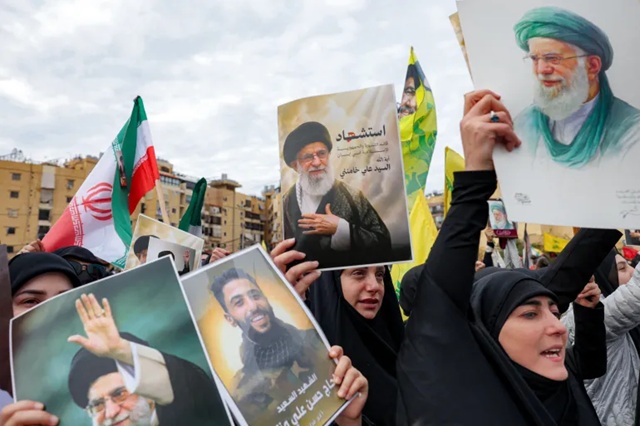
Hezbollah entered the current phase of the regional conflict earlier this week after launching rockets and drones toward Israel. The group said its actions were intended to avenge the death of Iran’s supreme leader, who was reportedly killed in a surprise joint U.S.-Israeli strike on Tehran.
Israel responded with heavy airstrikes across southern Lebanon and increased its military presence near the border. Israeli forces have also ordered residents to evacuate parts of the frontier region where Israeli troops have maintained positions since the 2024 conflict.
In a televised speech on Wednesday, Hezbollah leader Naim Qassem declared that the group would resist what he described as Israeli plans for “occupation and expansion.” He characterized the confrontation as an existential battle for the movement and its supporters.
Hezbollah’s initial attacks earlier in the week were launched from positions north of the Litani River, according to Lebanese President Joseph Aoun. The deployment of the Radwan force southward suggests a deeper level of involvement as the fighting spreads.
The Israeli military said two soldiers were wounded by anti-tank fire in southern Lebanon, the first reported Israeli casualties since the current phase of the regional conflict began. Hezbollah has since announced multiple attacks targeting Israeli tanks and positions, alongside continued rocket and drone launches toward Israel.
An Israeli military spokesperson said forces were being positioned deeper inside Lebanese territory than before to prevent attacks on northern Israeli communities.
The Radwan force, Hezbollah’s elite unit trained for offensive operations, has long been viewed as a key component of the group’s military strategy. Prior to the region-wide conflict that erupted after the Hamas-led attack on Israel in October 2023, Hezbollah had publicly demonstrated the unit’s capabilities, inviting journalists in May 2023 to watch fighters simulate an invasion of Israeli territory.
The 2024 war with Israel dealt a severe blow to Hezbollah, with around 5,000 fighters killed, many of them members of the Radwan force. Despite the truce that followed, Israel has continued near-daily strikes targeting Hezbollah infrastructure, including an attack in December on a site it said was a training facility for Radwan fighters.
Under the ceasefire agreement, the Lebanese army was tasked with confiscating unauthorized weapons south of the Litani River. The military subsequently seized multiple Hezbollah weapons caches in the region. Hezbollah stated at the time that it respected the ceasefire in the southern zone, though it maintained that the agreement did not apply to the rest of Lebanon.