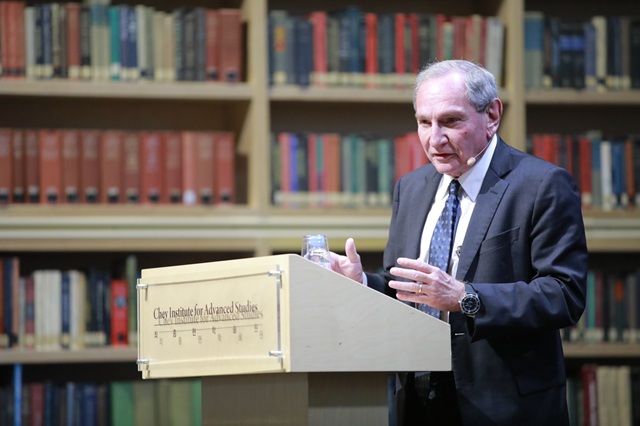
George Friedman is widely recognised as one of the most influential geopolitical analysts of the modern era. As the founder and chairman of Geopolitical Futures, a forecasting organisation devoted to anticipating major global trends, he has spent decades analysing the interplay between geography, economics, and political power. Friedman first gained public prominence through his bestselling books, including The Next 100 Years and The Next Decade, in which he argued that international conflict and cooperation are rooted in the strategic necessities of nations rather than the ideologies they claim to uphold. His forecasts are not based on abstract theories, but on a rigorous understanding of what nations can realistically do, what they must do, and what they cannot do. In his 2026 forecast, Friedman argues that the global system is on the verge of being re-stabilised after a period of disorientation and uncertainty. The central pivot of this new era, he insists, will be the relationship between the United States and China. He believes that this relationship will not spiral into the hostile confrontation many analysts predict; instead, he argues, the two powers will move towards a negotiated accommodation. This will reshape global geopolitics and re-anchor the world in a new structure of power.
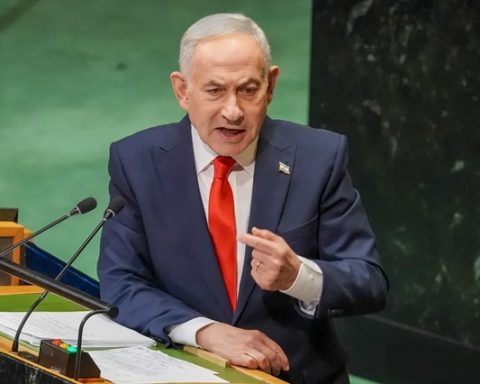
Friedman begins his discussion by reflecting on a contemporary crisis that has captured public attention: the US interest in Greenland. He describes the American concern over Greenland as “completely understandable” in terms of its strategic value and mineral resources. Yet he is deeply troubled by the manner in which the United States has approached the issue. He openly admits that he is “a lot flung on that” and that the desire to “own Greenland now is really at the edge of comprehension.” For Friedman, the problem is not merely the idea of strategic control, but the aggressive tone and the political damage it creates. He points out that “the decision to put tariffs on any European country that opposed the American acquisition of Greenland is beyond understanding.” His argument is not merely moral; it is structural. The United States and Europe are deeply interconnected economically and militarily, and to fracture that relationship through punitive tariffs would be “to break one” and, therefore, to damage the other. Friedman’s concern is that such actions are not merely an isolated diplomatic incident, but a symptom of a larger erosion of political restraint in Washington. He confesses that he has been forced to write an apology to his readers because the action is beyond his understanding. He explains: “My work is based on understanding what nations must do, what they cannot do, what their capabilities are and to forecast based on that. That particular action by Trump went beyond anything I could understand.”
The Greenland controversy is not just an isolated example of political unpredictability; for Friedman, it is a sign of a deeper problem: the public exposure of presidential ego in a way that has not been seen in modern history. He argues that “every president has is an egoomaniac,” but that previous leaders have managed to hide their ego. In contrast, he says, “the degree to which the ego of Trump is revealing itself is extraordinary and not quite understandable.” This admission is revealing because it highlights a tension in Friedman’s methodology. His forecasts rely on rational behaviour driven by national interest and strategic necessity. When a leader behaves in ways that seem to defy rational logic, the forecasting model becomes unstable. He is forced to admit that some actions are simply beyond his ability to predict. But even here, Friedman does not surrender to chaos. He frames the issue as a “fundamental reality” in US–European relations, and he warns that the tariffs could create “a serious gap” that would weaken the essential bond between the United States and its closest allies.
Friedman also stresses the domestic political consequences of such actions. He notes that Trump’s approval rating is declining, and he warns that “most Americans will see this as confirming their suspicions that Donald Trump goes to extremes that they not like.” In this sense, the Greenland episode becomes not just an international crisis but a domestic one, affecting American politics at a time when the country is already divided. He warns that Trump’s aggressive actions, such as those involving immigration enforcement in Minnesota, have alienated some of his base. This internal instability, Friedman suggests, will have consequences for American foreign policy. If Trump is weakened politically, his ability to sustain bold initiatives or risky diplomatic gambits may be reduced. This is not merely an observation about one president; it is a broader statement about the limits of unilateral power in a world where domestic legitimacy is essential to international strength.
After addressing this immediate issue, Friedman shifts the discussion to the central thesis of his forecast: the re-anchoring of global geopolitics through a new US–China relationship. He begins by recalling his previous forecast for 2025, which he titled A World Without an Anchor. He explains that during the Cold War, the world was anchored by a simple structure: each nation was either aligned with the United States, aligned with the Soviet Union, or neutral. These alliances did not change rapidly, and this stability—though dangerous—provided a predictable framework. He argues that the Cold War ended not with the collapse of the Soviet Union, but with the failure of the Russian invasion of Ukraine. The Russian army’s inability to take Kiev and its subsequent failure to occupy Ukraine demonstrated that Russia “could not invade Europe,” which was the fundamental fear of the Cold War. With that fear removed, the US–Russian standoff became obsolete. Russia is “nowhere near as powerful as the United States,” and the world no longer has a clear anchor to define alliances and global strategy. In Friedman’s words, “the world is without an anchor.”
This observation is crucial to understanding the forecast. Without the Cold War structure, nations are forced to re-evaluate their relationships. Europe, for example, had based its relationship with the United States on the Soviet threat. Now, with Russia’s limitations exposed, Europe must reconsider its strategic posture. The result is a world in which “many nations don’t know where we’re going.” This uncertainty is not necessarily a sign of impending chaos, but it does indicate a transitional period. In Friedman’s view, the world will not remain unanchored for long; it will re-anchor itself. And the new anchor will be the relationship between the two great powers that possess both global military reach and massive economic power: the United States and China.
Friedman argues that the US–China relationship is fundamentally different from the US–Soviet relationship of the Cold War. The United States and China have been hostile to each other, but they are also deeply economically entangled. He points out that the Chinese economic surge after 1980 was based on access to the American market and American investment. He explains: “China is was and continues to be very dependent on its access to the United States.” The United States represents 25 per cent of the global economy, and China has built its economic model around trading with the American market. Without that access, Friedman argues, China cannot find a substitute that would sustain its economy. This dependence is now causing severe economic pressure in China, which is facing unemployment, financial instability, and slowing growth. Friedman notes that China’s growth rate has fallen from 15 per cent in its heyday to around 3 per cent today. He concludes that “the Chinese are in serious trouble” and that they need access to the American market.
At the same time, the United States is also affected by the economic consequences of this relationship. The American economy has benefited from cheap Chinese goods, which have provided affordability and lowered prices for consumers. As those goods become more expensive due to tariffs or other disruptions, the US faces rising costs. Friedman argues that the economic problems in the United States are “less than the problems in China,” but they are still significant. In this context, he sees a clear incentive for both countries to seek accommodation. The question is not whether they need each other economically; it is how they can manage a relationship that is simultaneously economically dependent and militarily adversarial.
To explain the dynamics of such a relationship, Friedman draws an analogy with the Arab oil embargo of the 1970s. He describes how Arab nations used economic power to punish the United States for supporting Israel, causing severe economic disruption in the US. This example demonstrates the power of economic weaponisation in a hostile relationship. Friedman argues that if China were to stop exporting goods to the United States during a military conflict, the American economy would be deeply affected. Similarly, China would suffer economically because it relies on the American market. Therefore, he argues, economic dependence makes military hostility unsustainable. This is the key insight behind his forecast: “we cannot be dependent on a country which we may go to war with.”
From this, Friedman concludes that the US and China must develop both economic and military accommodations. He suggests that military accommodation can begin with small confidence-building measures, such as notifying each other about military exercises to reduce the risk of misinterpretation. He explains: “one of the small ways to do it is each side reports to the other when they’re going to have military exercises and then they know this exercise is not the preface to an attack.” This, he argues, is a necessary step toward a broader accommodation that would reduce the risk of escalation and allow both nations to manage their relationship without constant confrontation.
Friedman’s forecast is strikingly optimistic compared with many mainstream analyses. He believes that “there is no reason for the United States and China to be hostile and many reasons not to be.” He notes that there are signs of serious negotiation and changing rhetoric. The Chinese ambassador to the United States has expressed optimism about the future relationship, and Xi Jinping has “stopped saying very bad things about the United States.” Meanwhile, Trump has not been “saying very bad things about China.” Friedman interprets these signals as evidence that both sides are seeking a compromise. He argues that the world could evolve into a system where the two major powers are not hostile and might even collaborate. In his words, the new anchor could be “one in which the two major nations of the world will be in some way if not collaborating not getting in each other’s way but even the possibility of collaboration is possible.” He predicts that “sometime this year there’s a high probability of an accommodation being reached between the two countries because they need it.”
This forecast of accommodation is central to understanding Friedman’s vision of 2026. He believes that the world will not follow the Cold War model of irreconcilable rivalry. Instead, the US and China will reach a pragmatic settlement driven by mutual economic dependence and the recognition that military hostility would be catastrophic for both. He argues that this is not unprecedented. He points out that Britain and France, once fierce rivals and frequent enemies, eventually reached an accommodation based on economic necessity. He explains that the Cold War structure was unique because it was anchored in a clear and irreconcilable ideological conflict. The US–China relationship, by contrast, is rooted in mutual economic interdependence. This difference makes accommodation not only possible but necessary.
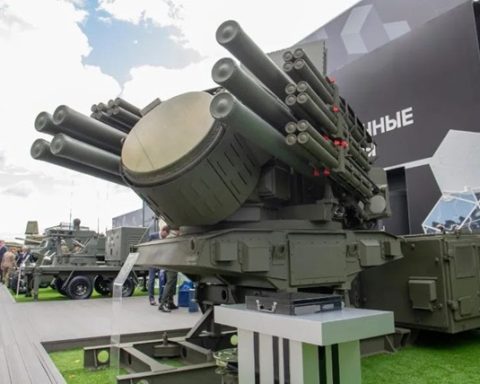
Friedman’s forecast also considers the implications of this new global structure for other major powers, particularly Russia. He argues that Russia is no longer a global power. It is neither a major economic power nor a global military power. While Russia retains the capability to initiate a nuclear war, it is not likely to do so because it would lead to its own destruction. Its conventional military performance in Ukraine has exposed profound limitations. Friedman points out that Russia has lost much of its influence in regions that were once part of its sphere, such as Central Asia and the South Caucasus. He warns that Russia is facing internal instability, including potential rebellions in Chechnya. He concludes that Russia is “not in the league of the United States or China” and therefore cannot be considered a global power. At best, it remains a regional power.
This assessment has major implications for Europe’s security fears. European analysts have warned that Russia could attack the Baltic states, but Friedman argues that such fears are overblown. He points out that the Russian military has proven ineffective, lacking integration of modern technologies and failing to achieve decisive results even in Ukraine. He argues that the idea that Russia could suddenly project power into Lithuania, Latvia, or Estonia is unrealistic. He notes that NATO forces are now stronger in the region, with German armour and a robust Polish military presence. He concludes that the strategic reality is very different from what it was four or five years ago, and that Russia does not possess the capacity to achieve such objectives. Friedman dismisses the idea that Russia could succeed in a smaller country after failing in Ukraine, calling it “not a reality.”
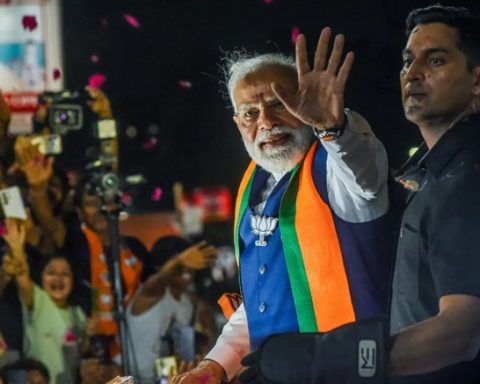
Friedman then turns his attention to India, a nation with enormous economic potential but not yet a global power. He notes that India has been subject to American tariffs and that its future depends on how it fits into the new global order. He argues that India will become a “great economic power” and a significant military force. However, he warns that it is still a “second tier” power because it lacks global reach. He also highlights China’s concern about India’s rise. If the United States and China reach an understanding, Friedman suggests, the US may not break that accommodation by fully supporting India militarily. He acknowledges that the United States has “flirted” with India to make China nervous, but he believes that India’s growth will be driven primarily by its own internal dynamics. He predicts that India will be secure and powerful, but not yet a global power.
Friedman also discusses the near-term implications of tariffs and economic tensions. He believes that American tariffs will be negotiated as 2026 approaches, and that affordability and high prices will become central political issues. He notes that Trump’s popularity is declining and that his domestic political position is weakening. He argues that the Republican Party is facing internal pressure as senators and congressmen “slowly, quietly started edging away from simply supporting him.” He also warns that the Supreme Court may begin to limit Trump’s actions, and that the political struggle within the United States will be a major factor shaping global geopolitics.
In Friedman’s view, the world has been drifting since the end of the Cold War. That drift intensified when Russia’s failure in Ukraine demonstrated that the old binary system of global power was no longer relevant. The result was a period of uncertainty and strategic confusion. Friedman argues that the world cannot remain in that state indefinitely. The world will seek a new anchor. And that anchor, he believes, will be an accommodation between the United States and China.
This accommodation is not merely a diplomatic convenience. It is a strategic necessity born of economic interdependence. Friedman is blunt about the economic reality: “China is was and continues to be very dependent on its access to the United States.” Without access to the American market, China’s entire economic model collapses. Likewise, the United States has become dependent on cheap Chinese goods that make American life more affordable. When those goods become more expensive due to tariffs or disruptions, American consumers feel the impact immediately. The United States cannot afford to sever economic ties with China, just as China cannot afford to lose access to the American market. In Friedman’s words, the two nations “need it.”
The importance of this dependency is highlighted by Friedman’s analysis of how economic power becomes a weapon in hostile relationships. He references the Arab oil embargo of the 1970s, when Arab nations used economic leverage to punish the United States for supporting Israel. The resulting economic crisis in America demonstrated the power of economic dependency. In the same way, a war between the United States and China would be catastrophic because it would cut off the economic lifeline that each country represents to the other. This is the central contradiction of the US–China relationship: they are economically dependent but strategically adversarial. Friedman insists that this contradiction cannot endure. He writes that “we cannot be dependent on a country which we may go to war with.”
To resolve this contradiction, Friedman argues, the United States and China must negotiate both economic and military accommodations. He emphasises that the economic aspect may be easier, because it is largely a matter of negotiation and compromise. The military aspect is more difficult because it involves trust and risk. Yet he suggests that even military accommodation is possible through confidence-building measures such as mutual notification of military exercises. These measures would reduce the risk of accidental escalation and demonstrate that each side is not preparing for immediate conflict. Friedman suggests that such measures are already being discussed, and that the rhetoric on both sides has become less hostile. He notes that Xi has “stopped saying very bad things about the United States,” and Trump has similarly moderated his tone toward China. These shifts in tone, Friedman argues, indicate that both sides are serious about negotiating a new relationship.
Friedman also addresses the question of whether a US–China accommodation would be unprecedented. He argues that it would not be. He compares the potential relationship to the historical accommodation between Britain and France, two great imperial powers that once fought frequent wars but eventually reached a stable equilibrium based on economic necessity. He explains that this kind of accommodation is not easy, but it is possible when both sides recognise that conflict would be mutually destructive. He suggests that the US–China relationship is not like the Cold War because the two countries are not isolated from each other. They are intertwined economically. Therefore, they have more incentive to compromise than the United States and the Soviet Union ever did. This is why he believes that the world is likely to re-anchor itself through a negotiated settlement rather than through a new Cold War.
Friedman’s forecast also contains a clear warning about the limits of American power in the current era. He suggests that the United States is facing structural challenges that constrain its ability to act unilaterally. These include domestic political divisions, economic vulnerability, and the dependence on imported goods. In his view, the United States must reduce its dependence on other nations — particularly those with which it might have conflict. Yet he argues that Trump’s aggressive approach risks undermining even the most vital alliances. The Greenland episode, in Friedman’s view, is emblematic of this problem. The tariffs threatened against European allies demonstrate a willingness to punish even close partners, which threatens the very fabric of the transatlantic relationship. Friedman warns that such actions create “serious strain” and risk destabilising long-term strategic alliances.
This warning is particularly relevant in the context of the broader forecast. Friedman argues that the world is being re-anchored not by a new alliance system but by a new balance of power. The United States and China are the only countries with both global military reach and massive economies. Russia, in contrast, is a regional power at best. This means that the global system will increasingly be defined by the relationship between Washington and Beijing, rather than by the old US–Russia confrontation. Friedman’s forecast suggests that other nations will have to adapt to this new structure. Europe, for example, must redefine its relationship with the United States in a world where Russia is no longer the central threat. India must decide how it fits into a world where the US–China relationship is stabilised. Russia must come to terms with its reduced status and the limits of its military power.
In this context, Friedman’s assessment of Russia is particularly striking. He argues that Russia is not a global power and that it has “profound military limits.” He notes that Russia’s conventional military capability has been exposed by its failures in Ukraine. He also highlights Russia’s economic weakness and internal instability. He points out that Russia has lost influence in its former sphere of influence, including Central Asia and the South Caucasus. He argues that Russia’s ability to project power is limited and that it cannot match the global reach of the United States or China. Friedman warns that Russia’s future is uncertain and that its ability to shape global events is much weaker than many analysts assume.
This assessment has major implications for European security. European generals have warned that Russia might attack the Baltic states, but Friedman dismisses this as unlikely. He argues that Russia’s military performance in Ukraine demonstrates that it cannot project power effectively. He notes that Russia is drafting older men and recruiting mercenaries, which indicates that its manpower is strained. He also points out that NATO has strengthened its forces in the Baltic region, including German armour and a strong Polish presence. He argues that any Russian attack would trigger massive NATO involvement and would be met with strong resistance. Friedman concludes that the strategic reality is very different from the past and that Russia does not possess the capacity to achieve such objectives.

Friedman’s forecast also highlights the potential rise of India as a major power. He argues that India has enormous economic potential and is likely to become a significant military power. However, he emphasises that India is not yet a global power because it lacks global reach. He notes that China is nervous about India’s rise, and that the United States may be cautious about fully arming India if it reaches an understanding with China. He predicts that India will become a powerful regional actor and a major economic force, but that it will remain a second-tier power for the foreseeable future. This assessment is consistent with Friedman’s broader thesis: the global system will be defined by the US–China relationship, and other nations will have to adapt to that reality.
As the forecast moves toward its conclusion, Friedman returns to the domestic political dimension of the United States. He argues that the internal political struggle in America will shape its foreign policy. He notes that Trump’s popularity is declining and that the Republican Party is facing internal pressure. He also warns that the Supreme Court may begin to limit Trump’s actions, which could further weaken his ability to pursue aggressive policies. He suggests that the year 2026 will be marked by “more storm as resistance to Trump rises.” He believes that the United States will face significant internal political turbulence, and that this turbulence will influence its global posture.
This is important because it highlights the limits of American unilateralism. Friedman argues that even a powerful nation cannot ignore domestic legitimacy. If a leader is weakened at home, his ability to act abroad is constrained. In this sense, the internal political dynamics of the United States are not separate from global geopolitics; they are central to it. The forecast implies that the US–China accommodation will not only be driven by strategic necessity but also by domestic political pressures in both countries. Both nations will seek stability in order to manage their internal challenges. This is why Friedman believes that a negotiated settlement is likely.