As India prepares for its first census in over a decade — and its first in the era of drone technology — officials face one of the most daunting challenges of all: how to count citizens who do not want to be found.
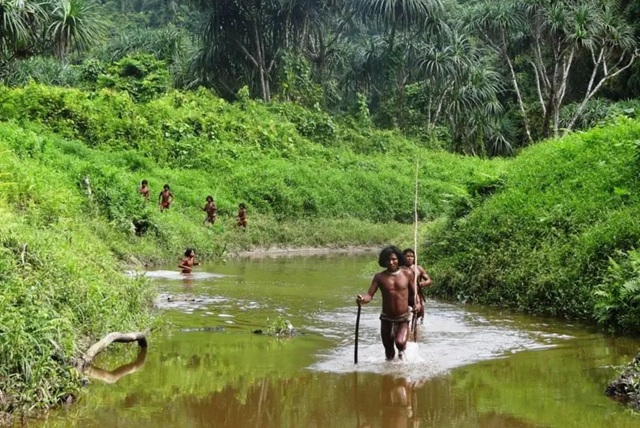
According to a recent report by The Times UK, the presence of fiercely isolated tribes such as the Sentinelese of North Sentinel Island and the Shompen of Great Nicobar Island presents both logistical and ethical dilemmas for enumerators. These communities, some of the most secluded on the planet, have resisted contact with outsiders for centuries — often violently.
The Sentinelese tribe, in particular, has a well-documented history of hostility toward intruders. In one notorious incident, two Indian fishermen were killed after their boat accidentally drifted ashore. Following the devastating 2004 Indian Ocean tsunami, a Sentinelese man was famously photographed aiming a bow and arrow at a navy helicopter attempting a welfare check.
Despite such incidents, the Indian government continues to uphold a strict no-contact policy. A 2014 directive officially forbade any approach toward North Sentinel Island, recognizing the extreme vulnerability of the tribe to modern diseases and the risk of cultural destruction. The upcoming 2027 census must now reckon with how — or whether — to account for the Sentinelese population without direct contact.
Dr. M. Sasikumar, joint director of the Anthropological Survey of India, told The Times UK that while speculative ideas such as drone mapping have been floated, “it is not clear if this will give an accurate estimate or whether it is even ethical to conduct such an exercise.” During the last census in 2011, estimates of the Sentinelese population were based on sightings from boats kept at a safe distance — a method which suggested the presence of approximately 15 individuals.
Similarly, the Shompen people of Great Nicobar Island, a nomadic hunter-gatherer group believed to reside deep within dense jungle terrain, have posed another major challenge. In 2011, they were only partially counted, with current estimates placing their population at 229.
Efforts to modernize the island — including controversial plans for a new airport and seaport — have met with international backlash. Dozens of genocide experts penned an open letter to the Indian president, calling the project a “death sentence” for the Shompen, who remain largely uncontacted and lack immunity to common illnesses.
“Any contact with such peoples, who lack immunity to common outside diseases, could well be deadly for them,” said Jonathan Mazower, communications director at Survival International, a group advocating for the rights of uncontacted tribes.
India’s remote tribes have also drawn global attention for other reasons. In 2018, American missionary John Allen Chau was killed by the Sentinelese while attempting to convert them to Christianity. Chau had made multiple attempts to reach the tribe, even bringing gifts like Diet Coke and a Bible, before he was reportedly shot with arrows and buried by the tribespeople.
The upcoming census — the first since 2011 — is expected to integrate advanced technology, but when it comes to these remote and reclusive groups, officials face an unprecedented mix of danger, uncertainty, and moral responsibility.
For now, it remains unclear how — or if — the government will attempt to count India’s most isolated people. What is certain, as The Times UK rightly highlights, is that no headcount can come at the cost of a community’s survival.