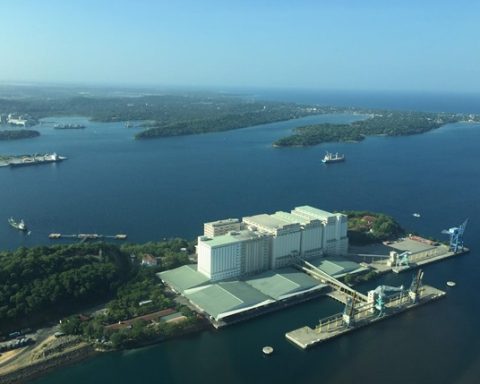
India is planning an ambitious “data city” designed to accelerate its push into artificial intelligence and narrow the technological gap with the United States and China, according to officials leading the initiative. The project aims to transform the coastal city of Visakhapatnam into a major digital infrastructure hub powering the country’s next phase of economic growth.
Nara Lokesh, information technology minister of Andhra Pradesh, said the government is embracing what he described as an unavoidable AI revolution and intends to build an ecosystem capable of supporting data centers, advanced computing, and manufacturing within a 100-kilometer radius. The city, long known more for its port and cricket stadium than high technology, is now being marketed as a landing point for submarine internet cables linking India to Singapore and other global data routes.
Lokesh said the state has already secured investment agreements worth about $175 billion across hundreds of projects. Among them is a reported $15 billion commitment from Google to establish its largest artificial intelligence infrastructure hub outside the United States. Another major initiative involves an $11 billion joint venture between Reliance Industries, Brookfield Corporation, and Digital Realty to develop a large-scale AI data center in the same region.
The project forms part of a broader strategy aligned with Prime Minister Narendra Modi, who is hosting an international AI summit in New Delhi aimed at positioning India as a global technology leader. Lokesh, the son of Chief Minister N. Chandrababu Naidu, said the initiative draws inspiration from earlier efforts that helped transform Hyderabad into a major technology center often dubbed “Cyberabad.”
India currently ranks third in global AI capability metrics compiled by Stanford University’s Institute for Human-Centered AI, reflecting strong performance in areas such as patents and private funding. With more than a billion internet users, the country has become an attractive destination for global technology firms seeking access to one of the world’s largest digital markets.
Technology companies are ramping up investments accordingly. Microsoft announced plans to invest $17.5 billion to expand India’s AI infrastructure, with CEO Satya Nadella describing it as the company’s largest investment in Asia.
Despite the surge of funding, critics argue that India still trails global leaders in high-end computing capacity and commercialization of advanced AI, raising questions about whether large-scale data centers will translate into widespread employment. Lokesh dismissed those concerns, saying every industrial revolution has ultimately generated more jobs than it displaced, particularly in countries willing to adapt quickly.
The state government says it has planned for the immense electricity and water requirements of the energy-intensive facilities, including using surplus monsoon water flowing into the Bay of Bengal for cooling systems. Andhra Pradesh is targeting six gigawatts of data center capacity and has also secured preliminary approval for six nuclear power plants at Kovvada to support long-term energy demand.
Framing the effort as a race defined by speed and scale, Lokesh said the state intends to execute the projects at an unprecedented pace, betting that rapid infrastructure development can place India among the world’s leading AI powers in the coming decade.