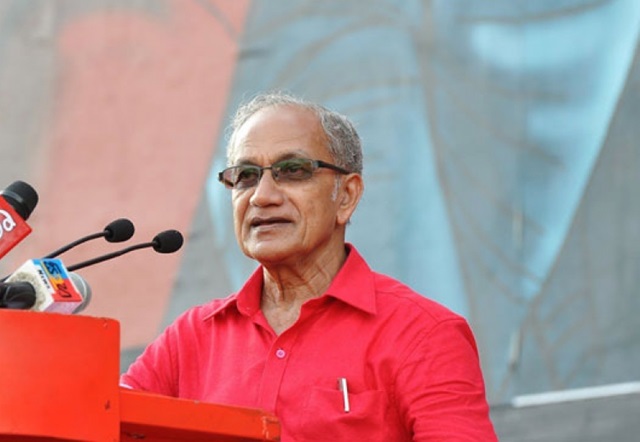
During the suppression of the JVP under the Premadasa government, most of the JVP politburo members were killed. The sole survivor of this onslaught was Somawansa Amarasinghe, who fled Sri Lanka. He initially sought refuge in India, later moved to Thailand, and eventually settled in Europe, where he was granted political asylum. From exile, Somawansa played a crucial role in reviving the JVP, reconnecting with regional leaders in hiding, and transforming the organization into a functioning political party.
In 2001, Somawansa returned to Sri Lanka after years in exile. Addressing an election rally, he publicly acknowledged that his life had been saved by India. Indian media reported excerpts from his speech, in which he expressed gratitude for the support he received during his time of need. The speech included the following remarks:
“A prominent Sri Lankan Marxist leader, who returned to the island ending a 12-year self-imposed exile in Europe, has said that India helped him flee a government crackdown on his party’s second insurrection against the state in 1987-89.
Somawansa Amarasinghe, the sole surviving member of the original politburo of the Janatha Vimukti Peramuna, or People’s Liberation Front, thanked India and former Prime Minister V.P. Singh for helping him survive the crackdown during an era that saw widespread murders in Sri Lanka.
Addressing his first public meeting in Kalutara, outside Colombo, on Friday night—a day after his arrival—the JVP leader showed signs that the party had shed its well-known anti-India stance of the past.
He paid tribute to the people of India, V.P. Singh, and Indian officials who helped him escape. His gratitude extended to many countries that provided him refuge, including Britain, France, and Italy, according to the Island Daily on Saturday. Amarasinghe, 58, was allowed to return to Sri Lanka by the People’s Alliance government to campaign for the JVP ahead of the December 5 parliamentary election. He had fled the country after the United National Party government launched a crackdown on suspected JVP activists nationwide to suppress the revolt.” — Times of India, November 24, 2001
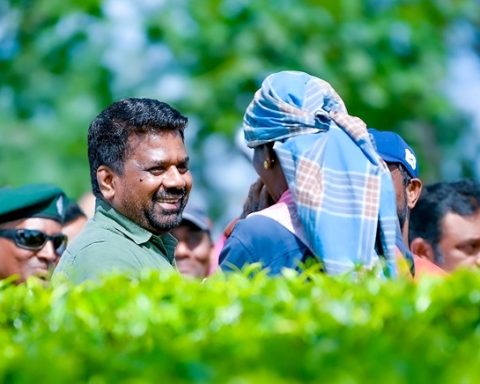
At the time of Somawansa’s statement, Anura Kumara Dissanayake, the current President of Sri Lanka, along with several cabinet ministers, were parliamentarians of the JVP. Anura eventually succeeded Somawansa as the leader of the JVP, continuing to build on the party’s legacy.
In January 2024, President Anura Kumara visited India at the invitation of Indian Prime Minister Narendra Modi. This visit marks a significant milestone, as Anura’s political journey and eventual presidency were indirectly influenced by India’s historical role in supporting Somawansa’s survival.
Somawansa’s escape and efforts to rebuild the JVP were pivotal in shaping the party’s future, ultimately paving the way for Anura Kumara’s rise to the presidency. It is notable that Somawansa’s escape to India occurred in November 1989, while Anura’s visit as President also coincides with November. This upcoming visit to India offers an opportunity for the President to reflect on and possibly acknowledge the historical connection between the JVP’s resurgence and India’s role during a critical period.
It is uncertain how grateful Anura is to India for protecting his predecessor, Somawansa, who played a vital role in reviving the JVP. Recently, Sri Lankan President Ranil Wickremesinghe visited India and suggested that Anura should implement the agreements signed with Prime Minister Modi. Anura’s response to this suggestion will likely be revealed during his visit to Delhi.