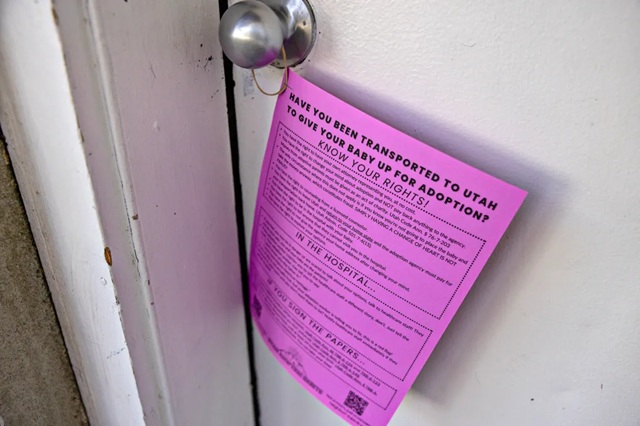
A controversial and increasingly scrutinized practice in Utah is drawing attention from across the U.S. and beyond. The state, known for its relaxed laws surrounding private adoption, has become a destination for desperate women seeking to place their children for adoption. These women, many from states with strict abortion laws, are often lured by promises of financial aid, housing, and medical care. However, what they find when they arrive is a troubling and controlling system that has earned Utah the grim nickname of a “human marketplace” for babies.
An investigation by The Times UK reveals how adoption agencies in Utah, including the well-known “A Guardian Angel,” exploit the relaxed adoption laws to facilitate rapid placements, often at the expense of birth mothers. These agencies attract women from across the country, particularly from states like Mississippi, where abortion access has been severely restricted. The mothers are often promised assistance with living expenses, medical bills, and even cash incentives, sometimes amounting to thousands of dollars. However, for many of these women, the reality falls far short of their expectations.
One woman, referred to as Janie (not her real name), described her experience with one of these agencies. At the time, she was living in Mississippi, where abortion had been outlawed after six weeks of pregnancy. Feeling that she had no other option, Janie turned to an adoption agency after researching online. She soon found herself on a plane to Salt Lake City, offered an apartment and medical care, with the promise of a $6,000 “post-placement bonus.” What she didn’t realize was that the decision to give up her baby would become irreversible within 24 hours of birth—an unsettling reality that she would come to regret.
Janie, who had been living in an abusive relationship, said she felt pressured by the agency, which told her that she could change her mind but would face financial penalties if she did. Once in Utah, she was kept in a controlled environment, isolated from the outside world, and given little room to reconsider her decision. The agency set a 24-hour deadline for her to choose an adoptive family, making the process feel rushed and emotionally overwhelming.
Experts, including family lawyer Wesley Hutchins, argue that practices like these essentially amount to coercion, as women are often vulnerable, without stable housing or financial resources. “What we are seeing in Utah is not far removed from child trafficking,” said Hutchins. “Agencies use financial incentives to persuade women to give up their children quickly, and once the adoption is finalized, the birth mother’s rights are practically non-existent.”
Utah’s adoption laws are among the most permissive in the country. While some states allow a period of up to 91 days for birth mothers to change their minds, Utah permits the irrevocable signing away of parental rights as soon as 24 hours after birth. This swift legal process benefits both adoptive parents—who can pay anywhere between $20,000 to $80,000 for expedited adoptions—and agencies that are able to quickly match children with waiting families. However, this also leaves birth mothers like Janie with little recourse if they later regret their decision.
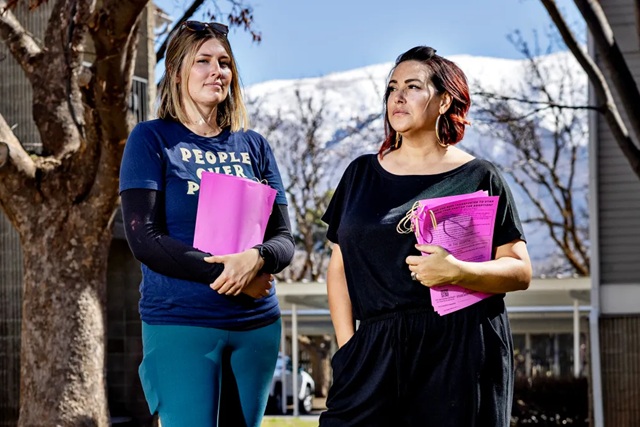
The Times UK spoke with advocates like Ashley Mitchell, co-founder of Utah Adoption Rights, who are working to expose the darker side of Utah’s adoption system. Mitchell, a former birth mother herself, said many women feel trapped once they arrive in Utah, with no ability to access the emotional support they need. “They market the process like a vacation,” she said. “But the women who come here are often fleeing from difficult circumstances, and they are given no room to make informed decisions.”
The influence of the anti-abortion movement has further fueled this market. Since the Supreme Court’s overturning of Roe v. Wade, more agencies have ramped up efforts to market adoption as an alternative to abortion, often targeting women in states with few resources for those seeking to terminate a pregnancy. However, the increasing commodification of children in Utah’s adoption system has drawn harsh criticism from adoption rights advocates, who argue that it prioritizes the needs of adoptive parents over the well-being of birth mothers.
Janie, after experiencing the isolating and coercive environment in Utah, returned to Mississippi, where she remains homeless and unemployed. She still plans to place her baby for adoption, but not through the agency that had pressured her into an irreversible decision. “I love this baby. I wish I could care for her, but I’m just not in a position to do so. It’s complicated,” she shared, highlighting the emotional turmoil that comes with these types of high-pressure adoptions.
Meanwhile, Utah’s adoption agencies continue to thrive, and the state remains a hotspot for adoptive parents seeking to bypass more stringent laws in other states. But as The Times UK reports, this booming industry is increasingly under scrutiny. Advocacy groups are pushing for legislative reforms that would grant birth mothers more time to change their minds and ensure more oversight in the adoption process to protect the vulnerable women involved.
The practice of rapid adoptions in Utah may remain a legal gray area, but the human cost of these transactions is undeniable. Advocates like Mitchell and Ranyard hope that their efforts will raise awareness about the realities of adoption in Utah, and ultimately lead to a more ethical and transparent system.