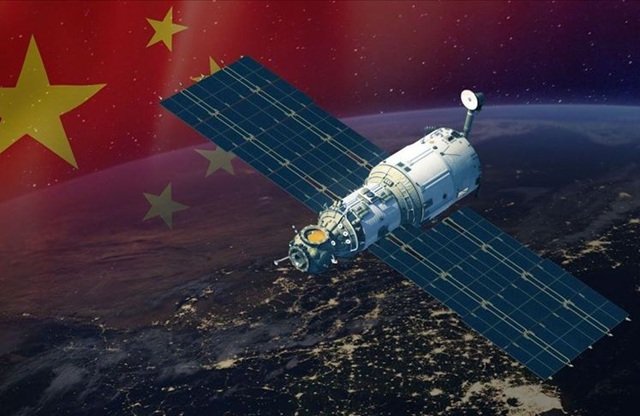
Iran secretly obtained access to a Chinese-built spy satellite that was allegedly used to monitor United States military installations across the Middle East during recent regional hostilities, according to reporting from Times UK citing Financial Times investigations. The development, if confirmed, would mark a significant escalation in Iran’s intelligence capabilities and deepen concerns over the militarisation of commercial space infrastructure.
The satellite, identified in the report as TEE-01B, was reportedly built and launched by a Chinese company, Earth Eye Co, before being acquired by Iran’s Islamic Revolutionary Guard Corps Aerospace Force in late 2024. According to leaked Iranian military documents cited by the Financial Times and referenced in Times UK reporting, the system was used to gather high-resolution imagery and coordinate surveillance of sensitive US military facilities in the region.
Iran’s elite military unit, the Islamic Revolutionary Guard Corps, is alleged to have directed the satellite to track multiple American positions across the Middle East, including air bases in Saudi Arabia, Jordan, Iraq, and naval facilities near Bahrain. The intelligence gathered reportedly included time-stamped coordinates and orbital imaging data collected in the weeks surrounding reported drone and missile activity in the region.
Among the sites allegedly monitored was Prince Sultan Air Base in Saudi Arabia, where US forces are stationed. The report claims satellite imagery was captured on multiple consecutive days in March, coinciding with regional escalations. Other facilities reportedly under surveillance included Muwaffaq Salti Air Base in Jordan, areas near the US Fifth Fleet headquarters in Bahrain, and locations close to Erbil airport in Iraq.
The Financial Times report, as cited by Times UK, also suggests that Iran’s access extended beyond the satellite itself, including the use of commercial ground stations operated by a Beijing-based provider offering satellite control and data services across multiple continents. This arrangement, if accurate, would highlight how dual-use commercial space infrastructure could be leveraged for military intelligence gathering.
While US officials and relevant companies have not publicly confirmed the allegations, the report has raised concerns in Western security circles about the expanding role of commercial satellite networks in modern warfare and intelligence operations. Analysts say the ability to access near-real-time orbital imagery could significantly enhance targeting capabilities and situational awareness during conflicts.
The claims, if verified, would underscore growing geopolitical tensions involving space-based surveillance technologies and the increasing intersection between private space firms and state military operations. For now, however, the reports remain unconfirmed by US, Chinese, and Iranian authorities, and further investigation is expected as governments assess the implications of the alleged surveillance network.