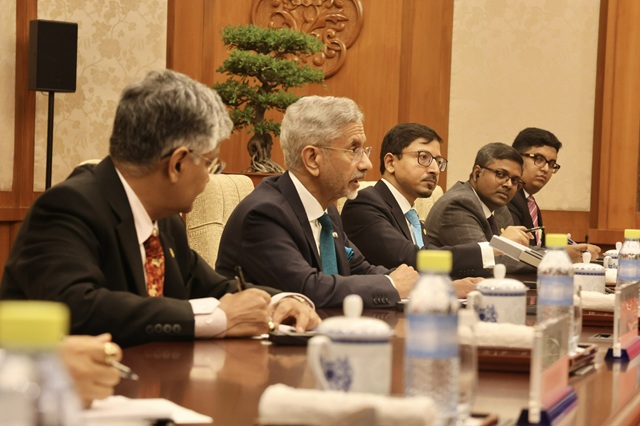
Indian External Affairs Minister Subrahmanyam Jaishankar’s visit to China—the first in five years—has drawn significant attention as a potential turning point in China-India relations. At the invitation of Chinese Foreign Minister Wang Yi, Jaishankar is attending the Meeting of the Council of Foreign Ministers of the Shanghai Cooperation Organisation (SCO) in Tianjin and is also holding bilateral talks aimed at repairing long-strained ties between the two Asian powers.
According to a recent editorial published by Global Times, a Beijing-based newspaper known for reflecting official Chinese viewpoints, the visit symbolizes a gradual thaw in relations and a mutual recognition that improved bilateral ties are both necessary and beneficial. The editorial described the current moment as a key opportunity for China and India to rebuild strategic trust and resume high-level diplomatic mechanisms after years of tension, particularly over their contested border.
During meetings in Beijing, Chinese Vice President Han Zheng stressed that China and India, as major developing nations and important players in the Global South, should be partners in each other’s success. He referred to the concept of a “Dragon-Elephant Tango,” symbolizing the potential for harmonious cooperation. Foreign Minister Wang Yi echoed this sentiment, calling for a relationship based on mutual trust, not suspicion, and cooperation over rivalry.
Jaishankar, in a statement released by India’s Ministry of External Affairs, said that India-China relations have been steadily improving and noted that “continued normalization of our ties can produce mutually beneficial outcomes.” His remarks have been interpreted as a more pragmatic and positive shift in India’s tone, which Global Times described as a reflection of growing consensus on the need for stable ties.
The editorial acknowledged that this is Jaishankar’s first visit to China in five years—a period marked by serious diplomatic strain, most notably following the 2020 Galwan Valley clash. It argued that this long gap underscores the “abnormal state” of bilateral diplomacy and the significance of renewed engagement.
Global Times also pointed to lingering challenges, including unresolved border disputes and political mistrust, partly fueled by India’s past engagements with Tibetan exile figures and the strategic influence of external powers like the United States. The editorial warned that outside actors have sought to exploit rifts between China and India, making the restoration of direct and sustained dialogue all the more urgent.
In proposing a path forward, the article called for the creation of resilient strategic trust based on mutual respect for core interests. It advocated for tangible steps such as restoring direct flights, reviving academic exchanges, and strengthening border management mechanisms. Furthermore, it highlighted the importance of multilateral cooperation through platforms like the SCO and BRICS, where China and India can align on global issues and support a more balanced world order.
While Global Times noted that strategic trust cannot be rebuilt overnight, it emphasized that enduring political will and pragmatic dialogue are essential. The newspaper concluded that the current window for renewed China-India dialogue offers a rare chance to reset relations, arguing that long-term cooperation between the two countries will ultimately outweigh their differences.
As two of Asia’s most influential nations, China and India now stand at a crossroads. Whether they choose to build on this diplomatic opening could shape not only their bilateral future but also the stability of the broader region.