In a quiet basement café beneath a West End church in London, Claire and Sebastien Lai sit on child-sized chairs around a small table, speaking softly but with urgency about a father they have not seen in years. Their father, Jimmy Lai, the Hong Kong media tycoon and democracy campaigner, is now one of the world’s most prominent political prisoners. The family’s story, as reported by the Times UK, has become a focal point in the wider struggle over Hong Kong’s political future and China’s tightening control.
Jimmy Lai, 78, has been held since December 2020 and is currently serving what his supporters describe as a politically motivated 20-year sentence under Hong Kong’s national security law. He has spent more than 1,900 days in solitary confinement at Stanley Prison, a maximum-security facility on Hong Kong Island. His conviction includes charges such as collusion with foreign forces and publishing “seditious” material through his now-closed pro-democracy newspaper Apple Daily.
For his children, the case has moved beyond politics into something deeply personal and increasingly urgent. “I used to say it was a life sentence, but then I started calling it a death sentence,” Claire Lai says, struggling to hold back tears as she describes her father’s deteriorating condition. The siblings say he has lost significant weight, suffers from untreated or inadequately treated diabetes, and is denied consistent access to medication. They fear that the conditions of his imprisonment are slowly destroying him.
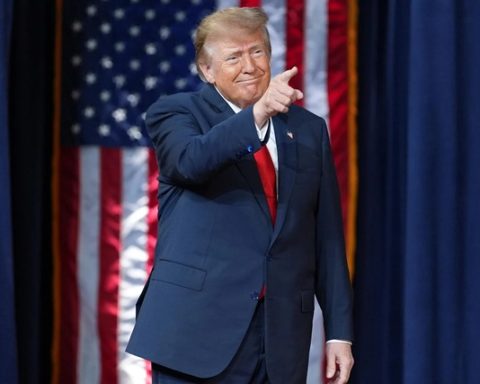
Their hope now rests partly on international diplomacy. They are watching closely ahead of a planned meeting between Donald Trump and Chinese President Xi Jinping, believing the case could be raised at the highest level. “I hope he raises it and tells President Xi it is not in his interest to keep my father locked up,” Sebastien Lai says, noting that there is bipartisan support for his father in the United States. British officials, including Prime Minister Keir Starmer, have also raised the case, though the family believes diplomatic efforts have often prioritised trade relations.
At the heart of their appeal are a series of letters written by Jimmy Lai from his prison cell. Published publicly for the first time, the correspondence reveals a man reflecting on faith, family, and suffering with a striking tone of spiritual resilience. “You are a real angel, so don’t worry about anything,” one letter reads to his daughter. “Through suffering I realize that living a life you won’t stake your life for is not worth living for.”
Born in Guangzhou in 1947, Lai fled mainland China as a child and smuggled himself into Hong Kong at the age of 12. He worked in a textile factory, lost part of a finger and hearing in one ear, and eventually built a business empire that made him a billionaire media mogul. His newspapers Apple Daily and Next Magazine became rare outspoken voices in support of Hong Kong’s pro-democracy movement, particularly after the 1989 Tiananmen Square crackdown, which he described as politically transformative.
That activism came at a cost. Over the years, Lai and his family were subject to intimidation, surveillance, and violent threats, including firebomb attacks on his home and a gruesome incident in which animal remains were left at his door. Despite this, his children recall a father who tried to maintain normal family life, returning home for dinner and engaging in everyday routines even amid political tension.
Following Beijing’s imposition of the national security law in 2020, Lai was arrested alongside executives from his media companies. Apple Daily was later shut down, marking the end of one of Hong Kong’s last major pro-democracy newspapers. Authorities argue that Lai’s activities endangered national security, while supporters say he has been punished for peaceful political expression.
The case has also become a broader symbol in international debate over press freedom and China’s governance of Hong Kong. As the Times UK has reported, Lai’s imprisonment sits at the intersection of law, geopolitics, and media suppression, raising difficult questions for Western governments balancing human rights concerns with economic ties to Beijing.
Within his prison letters, Lai often returns to themes of faith and endurance. A devout Catholic, he writes of prayer, reading theology, and drawing sketches, many of which depict religious imagery. “When I pray I come to your turn, I automatically smile,” one letter says. “Your image appears in my mind like an angel. I love you.” His children say he is permitted only a limited number of photographs each month, most of which feature his young granddaughter, whom he has never met in person.
For Claire and Sebastien, the emotional toll is compounded by the legal risks they face themselves. Under Hong Kong’s national security law, even advocacy abroad can potentially be prosecuted, with penalties that include life imprisonment. The family has therefore built their campaign from London and Washington, carefully balancing visibility with caution.
The Hong Kong government maintains that Lai has received a fair trial under the law and that the judiciary operates independently. However, international human rights organisations have criticised the use of the national security framework as a tool to suppress dissent, particularly following the 2019 democracy protests, when thousands were arrested.
Despite these tensions, Lai’s children say their father remains unbroken in spirit. “Fear is the cheapest weapon they have against us,” he once wrote in a letter that has since become central to his public image. “It costs nothing. If it is the right thing to do, you just have to keep going for it.”
As they speak in London, Claire and Sebastien grapple with the possibility that their father may never leave prison. Yet they also insist that his legacy is already fixed. To them, he is both a political symbol and a deeply human figure: a father who writes about cooking fish, a prisoner who sketches in his cell, and a man who continues to believe that suffering has meaning.
Whether international diplomacy will alter his fate remains uncertain. But as pressure builds and his letters circulate more widely, Jimmy Lai’s voice from prison is becoming harder to ignore.