As 2026 begins, the Middle East faces a critical juncture. Analysts warn that the region could either move toward fragile stability or descend once again into widespread conflict. Persistent crises in Gaza, Lebanon, Libya, Sudan, and Yemen, combined with political instability in Iraq, Syria, and Yemen, remain unresolved, ensuring that diplomats and security planners will need to maintain constant engagement throughout the year.
The Trump administration faces a strategic dilemma. While publicly signaling a desire to pivot U.S. focus toward East Asia and the Western Hemisphere, Washington is deeply entangled as a guarantor of ceasefires and a mediator of regional conflicts. The United States continues to play a central role in Lebanon and Gaza, where it monitors ceasefire arrangements and security coordination, and maintains intelligence-sharing mechanisms with Israel and Syria. Experts warn that these responsibilities limit the Trump team’s ability to divert attention elsewhere, leaving the U.S. in a near-permanent position of regional oversight.
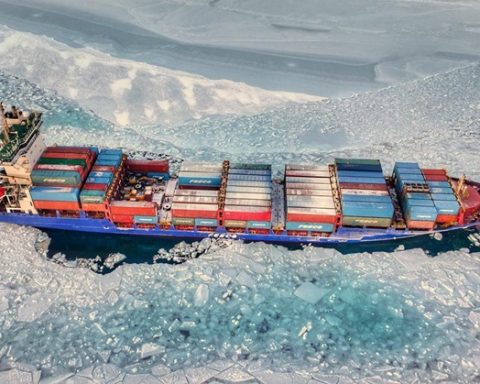
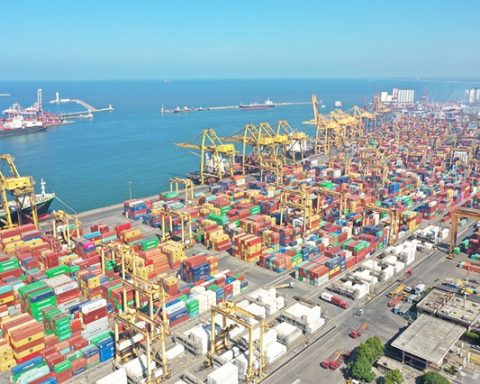
A major source of tension is the ongoing Gaza conflict. Despite a ceasefire brokered in October 2025, Hamas’s refusal to disarm under the Trump peace plan and Israel’s delay in further withdrawals make a resumption of hostilities highly probable. Any flare-up in Gaza could trigger retaliatory strikes by Iran-backed Houthis against commercial shipping in the Red Sea, creating ripple effects across the Gulf and beyond. Meanwhile, Israel is expected to continue its near-daily strikes on Hezbollah positions in Lebanon, aiming to pressure the Beirut government into disarming the group’s militia.
Security agreements between Israel and Syria offer a limited counterweight. In December 2025, a joint mechanism was established to coordinate intelligence and de-escalate potential incidents, signaling modest progress in curbing cross-border tensions. Yet these pacts are unlikely to alter Israel’s broader reliance on military power, particularly in response to threats perceived from Hamas, Hezbollah, or Iran. Some Arab leaders increasingly view Israel’s actions, including the bombing of a Hamas compound in Qatar in September 2025, as a greater threat than Iran, further complicating regional dynamics.
Failed states remain a persistent concern. Libya, Yemen, and Sudan continue to experience competing power centers and internal strife. In Sudan, fighting between the Sudan Armed Forces and the Rapid Support Forces militia shows no sign of abating, with foreign involvement from Egypt, Saudi Arabia, the UAE, and Russia prolonging the conflict. Yemen faces potential fragmentation as southern factions, opposed to the Houthi-controlled north, contest for autonomy or outright secession, drawing regional backers into a limited but dangerous confrontation.
Iran presents a paradoxical element in regional stability. While a potential flashpoint for conflict with the U.S. and Israel, Tehran has also become the focal point of widespread domestic protests that began in late December 2025. Initially sparked by economic grievances, these demonstrations quickly evolved into a broader call for regime change. If the uprising succeeds in displacing the current leadership, it could dramatically reshape the balance of power in the Middle East. Many Arab states, the United States, and Israel would view such a shift as a stabilizing development, depriving Iran’s Axis of Resistance of critical regional leverage. Yet the uncertainty surrounding a new regime carries risks of further instability, particularly if a power vacuum emerges.
The Trump administration remains committed to maintaining influence in the region while advancing economic integration. Initiatives focus on linking Middle Eastern states, especially wealthy Gulf nations like Saudi Arabia, Qatar, and the UAE, to U.S. industries, including artificial intelligence, rare-earth mineral processing, nuclear energy, and defense technologies. However, success in economic diplomacy is contingent on a reduction in military tensions—a goal complicated by unresolved conflicts and ongoing hostilities.
Iran’s nuclear program continues to be a central concern. Trump has signaled his willingness to approve Israeli military strikes should Iran continue uranium enrichment or expand its ballistic missile capabilities. Tehran, for its part, has halted cooperation with International Atomic Energy Agency monitors in key facilities, including those damaged during the June Twelve-Day War. The combination of Iran’s nuclear ambitions and its domestic unrest could create both the greatest threat and the most significant opportunity for regional stability in 2026.
In addition to Iran, regional rivalries and alliances will continue to shape outcomes. Saudi Arabia and the UAE are actively managing conflicts in Yemen and beyond, while Israel balances military aggression with limited security pacts. Syria, Lebanon, and Iraq remain caught between U.S. diplomacy, Iranian influence, and internal political fragility. Each unresolved crisis holds the potential to reignite fighting on a larger scale, threatening to engulf the entire region.
Experts caution that 2026 will not allow the United States to fully “pivot” from the Middle East. As guarantor of ceasefires, mediator of disputes, and protector of strategic Gulf allies, Washington remains an inextricable actor. Even limited successes, such as the Syria-Israel mechanism, are overshadowed by ongoing tensions in Gaza, Iran, and Yemen. The region’s future will hinge on a complex interplay of domestic uprisings, proxy conflicts, and U.S. strategic choices, making 2026 a year where peace and war hang in a delicate balance.