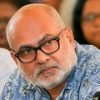

The National People’s Power (NPP) government is under intense public scrutiny. The recent appointment of retired Commodore M.B.N.A. Premarathne as new Commissioner General of Exercise drew heavy public condemnation as the media revealed his wife, senior Professor Wasantha Subasinghe, who had been on the NPP National List at the last parliamentary election held in November 2024, recently received appointment as Vice Chancellor of the Gampaha Wickramarachchi University of Indigenous Medicine. Social media erupted with adverse comments on the appointments.
Premarathne succeeded U.L. Udaya Kumara Perera, a Special Grade Officer of the Inland Revenue Service, who retired on 10 July, 2025, having reached the mandatory retirement age of 60. The Excise Department had been placed under a retired military officer.
The public questioned the appointments against the backdrop of severe NPP criticism over the years of nepotism in public sector appointments. She was one of the 13 nominees not lucky enough to get a National List slot. The Parliament consists of 29 nominated and 196 elected members.
The following were the NPP National List nominees: Bimal Niroshan Rathnayake , Dr. Anura Karunathilake, Prof. Upali Pannilage, Eranga Udesh Weerarathna, Aruna Jayasekara, Dr. Harshana Sooriyapperuma, Janitha Ruwan Kodithuwakku, Punya Sri Kumara Jayakody, Ramalingam Chandrasekar, Dr. Najith Indika, Sugath Thilakaratne Lakmali Kanchana Hemachandra, Sunil Kumara Gamage, Gamini Rathnayake, Prof. Ruwan Chaminda Ranasinghe, Sugath Wasantha de Silva Abubakar Adambawa (Digamadulla District candidate), and Ranthnayake Hettige Upali Samarasinghe (Vanni District candidate).
Perhaps Prof. Subasinghe could have been appointed to Parliament through the National List if not for the controversial NPP decision to choose two defeated candidates, namely Abubakar Adambawa and Ranthnayake Hettige Upali Samarasinghe.
The NPP appeared to have conveniently forgotten its own high profile campaign, not only against nepotism in public sector appointments but favoured treatment to retired armed forces officers.
The Opposition is likely to press the NPP government over Premarathne’s appointment. The Excise Department is one of the three main revenue earners for the government. The other institutions are the Inland Revenue and the Sri Lanka Customs. Over the years, its reputation has been badly tarnished by corruption and manipulation at the highest level. During the Wickremesinghe-Rajapaksa administration (July 2022-Sept 2024), the Excise Department received the wrath of the Opposition, including the NPP, for backing Ranil Wickremesinghe’s abortive presidential election bid.
The Parliament has repeatedly found fault with the Inland Revenue, the Sri Lanka Customs and the Excise Department for failing to meet revenue targets. Their failures have been essentially blamed on corruption at all levels. Is Premarathne the best choice for this vital post? Can he meet the challenging task? The Opposition is likely to target the Excise Department as it battles to paint a bleak picture of the developing situation. Having promised transparency and accountability in the run-up to the presidential and parliamentary polls last year, the NPP owes the public a lucid explanation regarding the near simultaneous appointment of the retired Navy officer and his wife to public sector positions.
Social media platforms have given the public a limitless opportunity to vent their anger at the government. Commodore Premaratne’s appointment as Excise chief surprised many, particularly against the NPP’s harsh criticism of the previous administrations of their failure to run revenue earning mechanisms professionally.
The NPP’s accusations against other political parties appeared to have backfired on them.
Role for ex-military
The Rajapaksas were severely criticised for accommodating retired military officers in the public sector at the expense of deserving civilians. Quite a number of diplomatic postings, too, were offered to the ex-military, whereas some serving officers received top appointments.
Following the 2019 presidential election, a section of the media carried lists of ex-military officers holding public sector positions. In fact, both the UNP and the SLFP-led coalitions, as well as the SLPP, treated the ex-military lavishly.
The NPP that fielded Anura Kumara Dissanayake at the 2024 presidential election is led by the JVP. Dissanayake is the leader of both the JVP and the NPP that came into being only in 2019.
Commodore Premarathne’s appointment should be examined against the backdrop of the role played by the retired military officers/personnel grouping in the NPP’s triumph at national elections last year. Throughout the presidential-parliamentary polls campaigns, the retired military grouping played a significant role in transforming public mindset. Emergence of retired Air Vice Marshal Sampath Thuiyakontha, as a key speaker at NPP platform, upset the Wickremesinghe-Rajapaksa government to such an extent that President Wickremeisnghe, in his capacity as the Defence Minister, imposed sanctions on the celebrated helicopter gunship pilot. The Defence Ministry ordered bases not to welcome him. Thuiyakontha hit back hard by seeking the intervention of the Supreme Court to overturn the Defence Ministry decision. The ex-AVM won the battle. The government ended up with egg on its face. Today Thuiyakontha is the Secretary to the Ministry of Defence. Who could have anticipated the JVP/NPP picking a war veteran to receive the appointment as Secretary Defence and the unceremonious scrapping of the Chief of Defence Staff (CDS) post?
The NPP also brought in retired Maj. Gen. Aruna Jayasekera, who had also been a speaker on its political platforms, as the Deputy Minister of Defence. The Opposition never expected two senior retired military officers at such crucial positions in a JVP/NPP government, especially against the backdrop of the ruling party being at the receiving end of two bloody military crackdowns directed at them in 1971 and 1987-1990. Having launched two insurrections, the JVP suffered at the hands of the military like no other political party. The military, police and paramilitary groups, formed by the UNP, eradicated the top JVP leadership leaving only Somawansa Amarasinghe, who survived by the skin of his teeth by escaping to India on a boat before the military/government death squads could get their hands on him. He, too, could have been eliminated if not for the timely intervention of the Indian authorities who carried out a clandestine operation to remove him. Did some influential section of the then UNP facilitate the operation is a question that has never been honestly answered?
The NPP has indicated in no uncertain terms that whatever it campaigned for during national elections those who served its interests during difficult times would be looked after. In fact, those who threw their weight behind the NPP, at the onset of the Aragalaya that forced President Gotabaya Rajapaksa out of office, should be appreciated from the point of view of the NPP. The writer doesn’t see any wrong in that reasoning. The appointment of Rear Admiral (retd.) Fred Seneviratne, as Sri Lanka’s High Commissioner to Pakistan, is a case in point. Seneviratne had been among those ex-senior military officers on NPP political platforms. Seneviratne, VSV, USP, psc, MSc (DS) assumed duties at the Sri Lanka High Commission, in Islamabad, on Thursday, 26 June, 2025.
For a long time, the top envoy’s position in Pakistan has been largely reserved for a retired military officer, regardless of the political party in power. There is no exception during the conflict that ended in 2009 and after. Pakistan is one of the few countries that backed the war against separatist Tamil terrorists.
The first post-Aragalaya parliamentary election paved the way for ex-military men to enter Parliament on the NPP ticket. Lieutenant Commander Prageeth Madhuranga (Gampaha) and Maj. Gen. G.D. Sooriyabandara (Kurunegala) were among the elected NPP members of its 159-member parliamentary group. Before the Aragalaya, the JVP/NPP fielding any ex-military officers at parliamentary elections sounded unreal. But Aragalaya has turned Sri Lanka politics upside down and the overall political environment changed to such an extent, the Rajapaksas had quite clearly lost the monopoly in fielding ex-military types at elections.
Controversial moves
The JVP/NPP lambasted the Rajapaksas bandyism and favouring close associates. The Rajapaksa family did that on an industrial scale. There was absolutely no limit to such political appointments. In fact, that had been one major campaign slogan against them at national elections in 2010, 2015, 2019, 2020 and 2024. However, the NPP, having been critical of nepotism, had no qualms in fielding Bimal Rathnayake’s wife Samanmalee Gunasinghe, a member of the JVP Central Committee from the Colombo district. While Bimal Rathnayake entered Parliament as the NPP’s first nominated member, Samanmalee Gunasinghe was elected. Now the Rathnayake duo represent the current Parliament.
The NPP’s General Secretary Dr. Nihal Abeysinghe and his son Chathuranga successfully contested Kalutara and Colombo districts, respectively, at the last parliamentary elections.
Political parties, representing the Opposition, cannot protest at such moves as they, right throughout parliamentary politics, practiced nepotism. However, the public can question such duplicitous conduct, especially through social media from those who cried hoarse about bringing a system change, but are now doing the exact same wrongs, albeit little by little. So folks don’t be surprised if it becomes an avalanche before long.
At the onset of AKD presidency, controversy erupted when he picked close friend and a contemporary at the Kelaniya University Nandika Sanath Kumanayake as Secretary to the President. Some questioned Kumanayake’s capacity to handle high pressure assignments though he had served as a Deputy Director of Customs. Of course President Dissanayake cannot be faulted for choosing a person he trusted.
Subsequently, the NPP drew fire when SSP Shanie Abeysekera and Senior DIG Ravi Seneviratne had been brought back from retirement with the intention of launching an all-out offensive, targeting those the government alleged were responsible for the 2019 Easter Sunday carnage. Now the continuing controversy over their appointments has taken a new turn with Leader of the House Bimal Rathnayake’s recent declaration that the two top ex-cops were taken back at the request of the Catholic Church. Rathnayake, without hesitation, named Archbishop of Colombo Malcolm Cardinal Ranjith as the prime mover in bringing back Messrs Abeysekera and Seneviratne.
Obviously there is no big mystery for the duo to crack as far as the Easter carnage is concerned, where outside forces hoodwinked local Muslim fanatics to carry out the dastardly acts by making them believe they were doing it for Al Qaeda.
The Catholic Church hasn’t contradicted the responsible NPPer’s declaration. Therefore, the Church’s intervention in making key appointments -Abeysekera as Director CID and Seneviratne as Secretary to the Ministry of Public Security Ministry – will now stick.
The recent dispute over the NPP move to appoint Pushpitha Chandana Hewa Kondilage as the Auditor General underscored the responsibility on the part of all concerned to adopt an open procedure. The move to bring in Kondilage now on the CPC Board of Directors, as the AG, drew widespread condemnation. They pushed for the formalisation of the appointment of Dharmapala Gammanpila, the Acting AG, with three decades of experience in the field.
The Committee on High Posts, chaired by Premier Dr. Harini Amarasuriya, granted approval for the appointment of retired Air Force Commander, Air Chief Marshal R.A.U.P. Rajapaksa, as the Sri Lanka High Commissioner to the Republic of South Africa.
The appointment of former Chief Justice Jayantha Jayasuriya, PC, as Sri Lanka’s Permanent Representative to the United Nations, in New York, Nimal Senadheera, a former Sri Lanka Administrative Service (SLAS) officer, currently pursuing a PhD in Scotland, as the High Commissioner to the United Kingdom, Prof. Janaka Kumarasinghe as Ambassador to Japan, and Prof. Arusha Cooray as Ambassador to the United Arab Emirates (UAE), proved that the NPP will pursue its agenda, regardless of criticism. The government has simply ignored the protests by the Sri Lanka Foreign Service Association in this regard.
Speaker challenged
An issue that failed to attract sufficient media attention is the complaint lodged by Nawa Jathika Peramuna with the Commission to Investigate Allegations of Bribery or Corruption (CIABOC) recently against Speaker Dr. Jagath Wickramaratne.
The complaint filed in terms of the Public Property Act and 2023 Anti-Corruption Act may not have received media attention at all if not for a hastily prepared press release issued by the Parliament. The move made by Nawa Jathika Peramuna is stimulating as its leader Sugeeshwara Bandara was the Private Secretary to the seventh executive President Gotabaya Rajapaksa.
Having backed Ranil
Wickremesinghe’s candidature at the 2024 presidential election, Sugeeswara Bandara’s move, is politically motivated and meant to humiliate the NPP. But, the political activist may find himself in hot water if unable to substantiate accusations directed at the Speaker and Parliament.
The bone of contention is whether the incumbent Speaker used an additional vehicle more than the two vehicles as stipulated, the use of a government housing unit other than the Speaker’s official residence and the favoured status granted to a member of his personal staff. The Parliament assured us that the Speaker’s personal staff comprised eight of whom four received a vehicle each and fuel allowance in terms of the relevant circulars. Nawa Janatha Peramuna insisted that according to information available, personal staff consisted of 15. Let CIABOC investigate and verify charges levelled by Bandara. If the former personal staffer of Gotabaya Rajapaksa is wrong, he must be prepared to face the consequences.
Parliament has completely contradicted Bandara’s claim pertaining to the conduct of the Speaker, whereas the activist posed a set of questions numbering 10 to the Parliament.
There had never been a previous instance of a Speaker being accused of corruption. The statement issued by Parliament, dated 06 July, disclosed that the incumbent Speaker on his own, this year, restricted the amount of litres of fuel he is entitled for to 900 litres, whereas previous Speakers drew unlimited quantities of fuel.
The previous and the NPP government’s first Speaker, Asoka Ranwala, had to leave his post under rather questionable circumstances as he could not confirm his claimed doctorate.
Bandara asked whether the Speaker received 900 litres of fuel in addition to the fuel allowance he received along with his monthly salary.
CIABOC will have to verify the high profile accusations. The Parliament cannot, under any circumstances, act in a manner that generated suspicions among the public as the country experienced extreme difficulties due to the continuing economic crisis. The decision on the part of the Speaker and Parliament to issue a statement contradicting accusations highlighted the gravity of the developing situation.
Interestingly, it was announced, last week, that the Speaker wants to convert his official residence into a knowledge hub for all elected public representatives from lowly local bodies to Parliament.
The NPP is struggling to maintain its public posture amidst various issues. The ruling party has succumbed to political pressures to such an extent, it ended up forging alliances with those who had been once called corrupt. Public responded with disbelief when the NPP reached consensus with those who had been previously accused of waste, corruption and irregularities teamed up with the NPP to form Local Government administrations. Norwood Pradeshiya Sabha is a case in point.
The Opposition will find it difficult to challenge the NPP in or outside Parliament as the public, at the presidential and parliamentary elections, annihilated them. They cannot take advantage of the developments while in power as their governments did the same.
Political parties represented in Parliament have remained silent on the issues raised by the Nawa Jathika Peramuna. At least the former Speakers who had been accused of using fuel allowance without restrictions should respond to the declaration made by Parliament.
Let me end this piece by reminding the lone battle fought by top House administrative official Lacille de Silva during Chandrika Bandaranaike Cumaratunga’s presidency when the then Speaker, the late W.J.M. Lokubandara, sacked him. The Speaker swiftly moved against de Silva after the JVP frontliner (current Minister in the NPP government) Lal Kantha lambasted Parliament for waste, corruption and irregularities on the basis of information provided by de Silva.
Ranil Wickremesinghe served as the Prime Minister during this period. Intrepid official successfully moved the Supreme Court against the Speaker’s move and emerged triumphant when the Supreme Court ruled against the controversial sacking. The Island, throughout de Silva’s campaign, stood by him. Lacille de Silva courageously made a series of disclosures that exposed those who sought to take cover behind parliamentary privileges.
The parliament, over the years, launched high profile projects to attract public attention. Some of these projects received the financial backing of the United Nations development Programme (UNDP). Perhaps the Parliament, and those working with the highest institution, should examine the conduct of the House.
Sri Lanka cannot continue with waste, corruption, irregularities and mismanagement at any level anywhere. The legislature, under any circumstances, cannot be above the law of the land. The same should apply to the executive, as well.