by Our Special Correspondent
The case at hand represents a dark and disturbing chapter in the long history of institutional misconduct. It is a tale that involves violence, intimidation, systemic failure, and the deliberate silencing of victims. For years, victims have struggled to make their voices heard, only to encounter indifference, neglect, and inaction from the authorities responsible for their protection. The case involving the Principal of Nuwara Eliya Good Shepherd Girls’ School is a glaring example of how unchecked power can perpetuate harm while institutions fail in their moral and legal duties to investigate and address abuse.
The testimonies emerging from victims and families paint a horrifying picture of systematic cruelty under the guise of discipline and institutional authority. One mother describes her years-long ordeal, as her daughter became a target of relentless harassment and physical assault. Her daughter was a resident of the boarding school between September 2016 and December 2019, but her suffering began even before then. The mother recounts an incident in which a foreign visitor named Sayuriya slapped her daughter over 20 times on the cheek—an act of violence emblematic of the environment of fear that permeated the institution. Furthermore, the mother recalls how Shanthi, the then-hostel warden, repeatedly struck her daughter on the head with an aluminium pot, leaving her with lasting physical damage and vision impairments. This kind of violence is not just an isolated incident; it paints a systemic culture of brutality, unchecked authority, and impunity.
The mother’s testimony further exposes how administrative and systemic failures compound the pain of victims. In her efforts to resolve matters through the legal system and communication with the school, she was treated with disdain and forced to endure humiliation and exhaustion. She recounts how, during her eighth month of pregnancy, she was forced to meet the Principal under degrading circumstances. Standing for an hour in front of the office on the hard ground, unable to enter or sit, the Principal finally dismissed her with promises of future meetings—a grim illustration of institutional coldness and the absence of genuine concern for victims’ suffering.
Even as attempts were made to navigate these injustices, the delays, obstructions, and personal attacks from the administration created additional hurdles. By 2020, the mother and daughter attempted to remove themselves from the toxic environment, seeking refuge in other educational institutions and other towns. However, this was no escape. The continued interference, verbal assaults, and deliberate delays—evident in the Principal’s efforts to make routine administrative processes unnecessarily difficult—showed a pattern of vengeful behaviour, one that sought to control and break the spirit of victims rather than allow them the freedom to live free from fear and torment.
Beyond this mother’s account are other voices of anguish—children subjected to unimaginable psychological and physical torment, stripped of their childhoods, their trust, and their dignity. One victim’s narrative, though fragmented, reveals layers of suffering that extend far beyond the walls of the school. She describes the pressure, isolation, and humiliation inflicted by teachers and administrators, their use of mental cruelty as a tool to dominate and silence. This child’s experiences included being accused of misbehaviour, having her mental state questioned, and being targeted with acts of deliberate exclusion and intimidation. She describes being labelled “naughty” and treated as an outcast, made to feel that her very existence was a disruption rather than a valid expression of being.

The repeated mention of teachers, nuns, and administrative figures exacerbates the disturbing nature of this case. The Catholic Church, as one of the primary governing institutions connected to the running of this school, is implicated in this matter. Many victims and observers have called upon the Church to conduct a full investigation into the patterns of abuse, to examine its complicity in allowing this Principal to wield unchecked power over vulnerable children and families. Pranitha Warnakulasuriya, Executive Director of the United Human Rights Organisation in Colombo, has stressed the need for transparency, accountability, and action. Warnakulasuriya has accused the Catholic Church of failing in its moral duty to act, despite repeated warnings, failed interventions, and a persistent culture of impunity.
Despite numerous complaints to the Nuwara Eliya Zonal Education Office, the Human Rights Institute, and even the National Child Protection Officer, systemic inertia has stalled progress. Parents have taken their concerns to the police, the courts, and media outlets, yet the responses have been tepid at best. The delays and lack of resolve by officials to take strong action have left victims feeling abandoned, further reinforcing their sense of helplessness. As stated by Warnakulasuriya, “The Nuwara Eliya police played havoc, did not support the children.”
It is not merely the physical violence that needs to be condemned but the systemic mental torture inflicted on these children—systematic acts of degradation, humiliation, and repeated exclusion from the very institutions meant to protect and educate. These acts amount to a climate of fear in which victims are not only abused but are silenced, stripped of their voices and their agency. Many victims express their frustration with inaction, blaming state officials and law enforcement for failing to support them. Despite repeated pleas, attempts to have the case transferred to officials such as WDIG Renuka Jayasundara were ignored, a failure that highlights how administrative indifference allows abuse to thrive. These failures have not only endangered the lives of victims but have left them vulnerable and unable to break free from the cycle of violence.
Victims report an overwhelming sense of despair, alienation, and loss as a result of this systemic neglect. One victim recounts being mentally tortured, with repeated threats, accusations, and emotional manipulation leading her to contemplate suicide. This level of despair speaks volumes about the failure of institutions and the justice system to intervene and support those in need. They did not merely experience physical violence but endured an ongoing psychological campaign of isolation, blame, and humiliation—cruelties that remain with victims long after the violence ends.
One of the most shocking elements of this case is how victims and parents were forced to rely on the media and public outcry to have their voices heard. For years, they were ignored, shunted from government office to government office, their pain met with apathy or indifference. Now, as the media amplifies their cries, victims hope for the exposure of systemic complicity, and the systemic disregard that has for too long rendered children powerless and voiceless.
This case is more than a mere localised incident; it highlights the failures of a broken system that refuses to acknowledge the scale of its problems. The Catholic Church, local law enforcement, and judicial institutions must urgently confront the patterns of violence and intimidation that have plagued Nuwara Eliya Good Shepherd Girls’ School. This is not merely about administrative failings or the actions of a single individual but about a culture of impunity, dysfunction, and neglect that allows violence to flourish unchallenged. An independent investigation must be launched into the Principal’s tenure, the actions of teachers and administrators, and the response of local and national authorities.
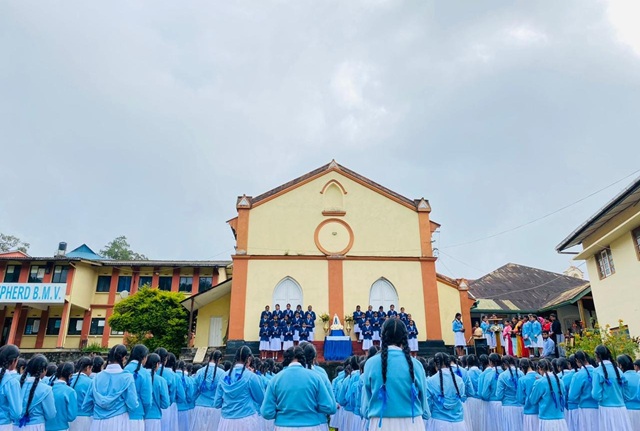
Victims of violence and abuse cannot be silenced or abandoned. The failure of state institutions, the police, and the legal system to act swiftly and firmly against perpetrators only emboldens the abusers and leaves survivors in perpetual suffering. Pranitha Warnakulasuriya’s call to the Catholic Church and other organisations should not be dismissed or delayed. There is a moral imperative to act—not just to secure justice for victims but to prevent future abuse and ensure that children can attend school free from fear, violence, and torment.
As the case moves toward its next hearing in January 2025, questions loom large about whether justice will ever truly come. It is a painful reminder that victims often find themselves abandoned by the very systems intended to protect them. This case is a stark call to the nation, to religious institutions, to government officials, and to law enforcement: the time for action is now. This case cannot be ignored, and the people of Nuwara Eliya, and the children affected, deserve nothing less than transparency, accountability, and a genuine commitment to justice.