Pakistan is a traditional hard security state since its inception, due to the longstanding rivalry with India and sharing its volatile frontier with Afghanistan. However, Pakistan somehow managed to defend its borders from the traditional threat, but now the South Asian nation is confronted with the dire nontraditional challenges of hydro and climate. Pakistan’s agriculture employs around 65% of the population and contributes 25% to the total GDP. Now, it is the critical fault line of the state that 80% of Pakistan’s agriculture depends on the Indus River, and, as a lower riparian state, India has geographical leverage, as an upper riparian state, to control the flow of western rivers that flow towards Pakistan.
Climate change, uneven rainfall patterns, outdated domestic infrastructure, and traditional high-waste irrigation have further compounded the hydrological system’s resilience. According to the Pakistan’s National Disaster Management Authority (NDMA), the climate calamities in 2025 cost the lives of 892 people nationwide, displaced 2.1 million people, and damaged 9,406 homes due to high flash floods, inadequate water reservoirs, and pre-monsoon floods. Climate change, combined with India’s push for hydroelectric projects on the Indus, Jhelum, and Chenab, drags Pakistan into a new struggle over hydro‑sovereignty and poses a grave threat to the survival of 241.5 million people.
Pakistan’s Hydro‑Sovereignty at Risk
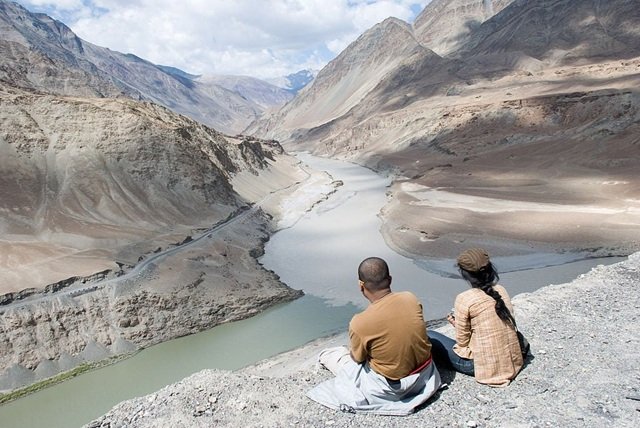
The Indus River is the lifeline of Pakistan; it is not only a river but also preserves Pakistan’s civilizational heritage and defines its South Asian identity. Currently, the Indus basin water is the primary bone of contention between India and Pakistan. Pakistan meets its agricultural needs on the Indus River. At the same time, India is ambitious for hydro projects -Wullar Barrage, Kishenganga, and Baglihar dams in India-held Kashmir on the western rivers of Pakistan, which has significantly raised the water insecurity for Pakistan. After the Pahalgam terror attack in April 2025, India unilaterally suspended the Indus Water Treaty signed in 1960 , which had brokered by the World Bank. The treaty has long been a symbol of cooperation and offers a comprehensive water-sharing formula. Under its featured guidelines, India has the rights over the eastern rivers, including the Ravi, Beas, and Sutlej. At the same time, Pakistan receives its share from the western rivers, including the Indus, Jhelum, and Chenab.
After its Suspension, 80% of the Pakistan’s population will suffer due to India’s hydroelectric projects and barrages. Water flow will be disrupted, potentially severely affecting agricultural yields and irrigation. In addition, it could further lead to food insecurity and economic instability in rural regions and significantly increase pressure on water storage systems. From a traditional geopolitical perspective, Pakistan relies heavily on the Indus River; it maintains a hard security posture toward it. According to Pakistan’s National Security Committee, any alteration to the existing water mechanism could be treated as an “act of war”. Looking at broader patterns, it indicates that the threat has now shifted from nontraditional to traditional, as it directly threatens the nation’s survival.
Hydro Insecurity in a Changing Climate
According to the United Nations Water definition of water security, “Water security is the adequate access to the sustainable and acceptable quantity of water essential for livelihoods, human well-being, and socio-economic development and also for preserving the ecosystems in the climate of peace and political stability. The definition aligns with SDG 6 and is not merely a sustainable development goal. However, it is directly linked with numerous other secondary problems, such as health SDG-3, Human settlement SDG-11, sustainable production and consumption SDG-12, and ecosystem SDG-15. There are four primary sources in Pakistan’s water sector: glaciers, monsoon rains, groundwater, and the Indus River. Though Pakistan has reservations over India’s Hydro projects, the one primary source of water security is now turning into insecurity.
Glaciers are Pakistan’s primary hydrological assets and are home to 13,032 glaciers that cover approximately 13,546.93 square kilometers. The International Centre for Integrated Mountain Development (ICIMOD) indicates that the Hindu Kush and Himalayan glaciers are melting 65% faster in the 2011-2020 period due to deforestation and large carbon dioxide and Sulfur dioxide footprints from the massive global north and China’s industries. Pakistan’s share of global carbon emissions is only 0.85%, which is significantly low. However, Pakistan suffers from the effects of industrialization in its neighbors. In 2025, India, which contributed 7% to global carbon emissions, and China, which contributed 28.8%, have significantly affected ice deposits in the hill areas of Pakistan.
From 2015 to 2025, Pakistan has recorded a 0.6–1.0°C rise in average temperature. This change has resulted in enormous disruption to weather patterns. Monsoon rainfall has become increasingly unpredictable; sometimes it exceeds expectations and sharply raises the groundwater table.
At the micro societal level, access to clean, fresh water is now a luxury in Pakistan, as only 39% of Pakistan’s population enjoys it, while 80% consume contaminated water with many associated risks. For that matter, 40% of all deaths, which is indeed a jaw-dropping figure, occur due to the concerning quality of water. At the macro global level, Pakistan is ranked 15th among the most water-stressed countries and the 5th most vulnerable state to climate change. Over the past few years, heavy rainfall, floods, and other climate change phenomena have cost the lives of 4200 people and affected 33 million people nationwide. The climate devastation has caused $30 billion in direct damage so far. In August 2025, the cloudburst and floods killed over 400 people, 3,638 livestock, and damaged 825 shops and 29 educational institutes in the province of Khyber Pakhtunkhwa’s district of Buner.
Policy Implications
Pakistan is now at a crossroads, confronting the nontraditional threats of climate change and water security. Pakistan’s primary water sectors are shrinking rapidly due to structural flaws and trans- boundary manipulation of the Indus Basin’s water resources. The crisis demands policy attention to shift water security from localized agricultural concerns to a core pillar of national security. Further, there is a need to upgrade outdated domestic agricultural infrastructure to modern irrigation technology and to implement transparent institutional governance to minimize water loss.
The enduring solution to Pakistan’s hydrological sovereignty depends on the transition of the Indus Water Treaty into climate–resilient diplomacy, which is, no doubt, the source of life for 241.5 million people. There is a further need to introduce a comprehensive mechanism that holds upper riparian states like India accountable for their actions, ensuring transparency and flow predictability. On the local level, the introduction of precision-guided drip and sprinkler systems needs policy attention, as they are the primary mechanism for addressing structural water crises. In addition, the continued rise in average temperature has induced glaciers to melt. Therefore, Pakistan’s status as a lower riparian state requires a defensive policy towards decentralized micro-storage facilities and large-scale reservoirs, which will act as a buffer against unpredictable seasonal flows.
Furthermore, at the domestic level, water stress requires a digital, transparent governance framework capable of enforcing fair provincial water distribution and regulating groundwater extraction.
Conclusion
Pakistan’s sovereignty can no longer be decoupled from hydrological integrity. If the climate and the dispute over Indus water are not addressed on time, it could result in a major-scale war between India and Pakistan. Further, given the majority population’s association with the agriculture sector, timely addressing the issue will prevent a humanitarian crisis, such as internal climate displacement and urban socio-economic collapse. In addition, the catastrophic shortfall demands determined public and private capital deployment toward water-efficiency infrastructure. Millions of lives are associated with Indus basin water; therefore, any conflict will be a zero-sum geopolitical posture. Instead, a bilateral collaboration is pivotal to addressing these nontraditional threats and achieving enduring peace.
Combating the dual threats of intensifying monsoon cycles and prolonged droughts demands a structural shift in agricultural planning, legally mandating crop zoning based on localized water availability and climate-adaptive constraints. Otherwise, a country like Pakistan, which is home to 241.5 million, cannot be left vulnerable to environmental disaster, as the humanitarian crises will not just remain within its borders but will extend to the region.