Punctuated by rapid political churn and recalibrated alliances, the Bharatiya Janata Party’s evolving strategy in Punjab has emerged as one of the most closely watched developments in Indian politics, according to analysis reported by Frontline India. As the state heads towards the next Assembly election cycle, the party appears to be combining organisational engineering, symbolic outreach, and welfare-driven messaging in a bid to overcome historical limitations in the Sikh-majority state where it has never achieved a decisive electoral breakthrough.
BJP’s post-2014 trajectory has been marked by consistent territorial expansion, with significant inroads in eastern India adding new dimensions to its national footprint. States such as West Bengal and Odisha have been highlighted as part of its expanding influence, while Bihar has witnessed complex political engineering that placed the party in a position of leverage within state leadership structures. Historically strong in western India since its Jana Sangh roots, and long dominant in Madhya Pradesh, the party’s growth has relied on consolidating both organisational depth and electoral adaptability.
In contrast, Punjab has remained a persistent challenge. Despite being part of the party’s northern ambitions, the BJP has struggled to build an independent organisational base in the state. Its earlier alliance with the Shiromani Akali Dal, which lasted from 1996 until its collapse in 2020 amid the farmers’ protests, restricted the party to a limited number of Assembly seats and prevented the development of a broader grassroots structure. Punjab’s Sikh-majority demographics, combined with perceptions of the BJP as primarily representing Hindu interests, further constrained its appeal.
The impact of the farmers’ protest between 2020 and 2021 further complicated the BJP’s prospects in Punjab. With a significant proportion of the protestors originating from the state, a strong narrative emerged that the central government was unsympathetic to agrarian concerns. This sentiment deepened mistrust and added an emotional dimension to electoral politics, making it harder for the BJP to reposition itself purely through policy announcements or organisational outreach.
Against this backdrop, the BJP has accelerated its outreach in Punjab well ahead of the next Assembly elections. Frequent visits by senior leaders, including the Prime Minister and Home Minister, signal an early start to campaigning, reflecting a belief that the Aam Aadmi Party’s recent political vulnerabilities can be exploited. The party’s approach appears to be shaped by its success in other states where early mobilisation and narrative control have proven decisive.
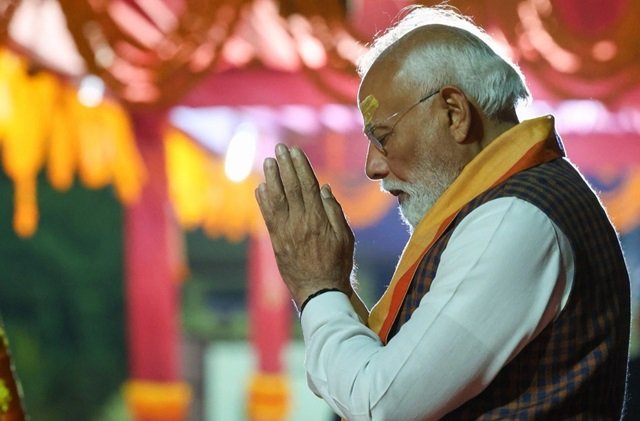
The BJP’s ‘2D factor’ strategy in Punjab focuses heavily on Deras and Devotees, particularly among Dalit communities. High-profile visits by Prime Minister Narendra Modi to spiritual centres such as the Sachkhand Ballan Dera on Guru Ravidas Jayanti are seen as attempts to connect with the influential Ravidassia community, the largest Dalit sub-group in the state. Similarly, engagement with Radha Soami Dera Beas and indirect influence efforts involving Dera Sacha Sauda reflect a broader attempt to mobilise religious networks that cut across caste and regional lines.
In parallel, the BJP has pursued a strategy of political consolidation through defections, a method it has successfully used in states such as Assam and West Bengal. The induction of prominent leaders from rival parties, including former Chief Minister Captain Amarinder Singh, Sunil Jakhar, and Ravneet Singh Bittu, reflects an effort to compensate for its limited grassroots base. Reports also suggest attempts to weaken the Aam Aadmi Party’s organisational strength by attracting key Rajya Sabha members and strategists, thereby targeting both leadership and internal planning structures.
The ‘2T factor’ in Punjab politics combines symbolism and strategic appointment. BJP leaders have increasingly adopted visible cultural markers such as turbans during campaigns to signal respect for Sikh traditions. At the same time, the appointment of Taranjit Singh Sandhu as Lieutenant Governor is seen as a calculated move to strengthen the party’s appeal in the Majha region and to project administrative influence from Delhi into Punjab’s political landscape. This dual approach blends cultural signalling with institutional positioning.
Alongside identity politics and organisational engineering, the BJP is also heavily promoting central welfare schemes such as PM Kisan Samman Nidhi, Ayushman Bharat, and the free ration programme under the Pradhan Mantri Garib Kalyan Anna Yojana. These initiatives are projected as evidence of governance delivery aimed at ordinary citizens. At the same time, there are indications of renewed engagement with the Shiromani Akali Dal after years of strained relations, particularly in the context of shared concerns over drug abuse and rural discontent.
Despite its aggressive outreach, the BJP continues to face structural limitations in Punjab. A shortage of leaders with deep ideological roots in the state, reliance on defectors, and the absence of a stable organisational base remain significant obstacles. Critics argue that many of its current leaders lack consistent electoral credibility. As the political battle intensifies, questions persist over whether the BJP’s current strategy will translate into sustainable support or whether it will struggle against entrenched regional forces. As noted in Frontline India’s analysis, the coming electoral cycle will determine whether this ambitious push results in a breakthrough or another missed opportunity.