The Quadrilateral Security Dialogue, better known as the Quad, is showing signs of imbalance as its military cooperation intensifies while political coordination falters, according to a recent analysis by Global Times. The bloc, comprising the United States, India, Japan, and Australia, has entered what observers describe as a phase of “military fervor and political coldness,” raising questions about its long-term unity and strategic purpose in the Indo-Pacific region.
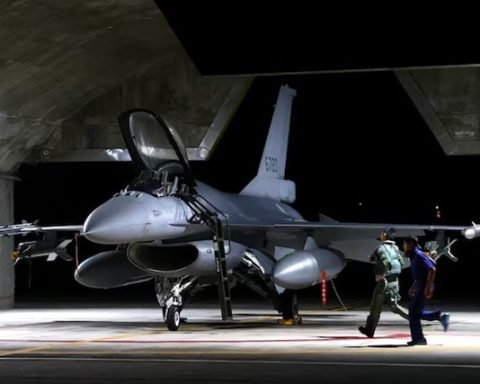
Since the beginning of 2025, the Quad’s military collaboration has reached new levels of sophistication. In early November, India hosted the “Cope India” joint air force exercise, with the United States as the core participant and Japan and Australia joining as observers. Around the same time, the four nations’ navies converged in Guam for “Exercise Malabar 2025,” one of the largest joint naval drills in the Pacific. These high-profile operations have solidified the Quad’s image as a growing military force in the region, even as its political foundations appear increasingly fragile.
The Global Times report noted that political coordination within the Quad has suffered significant setbacks. The leaders’ summit—originally scheduled to be held in India later this year—has been postponed to early 2026, reportedly due to emerging tensions between New Delhi and Washington. The delay underscores the bloc’s difficulty in maintaining consistent dialogue among members with divergent national interests and strategic visions.
Analysts attribute this disconnect to several underlying structural contradictions. First, the misalignment of strategic priorities continues to plague the grouping. While India emphasizes its “strategic autonomy” and maintains balanced ties with Russia alongside its cooperation with the U.S., Japan, and Australia, Washington seeks greater alignment with its Indo-Pacific strategy. This clash of intent—between India’s balancing approach and the U.S.’s dominant ambitions—often causes political friction, spilling over into the Quad’s broader agenda.
Second, the informal nature of the Quad, long celebrated for its flexibility, has become a liability. Without formal treaties or binding commitments, the bloc struggles to translate shared goals into coordinated action. As its strategic objectives evolve, this loose framework limits its ability to address disagreements or set a unified course.
Third, the Quad faces diverging perspectives on China. While the group’s inception was largely driven by a shared desire to counter China’s regional influence, those priorities have since shifted. India’s current focus remains on managing its border dispute and maritime interests through dialogue, not confrontation. Australia, for its part, values its economic ties with Beijing and remains cautious about heightening tensions, even as it strengthens defense links with the U.S. These differing outlooks have diluted the Quad’s collective stance toward China, making its strategic posture increasingly ambiguous.
Finally, the report emphasized that military cooperation is inherently easier to operationalize than political coordination. Joint drills and interoperability exercises follow structured frameworks and technical objectives, while political cooperation involves complex negotiations over economic interests, strategic compromises, and multilateral diplomacy—areas where consensus is far harder to achieve.
The Global Times concluded that the Quad’s current imbalance reflects its lack of deep strategic coherence. Driven largely by external pressures and led by a United States pursuing its own “America First” agenda, the bloc risks becoming a symbolic rather than substantive partnership. Unless it can achieve tangible results in political and economic cooperation to complement its expanding military activities, the Quad may soon find itself reduced to a formality—an alliance strong in drills but weak in direction.