As data centers on Earth continue to consume vast amounts of energy and resources, some technology companies are exploring a radical alternative—moving data storage and computing infrastructure to space. According to a report by MIT Technology Review, several projects are already in motion, testing the feasibility of operating data centers in orbit or on the moon.
A Bold Experiment: Data Storage on the Moon
Last week, Lonestar Data Holdings, a Florida-based company, took a major step toward this vision by launching a small data storage device aboard Intuitive Machines’ Athena lander. The shoebox-sized device, which carries data from internet pioneer Vint Cerf and the government of Florida, is expected to land on the moon later this week. If successful, this will be the first explicit test of a space-based data center.
Lonestar’s president and chief revenue officer, Steve Eisele, believes the moon offers unparalleled security for data storage. “Ultimately, the moon can be the safest option where you can have a backup for your data,” Eisele told MIT Technology Review. “It’s harder to hack; it’s way harder to penetrate; it’s above any issues on Earth, from natural disasters to power outages to war.”
For now, the device carries only eight terabytes of storage—roughly the capacity of a high-end laptop—and will operate for just a few weeks before lunar night brings extreme cold and cuts off its solar power. However, the company views this as an essential first step before launching a commercial data storage service.
By 2027, Lonestar aims to deploy a network of satellites at the Earth-moon Lagrange point L1, a gravitationally stable region 61,350 kilometers above the moon. This would enable continuous data access while leveraging the moon’s security advantages.
Other Companies Enter the Race
Lonestar is not alone in this venture. Several other companies are actively exploring space-based data solutions:
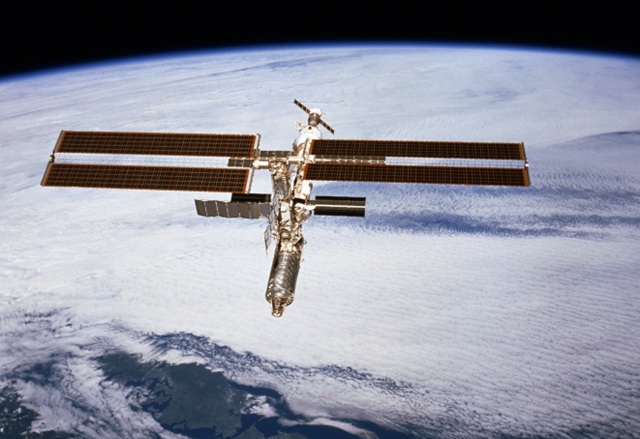
- Axiom Space: Known for organizing private astronaut missions to the International Space Station (ISS), Axiom is preparing to launch a prototype data server to the ISS in the coming months. By 2027, the company plans to establish a computing node in low Earth orbit aboard its own space station module.
- Starcloud: This Washington-based company, which recently raised over $11 million in funding, plans to launch a small data-processing satellite equipped with Nvidia GPUs later this year.
- Thales Alenia Space: The European aerospace giant is studying the feasibility of large-scale data centers in orbit, proposing structures that would generate a megawatt of power from solar arrays—four times more than the ISS currently produces.
Why Move Data Centers to Space?
The primary motivation for relocating data centers off Earth is to reduce the environmental impact of computing infrastructure. According to MIT Technology Review, data centers today account for 1-2% of global electricity consumption, a figure that could double by 2030 due to the rise of artificial intelligence and cryptocurrency mining.
Moving data centers to space could alleviate some of the major challenges associated with terrestrial facilities:
- Energy Efficiency: Solar power in space is abundant and uninterrupted, eliminating the need for fossil fuels.
- Cooling Systems: Data centers on Earth require vast amounts of water for cooling, whereas in space, excess heat can be radiated away naturally.
- Security: Space-based data centers would be less vulnerable to hacking, physical attacks, and natural disasters.
- Data Processing Speed: Satellites currently struggle with bandwidth limitations, as data must be transmitted to ground stations before processing. Computing in space would reduce delays for applications such as national security and scientific research.
Challenges and Risks
Despite the potential benefits, building and maintaining data centers in space presents significant technical and financial challenges:
- Radiation and Space Debris: Electronic components in orbit are exposed to high levels of radiation, which can degrade hardware over time. Micrometeorites and space debris also pose collision risks.
- Power Generation: While solar energy is plentiful in space, no existing system has harvested it at the scale required for full-scale data centers.
- High Costs: The expense of launching equipment into space remains a major barrier, though SpaceX’s Starship and other next-generation rockets could make large-scale deployments more feasible by 2030.
- Maintenance and Repairs: Fixing hardware in orbit is far more complex than on Earth. Even with automation and robotics, technical failures could be difficult and costly to address.
Domenico Vicinanza, an expert in intelligent systems and data science at Anglia Ruskin University, told MIT Technology Review that large-scale space data centers are still a long way off. “Fixing problems in orbit is far from straightforward. While space offers the benefit of 24/7 solar energy, solar flares and cosmic radiation could damage sensitive electronics,” he said.
The Future of Space-Based Computing
Even if large-scale space data centers remain a distant goal, proponents argue that digital infrastructure in space will be essential as humanity expands beyond Earth.
“The lunar economy will grow, and within the next five years, we will need digital infrastructure on the moon,” said Lonestar’s Eisele. “We will have robots that need to communicate, and scientific bases will require data storage and processing capabilities.”