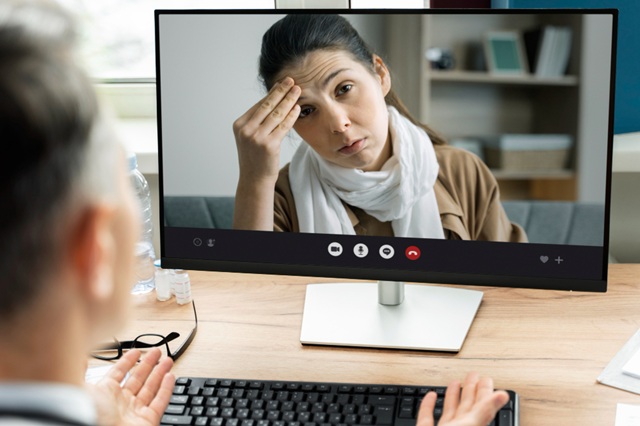
If you’re experiencing “Zoom fatigue,” you might not just be tired of endless video meetings—you could also be sick of looking at your own face. A study published in PLOS One has found that the growing phenomenon of “facial appearance dissatisfaction” may be exacerbating the fatigue associated with virtual meetings.
According to the research, repeated exposure to one’s own face during video calls—often seen in the corner of the screen while others dominate the display—can lead to heightened dissatisfaction with one’s appearance. This, in turn, can worsen “virtual meeting fatigue,” a condition that negatively impacts both workplace productivity and individual well-being. The study surveyed 2,448 workers regularly involved in remote virtual meetings, assessing their satisfaction with their facial appearance and their use of features like filters or image enhancement tools to alter their appearance during calls.
The researchers from Michigan State University, Santa Clara University, and other institutions found a clear link between dissatisfaction with one’s face and increased fatigue. Those who were most dissatisfied with their appearance were also more likely to turn off the option to see themselves during a call or use avatars and filters to change their appearance.
The study also highlighted a growing trend among those who edit their images before posting on social media, often seeking cosmetic procedures—something that has been reported to have increased during the pandemic. Researchers have termed this phenomenon “Zoom dysmorphia,” which points to the impact of frequent camera exposure on how individuals perceive themselves.
The findings, reported in The Times (UK), suggest that for many, virtual meetings have become a source of psychological stress, particularly in professional settings where there is an added pressure to look polished and presentable. The study’s authors recommended that companies offer tools that help enhance workers’ confidence by allowing them to manage how they appear on screen, improving the overall virtual meeting experience.