Sudan’s mining industry has suffered catastrophic losses totaling approximately $7 billion as the country’s civil war stretches into its 34th month, according to Ahmed Haroun al-Tom, Director of the General Authority for Geological Research. Speaking on Saturday, al-Tom detailed how widespread looting, sabotage, and the partial or total destruction of infrastructure across both public and private sectors have crippled operations, slashing the authority’s reach from 18 states before the conflict to just six states today.
The ongoing war has disrupted not only extraction and fieldwork but also research, exploration, and evaluation programs, severely affecting investment flows and public revenue tied to Sudan’s mineral wealth. Prior to the outbreak of hostilities, the authority possessed “above-average” technological capabilities in research and exploration, which were lost during the fighting. In response, it has begun importing advanced machinery and modern technologies, including geophysical equipment, remote sensing devices, Geographic Information Systems, and specialized geo-engineering tools, to rebuild operations centered in Khartoum rather than Port Sudan.
Sudan ranks third in Africa and thirteenth globally in terms of mineral diversity and volume, yet about 75% of its mineral resources remain insufficiently explored. The country saw a surge in gold production last year, with 70 tons extracted—the highest in five years—underscoring the sector’s untapped potential even amid instability.
The civil war, ongoing since April 2023, pits the Sudanese Armed Forces, led by General Abdel Fattah al-Burhan, against the paramilitary Rapid Support Forces under General Muhammad Hamdan Dagalo. The fighting has not only devastated the economy but also displaced state institutions temporarily relocated to Port Sudan, including the Sovereign Council and the Council of Ministers, which have now resumed operations in Khartoum.
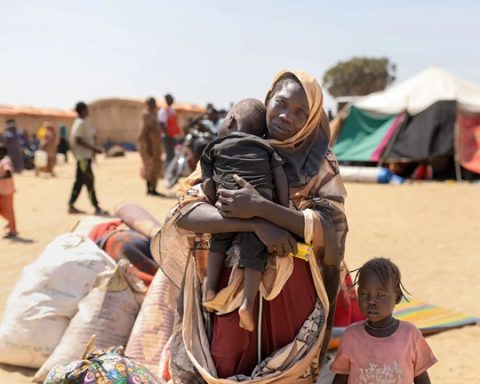
The conflict has drawn international attention due to escalating violence and human rights abuses, including reports from a UN fact-finding mission of ethnically targeted killings, sexual violence, and enforced disappearances by RSF militants in Darfur’s El Fasher. As the war drags on, Sudan’s mineral sector remains at the frontline of the country’s economic collapse and the broader humanitarian crisis.