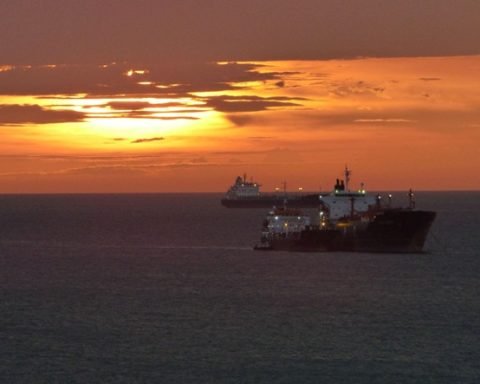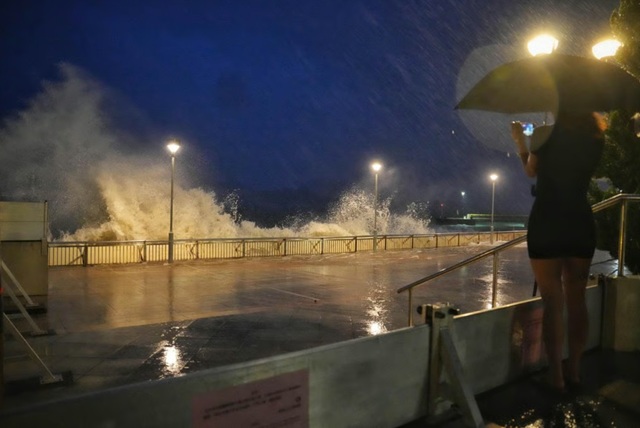
Hong Kong is bracing for what could become the strongest typhoon in the city’s history as Super Typhoon Ragasa edges closer, bringing hurricane-force winds and pounding waves. The Hong Kong Observatory raised the No. 8 warning signal at 2.20pm on Tuesday and announced that the No. 9 signal will be issued at 1.40am on Wednesday, when the storm is expected to pass closest to the city. At 1am Ragasa was centred about 160 kilometres southeast of Hong Kong, moving west-northwest at around 22 kilometres per hour. Despite easing slightly from earlier peaks, the storm’s core still carried sustained winds near 195 kilometres per hour and gusts of up to 230 kilometres per hour. Forecasters warned that Ragasa’s vast circulation could bring extensive gale-force winds, storm surges and heavy rain, potentially rivaling or surpassing the destruction caused by past record-breaking typhoons.
The city’s international airport has been severely disrupted, with at least 700 flights cancelled. Cathay Pacific alone axed 500 flights, while HK Express, Hong Kong Airlines and Greater Bay Airlines grounded nearly 200 more. The Airport Authority said only a limited number of cargo flights would operate on Wednesday. The Education Bureau cancelled all kindergarten, primary and secondary school classes on both Tuesday and Wednesday. Bus operator Citybus announced it expects to suspend all daytime services on Wednesday once the No. 9 warning is in force.
By late Tuesday, nearly 700 residents had sought refuge in 49 temporary shelters, with an additional centre opened in Fanling. Government teams carried out evacuation drills in Tai O, where elderly residents were helped out of flood-prone homes. Normally busy shopping areas such as Canton Road in Tsim Sha Tsui were left deserted, with luxury shops shuttered and windows taped against flying debris. Along the coast, waves as high as lamp posts battered Heng Fa Chuen, while surges at Tai O and Lei Yue Mun pushed seawater dangerously close to buildings.
Meteorologists say Ragasa’s strength places it among the most powerful typhoons ever recorded in Hong Kong. Typhoon Wanda in 1962 produced gusts of up to 260 kilometres per hour and caused widespread destruction. Typhoon Ruby in 1964 brought sustained winds around 195 kilometres per hour and gusts reaching 268 kilometres per hour, devastating fishing villages. Typhoon Hato in 2017 triggered a No. 10 signal and caused severe flooding in the city while killing at least 10 in neighbouring Macau. In 2018 Super Typhoon Mangkhut was described by the Hong Kong Observatory as the city’s most intense storm since World War II, with peak winds near 250 kilometres per hour before weakening slightly on approach. If Ragasa maintains its current intensity and passes close to the city, it could challenge Mangkhut’s record as Hong Kong’s strongest storm in modern history.
Officials have warned that the No. 10 signal, the highest alert, may still be issued depending on Ragasa’s track. Residents are urged to remain indoors, avoid coastal areas and prepare for possible flooding and damage. Emergency services remain on standby, with more than 100 rapid-response teams deployed to flood-prone zones and hospitals already treating storm-related injuries. As Ragasa bears down on the Pearl River Delta, Hong Kong is facing what could be a historic test of resilience against nature’s fury.