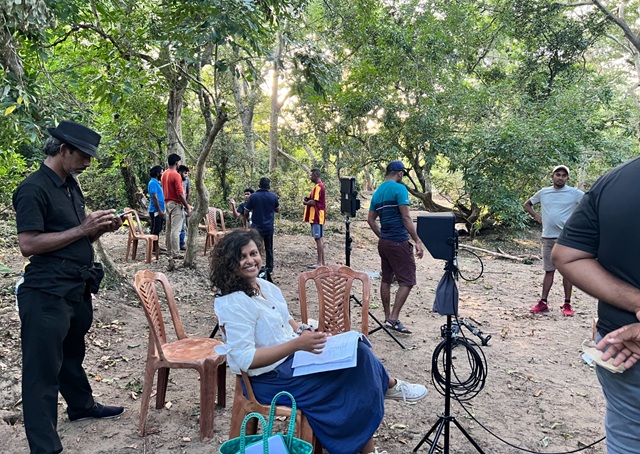
Nadie Wasalamudaliarachchi, a Sri Lankan author, filmmaker, and political activist, is no stranger to the collision of art and politics. Her work, layered with trauma, resistance, memory, and quiet rebellion, has long defied simplistic categorisation. Known for her novel Wolfhandhal Street (2015), which was nominated for the Swarnapusthaka Award the following year, Nadie has emerged as one of Sri Lanka’s most introspective and experimental voices. But it is perhaps in her most recent cinematic venture—Pantrum—screened as the opening film of the World Cinema section at the 7th Independent & Experimental Film Festival of Kerala (IEFK)—that we see her full artistic and political maturity unfold.
Published recently in MaktoobMedia, a Kerala-based platform known for championing marginalised voices, Nadie’s interview reveals not only the complex intersections between art and life but also her deepening emotional connection to Kerala, particularly Kozhikode (Calicut). “My second home is Calicut,” she told Sri Lanka Guardian in a conversation that echoed with gratitude and deep affection. “The place that gave me rebirth as a filmmaker. So want to thank them really.”
This sense of “rebirth” is not a throwaway sentiment—it is the emotional underpinning of her evolving work. Nadie’s journey through journalism, fiction, and advertising forms a mosaic of storytelling disciplines that finds its latest expression in the avant-garde world of arthouse cinema. As she explains, “Journalism taught me to observe the world critically… writing novels allowed me to explore inner worlds… advertising sharpened my sense of visual language.” In Pantrum, these threads come together to weave a fabric of symbolic resistance, psychological nuance, and visual poetry.
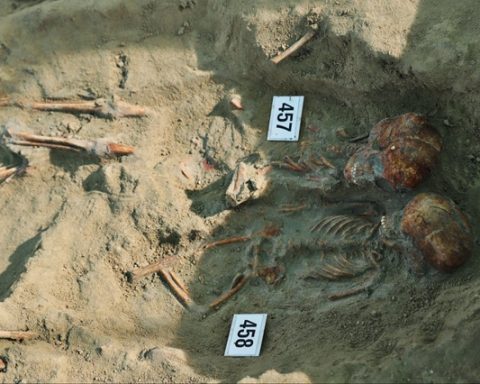
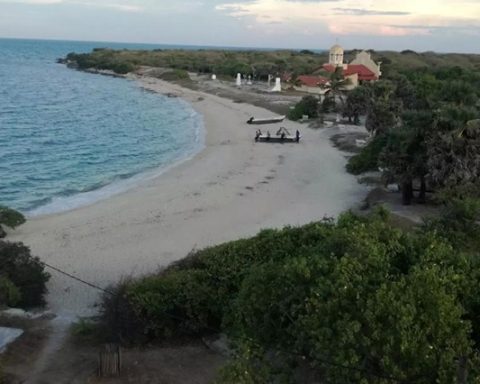
Set against the backdrop of Sri Lanka’s post-war terrain, Pantrum doesn’t merely depict trauma—it absorbs it, translating silence into symbol, memory into image. Its narrative does not proceed linearly; instead, it spirals—echoing the patterns of PTSD, looping back and forth through fractured memories and surreal metaphor. “The long-standing political, economic, and social turmoil in Sri Lanka served as the inspiration behind this work,” Nadie said. “My intention was to shed light on the often unseen struggles of those whose lives have been silently shaped by decades of political unrest.”
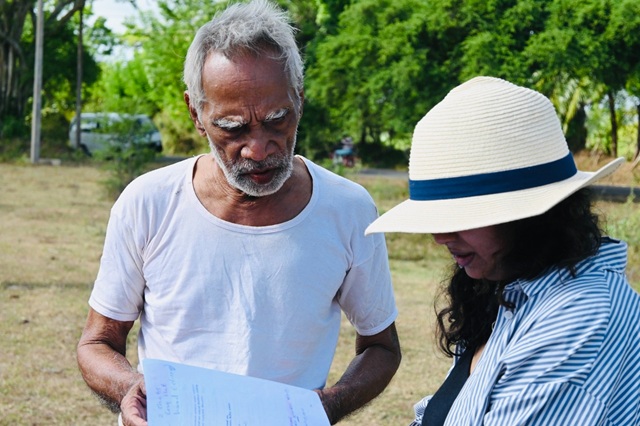
Central to this symbolic structure is the antlion—a small insect known in Sri Lankan childhood lore for being made to “dance” in the palms of children. “Much like the antlion unknowingly responds to the rhythm imposed on it, people too often dance to the tune of political agendas,” Nadie explained. It’s a chilling, poetic metaphor that captures the invisible manipulation and submission that characterise authoritarian regimes. “In the end, they perish, never realising they were merely performing to someone else’s script.”
The imagery may bring to mind Tarkovsky’s dreamscapes or Apichatpong Weerasethakul’s rhythmic pacing. Like these filmmakers, Nadie doesn’t tell stories in traditional acts; she evokes sensations. She paints the unspeakable with silence, relying not on the spectacle of suffering, but on its residue—the aftershock, the stillness. One thinks of Chantal Akerman’s Jeanne Dielman, where the mundane becomes the harbinger of psychological collapse. Or, in Nadie’s own reference, Frida Kahlo’s The Broken Column—a body in agony held upright only by willpower.
“There were three major challenges,” she notes, in developing the visual language of the film: “weaving space and time… expressing conflict within the human psyche… portraying a stagnant society.” The result is a cinematic experience not concerned with entertainment but with confrontation—with the viewer’s assumptions, complicity, and conscience. “PTSD, by nature, is not loud—it is persistent, quiet, and often invisible. I wanted the film to reflect this truth—not through dramatic outbursts, but through silences, stillness, and repetition.”
One could argue that in Pantrum, Nadie is not merely showing trauma—she is sculpting it. And this sculpting, deeply political yet radically intimate, places her in a tradition of filmmakers like Rithy Panh, whose work on the Khmer Rouge regime also avoids sensationalism in favour of poetic reckoning. Like Panh’s The Missing Picture, Nadie is asking us not just to see but to reflect. “Reconciliation, if it appears, is portrayed not as resolution but as survival,” she said. “It’s about the small acts—sitting still, breathing through the pain, holding onto memory without letting it consume you.”
It is not surprising, then, that Nadie’s artistic rebirth took root in Kerala, a land whose cultural rhythms mirror her own preference for depth over dazzle. Kerala’s long history of leftist thought, literary activism, and political cinema—from Adoor Gopalakrishnan’s meditative lens to the experimental provocations of John Abraham—provides fertile ground for artists like Nadie who straddle the personal and the political.
“I hope this narrative encourages audiences to feel genuine empathy,” Nadie said. “At its core, the film is a call to recognise the shared thread of humanity that connects us all.” Her cinema refuses the easy binaries of villain and victim; instead, it interrogates systems, ideologies, and even memory itself. The war may have ended in 2009, but for many Sri Lankans, as Nadie reminds us, “the suffering of people didn’t end… there was no real victory for the people—only political actors seemed to benefit.”
Her lens, thus, is neither forgiving nor vengeful—it is lucid. She holds up a mirror to a society that believes it has moved on while still breathing in the dust of buried truths. “This painful continuity is what I wanted to explore and expose,” she said. The cyclicality of suffering, the illusion of progress, the emotional residue of war—these are not only thematic concerns in Pantrum but moral imperatives. She does not seek catharsis, only recognition. In this, her vision echoes that of Chris Marker’s Sans Soleil—a non-linear meditation on memory, image, and the passage of history. Marker once said, “Memory is not what we remember, but what remembers us.” Nadie might agree.
But it is not only the philosophical weight of Nadie’s work that compels attention. It is her pedagogical generosity—her commitment to mentoring and guiding the next generation of filmmakers. Her advice to emerging artists is disarmingly simple but profound: “Don’t be afraid to be your own voice… be truthful to the story you want to tell… observe the world. Be deeply aware of your society.” In an industry often driven by profit, packaging, and superficial narratives, her call to authenticity and empathy stands out as a radical act.
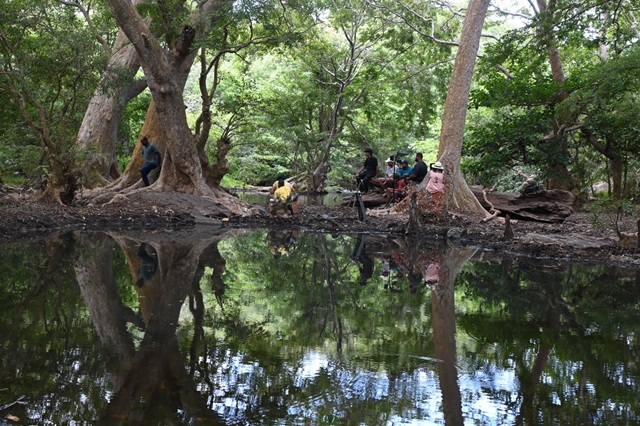
She reminds young filmmakers that cinema is not just a medium—it is a moral act. “When you see the world with empathy, your camera becomes more than a lens; it becomes a mirror.” These words should be etched in every film school wall across South Asia and beyond.
As Nadie dreams of making a film in Kerala—her “second home”—one cannot help but feel that the region is already part of her cinematic language. Calicut, in particular, is not just a place of artistic affirmation for her; it is the emotional and political soil from which a new chapter has emerged. The embrace she received at IEFK is more than a festival moment—it’s a symbol of South-South solidarity, a cross-border alliance of memory workers and truth tellers.
In a time when mainstream cinema often co-opts trauma for spectacle and politics for aesthetic clout, Nadie Wasalamudaliarachchi offers a different path. She shows us that real storytelling emerges from silence, from stillness, and from the refusal to look away.
And so, from Sri Lanka’s scarred soil to Kerala’s red earth, Nadie’s voice rises—not loudly, but indelibly.