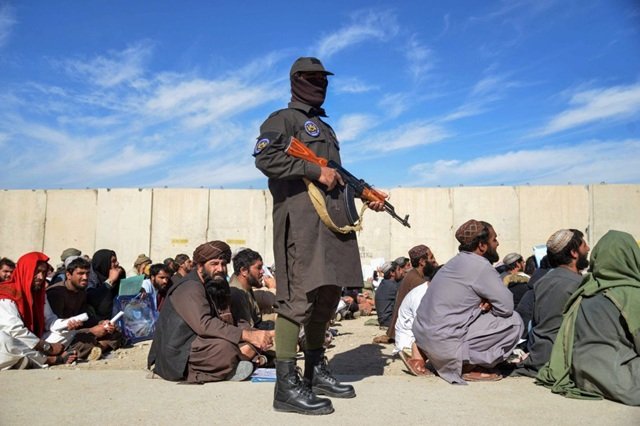
Nearly four years after the Taliban returned to Kabul, Afghanistan appears politically unified on the map but remains deeply fragmented in practice. The Taliban project an image of centralized authority and national control, yet armed resistance persists in several provinces, ethnic grievances remain unresolved, and governance continues to rely more on coercion than broad political inclusion. These tensions predate the Taliban’s return. They reflect structural patterns that have shaped Afghan politics for more than two centuries.
Afghanistan is internationally recognized as a sovereign state, but its modern history demonstrates that exercising authority over a diverse society has consistently proven more difficult than claiming it. Successive governments monarchical, republican, communist, and now Taliban have struggled to build institutions capable of commanding legitimacy across the country’s ethnic, tribal, sectarian, and regional communities. Understanding Afghanistan’s contemporary instability therefore requires looking beyond recent events to the historical foundations of the Afghan state itself.
State Formation and the Challenge of Political Integration
Modern Afghanistan traces its origins to the establishment of the Durrani Empire in 1747 under Ahmad Shah Durrani. Although this marked the emergence of a recognizable Afghan polity, it did not create a fully integrated nation-state in the modern sense. Rather than establishing a centralized national administration, the early Afghan state relied heavily on negotiated loyalty among tribal elites, regional alliances, and shifting balances of power. That governing model continued to shape Afghan politics long after the Durrani Empire declined.
Throughout the nineteenth and twentieth centuries, successive rulers sought to strengthen central authority. These efforts frequently relied on military campaigns, patronage networks, and administrative centralization rather than broad political participation. While such policies occasionally produced periods of stability, they also generated recurring tribal revolts, regional uprisings, and struggles over succession. The result was a political system in which the authority of Kabul often fluctuated according to the strength of individual rulers rather than the resilience of national institutions.
Centralization repeatedly faltered not simply because Afghanistan is ethnically diverse, but because successive governments often attempted to consolidate authority before building inclusive political institutions. Where local identities remained stronger than national institutions, coercive state-building frequently substituted for political consensus, reinforcing rather than resolving existing divisions. This recurring pattern has shaped Afghanistan’s political trajectory across successive regimes.
Unlike many modern states where national institutions gradually superseded local identities, Afghanistan’s political development often moved in the opposite direction. Tribal, ethnic, linguistic, and regional affiliations remained the primary sources of political legitimacy, while state institutions frequently lacked the capacity or public trust to cultivate a shared national identity. This imbalance has complicated nearly every attempt to establish durable centralized governance.
The historical relationship between the two major Pashtun tribal confederations-the Durrani and the Ghilzai illustrates the complexity of Afghan politics. Although historians differ on the extent to which this rivalry has determined national politics, it has repeatedly influenced elite competition, patterns of patronage, and debates over political leadership. These dynamics have also intersected with the interests of Tajik, Hazara, Uzbek, Turkmen, and other communities, reinforcing Afghanistan’s highly plural political landscape.
The rule of Amir Abdur Rahman Khan (1880–1901) remains one of the most controversial chapters in Afghan history. His efforts to consolidate centralized rule involved extensive military campaigns against several communities, particularly the Hazara population, whose displacement, mass killings, confiscation of land, and forced migration continue to influence collective memory and intercommunal relations. These historical experiences continue to shape debates about state legitimacy, minority representation, and the relationship between central authority and peripheral communities.
The Taliban and Afghanistan’s Contemporary Fault Lines
The Taliban’s return to power did not resolve Afghanistan’s long-standing structural divisions. Instead, it restored a highly centralized governing model that many observers argue has struggled to accommodate the country’s ethnic and regional diversity.
Decision-making has become concentrated around the movement’s senior leadership in Kandahar, while analysts have pointed to differences among various Taliban factions over governance, appointments, foreign policy, and security. Although these divisions should not be exaggerated, they demonstrate that the movement itself contains differing political interests and regional constituencies.
Beyond the Taliban’s internal dynamics, armed resistance continues in parts of Panjshir, Baghlan, Takhar, Badakhshan, Kapisa, and Parwan. These movements do not currently threaten the Taliban’s overall control of Afghanistan, but they illustrate that military victory has not translated into universal political acceptance. Although these resistance groups differ in organization, ideology, and local objectives, they collectively demonstrate that opposition to centralized rule continues to emerge where communities perceive political exclusion and limited representation. Many of the grievances driving localized resistance including demands for political inclusion, concerns over ethnic representation, restrictions on civil liberties, and opposition to highly centralized rule-remain unresolved.
Human rights organizations have also documented continuing restrictions affecting women, civil society, education, media freedom, and minority protections. Whether these policies ultimately strengthen or weaken long-term political stability remains debated, but there is broad agreement that governance based primarily on coercion rather than inclusion faces significant long-term constraints.
The Taliban’s military victory therefore solved one problem while leaving another unresolved. It restored centralized authority in Kabul but did not eliminate the deeper historical tensions that have repeatedly challenged Afghan governments. Military control should not automatically be confused with durable political legitimacy.
Regional Geopolitics and the Afghan State
Afghanistan’s internal divisions have frequently been magnified by external intervention. During the nineteenth century, it functioned as a strategic buffer between competing empires. Later, the Soviet invasion, the U.S.-led intervention, and continuing regional competition transformed Afghanistan into one of the world’s most contested geopolitical arenas.
Successive governments whether monarchist, communist, republican, or Taliban have depended to varying degrees on foreign military, financial, or diplomatic support. This dependence has often complicated efforts to build institutions capable of sustaining legitimacy through domestic consensus rather than external assistance.
Relations with neighboring Pakistan remain another enduring source of tension. Disagreements over the Durand Line, cross-border militancy, refugee movements, and border management continue to shape bilateral relations. At the same time, Afghanistan’s stability directly affects the wider region. Pakistan, Iran, the Central Asian republics, China, and other regional actors all have significant security and economic interests in preventing renewed state collapse. Persistent instability creates opportunities for transnational militant organizations, disrupts regional connectivity initiatives, fuels irregular migration, and complicates counterterrorism cooperation across South and Central Asia.
Afghanistan also occupies a strategic position linking South Asia, Central Asia, and the Middle East. As a result, its internal stability influences regional trade corridors, energy projects, transport connectivity, and broader economic integration alongside traditional security concerns. For neighboring states, Afghanistan’s internal cohesion is therefore no longer simply an Afghan question but a wider regional strategic concern.
A State at a Crossroads
Afghanistan’s future should not be viewed through the lens of inevitability. Predictions of either permanent unity or inevitable fragmentation oversimplify an extraordinarily complex society. History demonstrates that Afghanistan has repeatedly survived periods of profound crisis, yet it also shows that centralized governments have consistently struggled to command lasting legitimacy across the country’s diverse communities.
The country’s greatest challenge is therefore not simply restoring security or rebuilding its economy. It is constructing a political order that accommodates Afghanistan’s ethnic, tribal, regional, and sectarian diversity while creating institutions viewed as legitimate by citizens beyond Kabul.
If governance continues to rely primarily on exclusion and coercion, cycles of resistance and instability are likely to persist. Conversely, broader political participation, stronger local governance, protection of minority rights, and genuine national reconciliation could gradually reduce many of the structural tensions that have shaped Afghan politics for generations.
Afghanistan’s history is neither one of uninterrupted national cohesion nor one of predetermined disintegration. Rather, it is the history of a state continually negotiating the difficult relationship between centralized authority and extraordinary social diversity. For more than two centuries, the decisive question has never been who controls Kabul. It has been whether any government can transform control of the capital into legitimate authority across Afghanistan’s diverse society. History suggests that governments can seize Kabul through force, but they endure only when they earn legitimacy beyond it.