Editorial
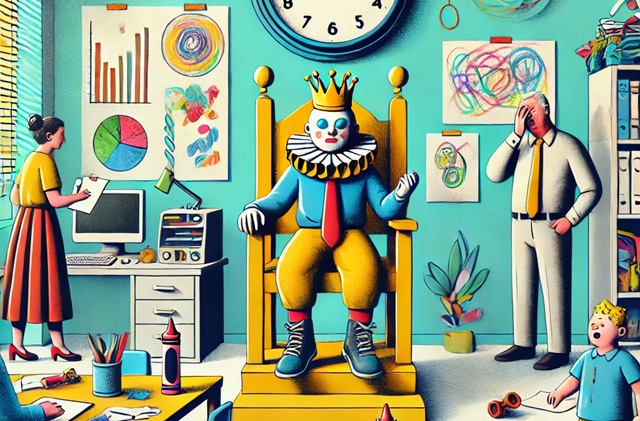
The election of immature leaders reveals a profound tragedy within the democratic process, which should ideally elevate wisdom and virtue. When society opts for individuals lacking the maturity, insight, and moral grounding necessary for leadership, the consequences can be dire, reverberating through the very fabric of social existence. This is not merely a matter of poor decision-making; it is a philosophical crisis, a failure to grasp the weight of governance and the responsibilities it entails.
The philosophical underpinnings of leadership, as explored by the ancients, remind us that governance should be the province of the wise, those capable of seeing beyond their immediate desires. Aristotle’s assertion that “the law is reason, free from passion” resonates deeply in this context, elucidating the perils that arise when leaders operate from impulsive emotions rather than thoughtful deliberation. The history of humanity is littered with the remnants of societies that have suffered under the stewardship of leaders who were ill-equipped to manage the complexities of their time. Herbert Hoover’s presidency during the Great Depression serves as a poignant example. His misguided belief that the economy would self-correct in the face of catastrophe illustrated a fundamental misunderstanding of human suffering and a failure to respond to the desperate cries for assistance. The societal consequences were not mere economic metrics; they were the stories of families torn asunder, of communities left to languish in despair, and of trust eroded between the governed and those who claimed to lead them.
This immaturity in leadership is not confined to modernity. The annals of history are replete with figures whose self-indulgence and shortsightedness precipitated catastrophic events. Consider Nero, whose obsession with personal fame blinded him to the dire needs of his people during the Great Fire of Rome. Tacitus’s observation that Nero’s “only concern was to distract the people with public spectacles while the city burned” underscores the pernicious effects of a leader who fails to comprehend the gravity of their office. Similarly, King Louis XVI of France epitomised the dangers of indecisiveness and lack of vision; his reluctance to enact meaningful reforms led to the chaos of the French Revolution. As Cicero wisely stated, “The safety of the people shall be the highest law.” When leaders forsake this principle, they abandon their duty to uphold the social contract, leaving the populace vulnerable and adrift.
Moreover, the immaturity of leadership does not merely manifest in policy failures; it cultivates a culture of cynicism and apathy among the citizenry. When those in power act without regard for the common good, the social fabric begins to unravel. Citizens become disillusioned, retreating from the political sphere as they witness the disintegration of their rights and values. This phenomenon has played out tragically in recent history, where the disparity between nations led by empathetic leaders and those governed by self-serving figures became glaringly apparent during crises. The suffering endured by the most vulnerable populations underscores the dire consequences of electing leaders who lack the capacity for empathy and understanding.
The philosophical ramifications of immature leadership are profound. It leads us to question the very nature of democracy itself. If democracy is predicated upon the belief that all voices matter, we must grapple with the reality that not all voices are imbued with wisdom. Plato warned of the dangers of allowing the uninformed masses to choose their rulers, stating that “the heaviest penalty for declining to rule is to be ruled by someone inferior to yourself.” This assertion challenges us to reflect upon the essence of democratic principles. Are we, in our quest for inclusivity and equal representation, inadvertently sowing the seeds of our own disillusionment?