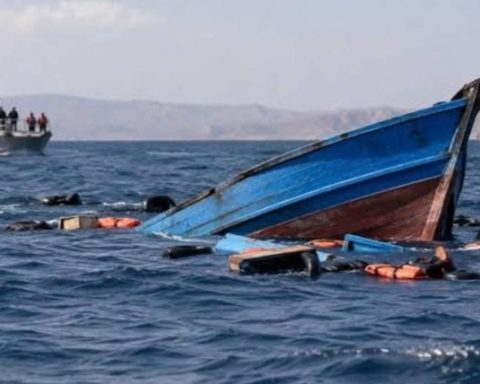
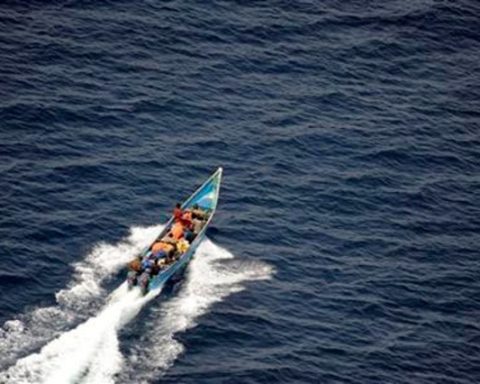
A new wave of piracy off Somalia is exposing the fragile security of the Horn of Africa, as depleted fishing grounds, drought and stretched naval patrols drive former fishermen back to the sea with guns.
In late April, the cargo ship Sward left Suez carrying cement for Mombasa. Days later, as it rounded the Horn of Africa, armed pirates boarded the vessel from the Somali coast. Its transponder was switched off and the ship disappeared from tracking systems. Its 15-man crew was taken captive on the mainland.
Within days, two oil tankers were also hijacked, raising fears that piracy was once again becoming a major threat to international shipping. Negotiations are under way for the release of scores of sailors being held hostage.
The Sward has since reappeared off the coast of Banderbeyla, a Somali fishing town in Puntland. The vessel is now being used as a “mothership”, an offshore base from which pirates can refuel and launch attacks farther from the coast.
Banderbeyla lies about 10 hours’ drive north-east of Garowe, between the rocky desert of Puntland and the vast Indian Ocean. To outsiders, it can appear remote and isolated. But the ancient town has long been associated with piracy and has now become a centre of a new wave of attacks that has added another threat to an already disrupted regional shipping system.
For more than a decade, large-scale piracy off Somalia had largely been contained. Between 2005 and 2011, attacks on shipping across the Indian Ocean generated millions of dollars in ransom payments and billions in costs to international trade. Some hostages endured years of captivity in appalling conditions. International naval patrols eventually succeeded in sharply reducing the threat.
Now those gains are under pressure.
The renewed attacks come as shipping across the region faces multiple security threats. The Strait of Hormuz has been closed by the US conflict with Iran, while Iran-backed Houthi militants have intensified attacks on shipping in the Red Sea. Naval forces that previously helped suppress Somali piracy are now stretched across a much wider area, leaving commercial vessels more exposed.
But the revival of piracy cannot be understood solely through the lens of maritime security. In Banderbeyla, economic desperation has become closely connected to what happens at sea. Puntland has endured an unrelenting drought, while local fishing stocks have declined amid complaints about illegal foreign trawlers. For communities dependent on fishing, the loss of access to the sea has destroyed livelihoods.
“People take up arms at sea because of poverty… There are families in this town that haven’t eaten for three days because their men are not able to catch fish,” said Farah Abdulkadir Rahman, a fisherman from Banderbeyla.
The economic consequences extend well beyond individual fishermen. “The issues out at sea have an impact on land… There are no fish to catch like there once was, so this is impacting the local community and livelihoods are destroyed,” Rahman said.
Using the Sward as a base, pirates hijacked two Iranian fishing boats in co-ordinated attacks on 16 July. The vessels and their crews were released days later after $20,000 was paid for each ship, according to clan elders. They were the first confirmed ransoms since the latest spike in attacks began.
Many of those involved are former fishermen who say they have been pushed towards crime after losing the ability to make a living from the sea. Mohamud Ali Farah, another fisherman in Banderbeyla, remembers a time when the waters supported much larger catches.
“Thirty years ago, when I started as a fisherman, there were plenty of fish in the sea. Today that is not the case,” he said.
He attributes much of the decline to illegal fishing. “A lot of it has to do with the illegal overfishing that is happening. It’s affecting everyone economically.”
The conflict between Somali fishermen and foreign trawlers predates the current regional shipping crisis. Months before Donald Trump launched his war with Iran, Somali fishermen who had turned to piracy were already engaged in a territorial struggle with foreign fishing vessels operating in waters they considered their own.
Puntland officials believe an earlier hijacking may have helped create the conditions for the latest attacks. On New Year’s Eve, pirates seized the Chinese fishing vessel Liao Dong You 578. One Somali security guard was killed during the attack, according to police commander Abdulkadir Said.
“We were able to secure the release of his body [but] the pirates were able to secure more than $1m ransom, which is fuelling the current attacks,” Said told The Observer at the criminal investigation department for Puntland’s Karkaar province.
The vessel was released in March, a month before the latest hijackings. It had previously been seized in November 2024, when local reports said it was operating under an expired licence from the Puntland government. Its release followed mediation involving clan elders, the Puntland government and the Chinese ambassador. Reports suggested that China had paid a $2m ransom, although Beijing has not confirmed this.
Foreign fishing vessels from China, Iran, Pakistan and Thailand are widely resented by local fishermen. Somalia has prohibited such vessels from operating within 24 nautical miles of the coast in an effort to protect the local economy and marine environment. Fishermen say the ban is routinely ignored.
At the Corno Africa Fishing Company in Banderbeyla, fishermen gather around freezers storing their catch while discussing encounters with foreign trawlers. Mohamed Kolumbo, who has spent 20 years fishing, described the impact bluntly.
“The foreign fishing boats cause us a lot of problems. They enter our seas, trawlers destroy our fish nets. We return to our boats empty,” he said.
Rahman recalled one encounter around 2am when a trawler ran over his fishing net and then charged towards him. His boat was destroyed and capsized. Alone in the darkness, he clung to the wreck and its motor for a day and a half before help arrived.
The fishing crisis has been compounded by climate change. Banderbeyla has experienced what local officials describe as seemingly endless drought. Abshir Farah, the town’s deputy mayor, said there had been no rain for two years.
“If it rains, the fish will increase but it hasn’t rained here in two years,” he said. “The sea is being emptied and on land there is a drought. So some people are going to attack and capture ships.”
Puntland authorities have made efforts to suppress the piracy, but officials acknowledge that local clans provide support to the pirates. When a suspect in the Sward hijacking was arrested during the summer, local militiamen attacked the police station in an attempt to free him. One officer was killed in the resulting firefight.
The region’s security forces are also facing another threat. Puntland has enjoyed relative stability compared with much of Somalia since the civil war of the 1990s, but its limited security resources have increasingly been diverted towards an emerging Isis presence in the Golis Mountains in northern Somalia.
That focus on counter-terrorism has created space for piracy to grow.
“Puntland has been at war with terrorists since last year and [the pirates] are exploiting that,” said Najib Hassan, captain of the Puntland Maritime Police Force, speaking to The Observer in Bosaso.
He remains confident that the authorities can contain the threat, pointing towards the mountains beyond the city. “We fight pirates first on land,” he said. “If they are able to make it out at sea, then we isolate them on land by cutting off their supply routes.”
The return of Somali piracy therefore reflects a wider crisis stretching from the fishing communities of Puntland to some of the world’s busiest shipping routes. The immediate threat is armed men at sea and the crews they take hostage. Behind it lies a more complex combination of poverty, depleted fisheries, illegal fishing, drought, regional conflict and overstretched security forces.
For Banderbeyla’s fishermen, the distinction between the crisis on land and the crisis at sea has already disappeared. When the fish vanish, livelihoods collapse. When livelihoods collapse, piracy becomes an alternative. And when piracy returns, the consequences reach far beyond Somalia’s coastline.