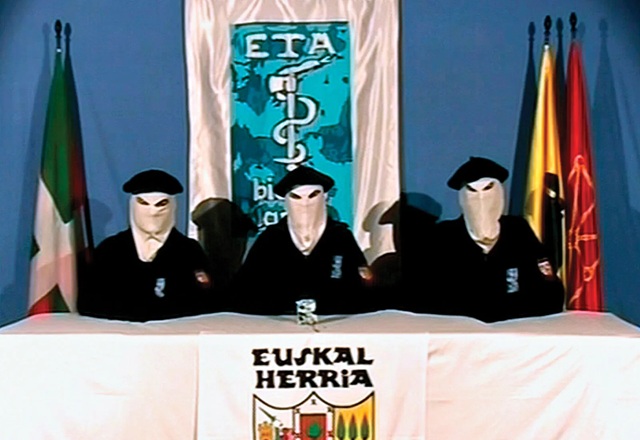
In a quiet residential home in southern France, few of the elderly woman’s neighbours have any inkling of her remarkable past. Once a wealthy and highly skilled spy, she played a crucial role in dismantling the leadership of the Basque terrorist group ETA, whose violent campaign terrorized Spain for decades. Her actions were driven not only by a sense of duty but also by a deeply personal quest for revenge after the brutal murder of her lover.
The woman, whose true identity remains a secret, has been dubbed “Clare” in the novel Llueve sobre Intxaurrondo (Rain over Intxaurrondo) by Francisco Hermida, a retired Guardia Civil officer who worked alongside her. The book reveals how her determination led to the arrest of key members of ETA’s leadership in the early 1990s. The woman’s involvement in the fight against ETA began after the tragic murder of Joseph Couchot, a French Basque businessman and the love of her life, who was killed by the group in 1984 for refusing to pay their extortionist “revolutionary tax.”
Couchot’s murder, justified by ETA under the claim of his alleged links to GAL, a state-backed paramilitary group, drove the woman into action. After the tragic loss, Hermida approached her and asked if she was willing to help take down the terrorist group. Without hesitation, she agreed, saying, “If it’s to get rid of those sons of bitches, ask me for anything.”
Her mission was to track down Philippe Lassalle, a driver for one of ETA’s leaders. Disguised as a cosmetics saleswoman, she methodically visited homes in the French town of Ascain, showing a low-quality image of Lassalle. In March 1992, her persistence paid off when she found him. During a visit to his mother’s house, she identified him from a photograph on the wall. When Lassalle unexpectedly entered, he confronted her aggressively, but his mother intervened, allowing her to leave unharmed.
The discovery of Lassalle led to a pivotal operation by the French and Spanish security forces in March 1992, resulting in a devastating blow to ETA. The arrests, which took place just months before Spain’s Expo ’92 and the Olympics in Barcelona and Seville, prevented planned attacks on the events. The operation remains one of the most significant actions against the group.
In the aftermath, Hermida immediately called Clare to inform her of the success. Her simple reply, “Congratulations. Mission accomplished,” underscored her focus on the mission rather than any personal recognition.
According to Hermida, Clare was instrumental in the fight against ETA, calling her “the best agent we had in France.” He also emphasized that her actions were driven purely by conviction, without any desire for reward or recognition. “Apart from the security forces, she was the greatest heroine of the fight against ETA,” he stated.
ETA’s violent campaign, which lasted for more than six decades and claimed 853 lives, formally ended in 2011 with the declaration of a “definitive cessation of its armed activity,” followed by its disbandment in 2018. However, the shadow of the conflict still looms over the Basque region and Spain as a whole, with Clare’s heroic actions serving as a powerful reminder of the resilience and determination in the face of unimaginable loss.