The long nights of ‘vengeance’ are over. It is time to ask, what has been achieved? Frenetic campaigns of falsehoods have enabled both sides to claim that they have engineered a notable victory. The whole truth, partly protected by legitimate interests of state, partly by vested partisan political interests, will never be known. But much can be measured in falsehoods as well.
The first truth that emerges through the noise is that the clear victory the Indian leadership sought has been tainted with ambiguity. Another is the tragic reality that domestic politics invariably trumps national security on both sides of the border.
Operation Sindoor was not a strategic imperative, nor was it timed for maximal strategic impact. It was a response to an orchestrated, partisan political campaign to whip up public sentiments, and was timed to meet partisan political, and not maximal strategic, objectives. For all the talk of “a compulsion to prevent, deter, and to pre-empt” attacks in India by Pakistan-based terrorist groups, the Operation simply had no potential to secure these objectives, and it was timed to a political calendar – the imperatives of being seen to have done ‘something big’, rather than doing something effective to secure these declared goals – that saw the launch of the coordinated strikes after a fortnight of media and public frenzy, and a succession of threats from the highest offices of the land. The result was, the Operation was initiated at a time when the Pakistani forces were on the highest levels of alert, dramatically escalating the risks for the attacking force.
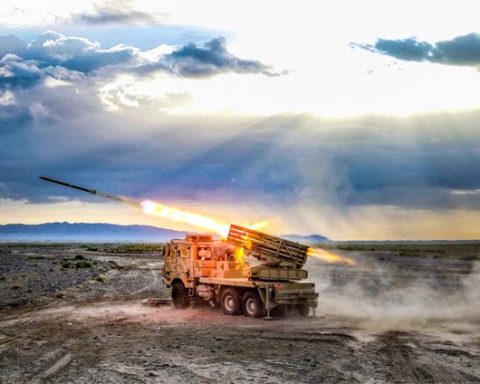
Nevertheless, at the tactical and operational levels, Operation Sindoor did secure most of its objectives. At the tactical level, the delivery of nine precision strikes on widely dispersed selected targets deep inside Pakistan occupied Jammu and Kashmir (PoJK) and Pakistani Punjab – including one at Bahawalpur, over a hundred kilometres from the International Border, that killed at least three prominent Jaish-e-Mohammad (JeM) terrorists, and another two of the Lashkar-e-Taiba (LeT) at Muridke, both in Punjab, was a signal military achievement. India claimed at least 100 terrorists killed; Pakistan insisted that just 31 ‘civilians’ had been killed in the first strikes.
It is significant that those who are constantly citing Chanakya as their inspiration, appear to have little familiarity with the concepts of deception and misdirection in war that he insisted on. Drumming up the ‘retaliation’ for a fortnight before the actual raids not only found the Pakistani Forces on the highest levels of alert, but also had the targets cleared of most of their regular occupants, particularly of the ‘highest value’ residents. Had the rhetoric of revenge been allowed to fade, and operations been held back till a measure of calm – and complacence on the other side – restored, the toll, particularly in terms of terrorist leadership, could have been substantially higher. But this would have required the national leadership to shoulder the responsibility of the intervening public criticism for their failure to act, and clearly such strength was lacking. And so, the Operation was fast forwarded, not with a view to securing maximal military objectives, but rather, to be harvested for political advantage.
At the operational level, the purpose of the strikes was to send a message to Pakistan that acts of terrorism, particularly of the magnitude reflected in the Baisaran massacre, would attract retribution, and that the lines in this regard had been pushed far forward from earlier retaliatory actions, such as the surgical strikes of 2016, and the Balakot bombings of 2019. In this, again, Operation Sindoor succeeded fully.
It is at the critical strategic level that Operation Sindoor fails, indeed, by design itself. If deterrence was the objective, Pakistan’s immediate reactions demonstrate its unwillingness to learn the lessons it was intended to be taught. Pakistan engaged in relentless tit-for-tat escalation in the wake of the first Indian strikes and, even after the declaration of a ceasefire, continued with shelling and drone attacks well into the night of May 10-11, demonstrating a recalcitrance that is likely to be reflected in its continued support to terrorism in Jammu and Kashmir (J&K).
It is useful to recall, here, that the United States (US) sustained a campaign of thousands of targeted drone strikes in Pakistan over nearly a decade and a half, but failed to prevent or deter Pakistani support to the Taliban and affiliated terrorist groups who were, at that time, killing US and Coalition forces, as well as Afghan Government forces. The sheer scale and persistence of these operations would have also had some pre-emptive impact, since many active armed groups were ‘neutralized’. But it is also useful to recall that one of the principal drivers of Taliban and terrorist recruitment for the ‘Afghan jihad’ was the US drone strikes. A limited action of the nature of Operation Sindoor is unlikely to have any lasting impact, though it may well become a rallying point for future recruitment to terrorist ranks. We have already heard statements by terrorist leaders in Pakistan promising vengeance. At least some will act on these threats. There is little evidence to suggest, moreover, that the Pakistani state and Army are simply going to give up on their ‘core issue’ and ‘jugular vein’.
Pakistan has fought four wars with India, and lost all these by general international consensus (and not just Indian claims), the 1971 war most graphically, losing more than half of its population and about 15 percent of its territory to the newly created Bangladesh. Not even these experiences have in any measure diverted it from its obsession with and misadventures in J&K and, by most measures, have deepened its commitment to ‘bleed India with a thousand cuts’.
More problematically, in its declaration that “Any terror incident will now be seen as an act of war,” New Delhi appears to be painting itself into a corner, with an inflexible commitment to direct retaliatory military action or war. Are we now to believe that a nation of 1.5 billion can be pushed to the brink of war by every terrorist attack? The world will have little tolerance for such unrelenting belligerence. There would be inevitable costs in terms of the country’s international standing, on the economy, investment, growth and development. Operation Sindoor has already resulted in an unacceptable US intervention in the conflict. Constant military confrontations and war-mongering will bring the ‘Kashmir issue’ more and more onto the international agenda – an objective Pakistan has long sought. Much like Union Ministry of Home Affairs vaunting declaration of ‘zero terrorism’, this poorly drafted declaration is likely to return to haunt the Centre.
Operation Sindoor will, of course, provoke some adaptive responses in the terrorist groups in Pakistan, and among their sponsors. Aware of the depths of the Indian strikes, as well as the possibility that future strikes may come without warning, the terrorist leadership and cadres are likely to be driven deeper underground, imposing at least some costs and operational difficulties on these groups. At the same time, these moves may create challenges for future retaliation as well, with a diminution in the number of visible and prominent terrorist targets for India to hone in on.
Much can also be learned from the bloodthirsty screaming, lying anchors and experts, knowingly spinning out falsehoods, or simply parroting a ‘line’ without any real information – the cream of the civilisational genius that is India today. We had Generals boasting that India had twice the Army, twice the tanks, nearly twice the Air strength, etc., as compared to Pakistan. But why should this be the case? India has 10.46 times Pakistan’s GDP and 5.6 times Pakistan’s population in 2024; as well as 9.5 times Pakistan’s territory. With a gigantic, growing and hostile power on its Eastern front as well, why has India’s leadership kept its Armed Forces’ strength at just twice that of its weaker neighbour? Why is it that, despite its ‘muscularity’ and purported commitment to national security, the present regime has kept allocations to defence at under 2 per cent of GDP (1.9 per cent under the current budget)?
Historically, India has sought nothing more than defensive parity with Pakistan, and has buried its head in the sand with regard to the burgeoning giant threatening the Eastern borders. This does not appear to have changed in any measure under the current dispensation, which remains far more sensitive to the monies being spent on the defence sector, and on the ‘burden’ of pensions for servicemen, than to the rising and menacing China, and the relentless mischief of Pakistan. Irrespective of our brave and boastful postures, if national expenditure on defence and security remains at present levels, India’s future cannot be secured.
Many who engaged in the vile, polarizing, bloodthirsty and ignorant propaganda of the weeks after the Baisaran massacre, have sought to justify their conduct in the name of ‘information warfare’. Certainly, the criticality of information warfare in modern conflict cannot be denied and this is the justification put forward by some of the most virulent propagandists. But the overwhelming burden of purported information warfare during this crisis was directed, not against the enemy, but at the domestic population [this was equally true of Pakistani propaganda], underlining the fact that the weight of state or state directed actions after Baisaran was overwhelmingly motivated by domestic partisan politics, and not by the nation’s strategic and security interests.
Operation Sindoor will have significant consequences, beyond any initial calculus, not only for Pakistan, but for India as well. Within hours of the announcement of the ceasefire, a savage political campaign was launched by the Opposition in India to portray Prime Minister Modi as weak, for having succumbed to Donald Trump’s bullying, even though Operation Sindoor had purportedly achieved nothing tangible. At the same time, sections of the international media began to push the idea that it was India that approached Trump to seek intercession to end the hostilities. These themes undermine the partisan and ultra-nationalist narrative that was imposed on the Baisaran massacre, on Operation Sindoor, and for years, on the conflict in J&K. It is likely that the majoritarian narrative will eventually be restored under the weight of sheer numbers of trolls and the distribution of resources. Nevertheless, at least some of the virulence of radical forces in the country has already been turned against those who have long provoked them. Like the revolution, polarizing ideologies of hate eventually devour their own children.