A thick blanket of black smoke hung over Tehran as explosions from recent airstrikes ignited oil storage facilities, raising alarms about toxic fallout and the possibility of acid rain in the Iranian capital. The attacks come as the war between the United States, Israel and Iran entered its tenth day, with military strikes, drone attacks and retaliatory operations spreading across several countries in the region.
Iranian emergency authorities warned residents that the destruction of major fuel storage sites could release hazardous chemicals into the atmosphere. The Iranian Red Crescent issued a public alert stating that the burning oil and damaged infrastructure may release toxic hydrocarbons along with sulfur and nitrogen oxides. When combined with rainfall, these pollutants can produce highly acidic precipitation capable of damaging infrastructure, contaminating water supplies and posing serious health risks to civilians.
Video footage captured on the ground in Tehran showed dense clouds of smoke drifting across the skyline while dark rainfall mixed with oily residue fell over parts of the city. Environmental specialists say such conditions can form when massive quantities of petroleum products burn simultaneously, sending chemical particles high into the atmosphere before they return to the ground with rain.
Authorities urged residents to remain indoors as pollution levels soared following the explosions. Thick smog and toxic particles have reportedly spread across large sections of the capital, worsening already severe air quality in the densely populated metropolis. Tehran, home to more than nine million people, now faces the possibility of environmental damage in addition to the physical destruction caused by the strikes.
The airstrikes targeted oil storage infrastructure believed to be crucial to Iran’s energy distribution network. Iranian officials condemned the attacks, describing them as equivalent to chemical warfare against civilians. According to the country’s foreign ministry, the destruction of fuel depots in a heavily populated urban area carries environmental consequences that extend far beyond the immediate blast zone.
The conflict itself has intensified rapidly since the first wave of joint US and Israeli strikes earlier in the campaign. Iranian authorities say at least 1,332 civilians have been killed in the attacks so far, though independent verification of the numbers remains difficult due to the ongoing fighting and limited access for international observers.
Iran has responded by launching retaliatory strikes on US military positions across the Middle East. The Islamic Revolutionary Guard Corps reported targeting Camp Arifjan and Ali Al Salem Air Base in Kuwait during a new round of missile and drone attacks. According to regional reports, a high-rise government building in Kuwait City was also struck by a drone, further expanding the geographical reach of the confrontation.
Meanwhile, additional explosions have been reported across the region. In Lebanon’s capital Beirut, at least two people were killed in a strike that hit the Ramada Hotel in the city centre, according to security sources cited by Reuters. Lebanese media outlets blamed Israel for the attack, though official confirmation has yet to be issued.
The fighting has also reached Israel itself. Footage from Tel Aviv showed damaged residential areas following Iranian missile strikes, with debris scattered across streets and abandoned vehicles left amid shattered buildings. Israeli officials say their air defense systems intercepted multiple waves of Iranian attacks while continuing their own offensive operations.
In Iran, explosions were heard again in Tehran hours after images circulated showing fires burning near Mehrabad Airport. Israeli officials stated that more than 80 fighter jets participated in a large-scale wave of strikes targeting military and strategic sites across the country. Israeli defense authorities also claimed to have destroyed Iran’s remaining F-14A Tomcat fighter jets at a major air base in Isfahan, although Iranian officials have not confirmed the claim.
Beyond the battlefield, the conflict is also creating political uncertainty inside Iran. Several members of the country’s Assembly of Experts, the clerical body responsible for selecting the next supreme leader, announced that they have reached a decision on a successor following the reported killing of the country’s previous leader during the opening phase of the war. The identity of the chosen candidate has not yet been publicly revealed.
Israeli officials have warned that any new Iranian leader who continues the current military strategy could become a target. The warning highlights the increasingly personal and high-stakes nature of the confrontation between the rival powers.
The environmental fears now emerging in Tehran echo previous conflicts in the region. During the 1991 Gulf War, hundreds of burning oil wells in Kuwait released enormous quantities of sulfur dioxide into the atmosphere. The resulting smoke clouds and acid rain spread thousands of kilometres, affecting air quality across much of the Middle East and even reaching parts of Eastern Europe and Central Asia.
Analysts say a similar environmental crisis could develop if more energy facilities are destroyed during the current conflict. Burning oil infrastructure releases massive volumes of pollutants that can linger in the atmosphere for weeks or months, spreading far beyond the immediate combat zone.
The financial cost of the war is also rising rapidly. Reports citing US officials indicate that the first week of military operations has already cost Washington roughly six billion dollars. Pentagon estimates suggest that if the campaign continues at its current pace, daily costs could approach one billion dollars. Officials in Washington are expected to request additional funding from Congress as the operation expands.
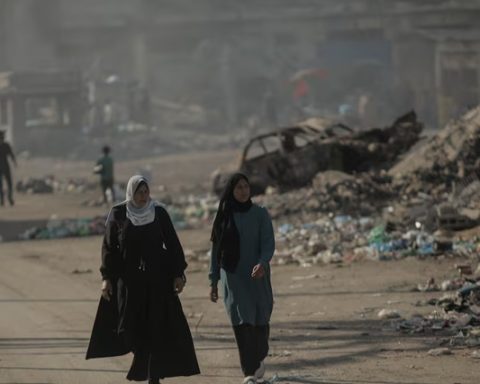
At the same time, the scale of destruction inside Iran continues to grow. According to figures released by the Iranian Red Crescent, nearly 9,700 civilian locations have been damaged by airstrikes. The majority are residential buildings, though commercial properties, schools and medical facilities have also been affected.
As smoke continues to drift across Tehran’s skyline and warnings of acid rain spread among residents, the environmental consequences of the conflict are becoming impossible to ignore. What began as a military confrontation is now producing a toxic legacy in the air above one of the Middle East’s largest cities, raising fears that the war’s impact will extend far beyond the battlefield.