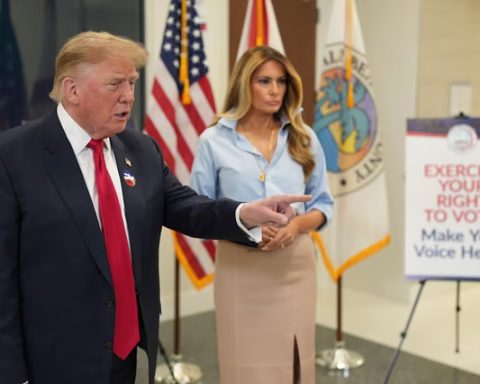
President Donald Trump recently received and discussed a draft of a forthcoming book by constitutional lawyer Alan Dershowitz that examines whether Trump could legally serve a third term as president, according to an interview Dershowitz gave to The Wall Street Journal. The conversation, which took place during a meeting in the Oval Office, has reignited debate over the limits of presidential power and the meaning of the Constitution’s two-term restriction.
Dershowitz told the Wall Street Journal that he handed Trump a draft of the book, titled “Could President Trump Constitutionally Serve a Third Term?”, which is scheduled for publication next year. During their discussion, Dershowitz said Trump asked about the book’s conclusions and appeared intrigued by the legal arguments, though not overtly committed to pursuing such a path. Dershowitz said he told the president that the Constitution is not entirely clear on every conceivable scenario related to a third term, despite the widely accepted understanding that presidents are barred from being elected more than twice.
According to Dershowitz, Trump reacted with curiosity rather than intent, smiling before moving on to other matters. Dershowitz emphasized to the Journal that he does not believe Trump plans to run for a third term, describing the issue as one the president viewed primarily as an intellectual exercise. Trump himself told reporters in October that the Constitution is “pretty clear” that he is not allowed to run again.
The White House offered mixed signals following the report. Asked by the Wall Street Journal about the meeting and Trump’s views, spokeswoman Abigail Jackson said the country would be fortunate if Trump were able to serve for a longer period of time. Separately, White House chief of staff Susie Wiles said in a Vanity Fair interview published this week that Trump understands he cannot run again.
Dershowitz’s book outlines several hypothetical scenarios in which a president might nonetheless return to office. One proposal involves Trump running for a third term and winning an election that ultimately becomes unresolved, potentially forcing the outcome to be decided by Congress. Dershowitz suggested that if members of the Electoral College were to abstain from voting, the decision could be shifted to lawmakers, who would then select rather than elect the president.
Such scenarios have little historical precedent. The National Constitution Center notes that only twice in US history have electors abstained from voting for a pledged presidential candidate who was still alive, and neither instance resulted in Congress deciding the presidency. Legal scholars remain deeply skeptical of Dershowitz’s arguments. James Sample, a law professor at Hofstra University, told the Wall Street Journal that the idea was “absurd,” though he outlined a different, more speculative scenario involving allies winning the presidency, resigning, and positioning Trump for succession through the speakership of the House.
The discussion extended beyond legal theory into political enthusiasm among Trump’s allies. Dershowitz said that after his meeting with Trump, he spoke with prominent Republican donor Miriam Adelson at a White House Hanukkah party. After reviewing the draft, Adelson reportedly expressed hope that the idea of a third term could become reality. Adelson later echoed that sentiment publicly during the event, prompting chants of “four more years” from attendees.
During the celebration, Trump joked to the crowd that Adelson had suggested he “think about it,” adding humorously that she would offer another $250 million in support. Federal Election Commission records show Adelson donated more than $100 million to a pro-Trump political action committee during the 2024 election cycle and more than $145 million overall to Republican causes, though it remains unclear why Trump cited the higher figure.