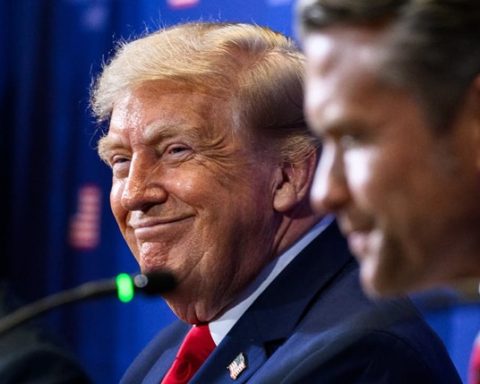
US President Donald Trump sparked international concern after declaring that the United States could “take Cuba almost immediately” once the conflict with Iran is resolved. The remarks were delivered during a private dinner with political and business leaders at the Raymond F. Kravis Center for the Performing Arts in West Palm Beach, Florida, where he outlined a foreign policy sequence prioritizing Iran before turning attention to Cuba.
In his speech, Trump suggested that after reaching what he described as victory in Iran, the United States could move militarily toward Cuba, claiming such action would lead to a rapid surrender. He referenced deploying a US aircraft carrier near Cuban waters as part of a show of force. The comments, delivered in a confident and provocative tone, have raised questions about escalation risks in already tense international relationships.
The statement came shortly after the White House issued a new executive order intensifying economic sanctions against Cuba. The expanded measures target key sectors including energy, mining, financial services, and defense. They also extend penalties to individuals and companies—both domestic and foreign—engaged in transactions that generate revenue for the Cuban government, including potential asset freezes and restrictions on access to the US financial system.
The sanctions are part of a broader “maximum pressure” strategy aimed at further limiting Cuba’s access to international finance, fuel, and commercial operations. This approach builds on decades of economic restrictions that have already significantly constrained the Cuban economy.
Cuban President Miguel Díaz-Canel strongly rejected the new measures, condemning them as coercive and harmful. He argued that the sanctions deepen economic hardship for the Cuban population and reinforced his government’s long-standing position that the US embargo is a central obstacle to national development.
At the same time, Cuba continues efforts to strengthen its domestic resilience, particularly in energy production. The country recently inaugurated a new photovoltaic solar park with battery storage in Ciego de Ávila province, developed with international cooperation. The project is part of a broader strategy to expand renewable energy capacity and reduce dependence on imported fuel amid ongoing external restrictions.
The solar initiative is one of several aimed at improving energy stability and strengthening national infrastructure. Officials say these projects are essential for maintaining electricity supply reliability and supporting long-term economic sustainability.
The combination of heightened US political rhetoric, expanded sanctions, and Cuba’s push for energy independence highlights a growing geopolitical standoff. While Washington increases economic and strategic pressure, Havana is accelerating efforts to build internal capacity and reduce vulnerability to external constraints.