
On Monday, October 13, 2025, President Donald J. Trump convened “The Middle East Peace Plan” summit with twenty chiefs of state and heads of government in Egypt. Accompanying him on the trip were U.S. Secretary of State Marco Rubio, Secretary of War Pete Hegseth, CIA Director John Ratcliffe, and White House Chief of Staff Dan Cane. President Trump made a brief stop in Israel before continuing on to Egypt.
While aboard Air Force One, he briefed reporters on the summit and the latest developments in the Gaza ceasefire, which he described as “holding” and marking the end of the war. In response to a question, Trump said, “The war in Gaza is over. Do you understand that? It is over. The ceasefire will hold. People are tired of it.” His visit coincided with the release of hostages from the Gaza City–Netzarim axis at 8:00 a.m. and from the central camps and Khan Yunis in the southern Gaza Strip at 10:00 a.m. The president landed at 9:20 a.m.
Air Force One departed Joint Base Andrews in Maryland early Monday morning, carrying President Trump and his delegation to Israel and then Egypt. During the flight, he reiterated his optimism about the ceasefire and the peace process, declaring that “a new chapter” was beginning in the region.
In Israel, President Trump received the “President’s Medal” from Israeli President Isaac Herzog — the highest civilian honor in Israel. The award recognized Trump’s role in brokering the agreement that led to the release of all hostages and the end of the war. President Herzog praised Trump “for the historic agreement, for his full and steadfast support of the State of Israel, for his special contribution to its security and concern for the welfare of its citizens, and for his commitment to lead the entire region into an era of peace and cooperation.”
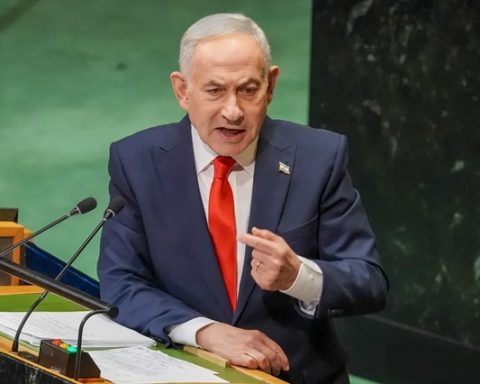
Prime Minister Benjamin Netanyahu hailed the day as “a diplomatic success and a national and moral victory for the State of Israel.” He added, “From the beginning, I made it clear: we would not rest until all our hostages returned and all our goals were achieved. Through steadfast resolve, powerful military action, and the great efforts of our great friend and ally President Trump, we have reached this critical turning point. I thank President Trump for his leadership, his partnership, and his unwavering commitment to the safety of Israel and the freedom of our hostages. God bless Israel. God bless America. God bless our great alliance.”
According to the official schedule, President Trump arrived in Israel at 9:20 a.m., met with families of the hostages at 10:45 a.m., and addressed the Knesset at 11:00 a.m. He departed for Sharm el-Sheikh, Egypt, at 1:00 p.m., where the summit and signing ceremony took place at 2:30 p.m., before returning to the United States at 5:00 p.m. Ben-Gurion Airport rolled out the red carpet for the president’s arrival, where he was greeted by President Herzog, Prime Minister Netanyahu, and their spouses.
In Jerusalem, Ivanka Trump, the president’s daughter and wife of Jared Kushner, was seen praying at the Western Wall. Meanwhile, Chief of Staff Eyal Zamir led CENTCOM Commander Brad Cooper and special envoys Steve Witkoff and Jared Kushner on a guided tour of the Gaza region, briefing them on the IDF’s preparations for the ceasefire. Commander Cooper said, “The U.S. will deliver peace in the Middle East without boots on the ground. Arab, Turkish, and other militaries are likely to deploy in Gaza, with Indonesian and Pakistani forces also expected to participate.”
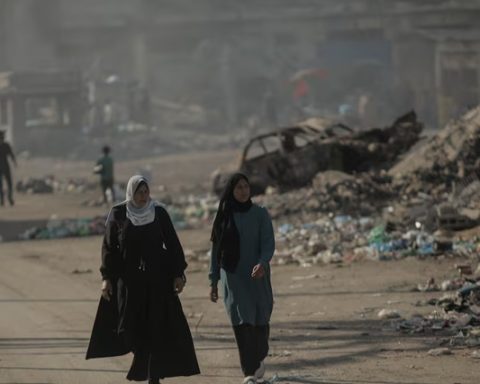
In Gaza City, municipal engineering vehicles began clearing rubble from the streets following the Israeli withdrawal. The White House released the full text of President Trump’s twenty-point peace plan, outlining a roadmap for demilitarizing Gaza, ensuring hostage releases, and launching a comprehensive reconstruction effort under international supervision. The plan envisioned Gaza as a deradicalized, terror-free zone governed temporarily by a technocratic Palestinian committee under the oversight of an international body — the “Board of Peace” — chaired by President Trump and including global figures such as former British Prime Minister Tony Blair.
The plan included provisions for humanitarian aid, infrastructure rehabilitation, and amnesty for Hamas members who disarmed. It also established an International Stabilisation Force (ISF) to train Palestinian police and maintain internal security. The document explicitly stated that Israel would not occupy or annex Gaza and that a credible pathway to Palestinian self-determination could emerge once the agreement was fully implemented.
Under the terms of the plan, the Israel Defense Forces (IDF) withdrew to the so-called “yellow line,” maintaining control over approximately 53 percent of Gaza. Prime Minister Netanyahu visited Sheba Hospital to review preparations for receiving released hostages. Points four and five of the Trump plan — which covered hostage and prisoner exchanges — were implemented on October 13. While Israel accepted the plan, it allowed for the resumption of hostilities should Hamas refuse to disarm. The disarmament of Hamas and the broader demilitarization of Gaza were identified as the next critical steps.
Reports indicated that Hamas leaders, under pressure from Qatar, Egypt, and Turkey, agreed to release the hostages but remained unwilling to surrender their weapons. Senior Hamas leader Osama Hamdan stated, “The resistance will not hand over its weapons before the liberation and establishment of the state, and after the liberation, the weapons will remain for self-defense.” He added, “We will not leave the Gaza Strip; on the contrary, we plan for Hamas leaders abroad to return to the Gaza Strip. The entire Palestinian people reject expulsion.”
Israeli intelligence assessments concluded that Hamas and its allies were unlikely to relinquish power to the International Stabilisation Force or to the IDF. Hamas aimed to retain control over 47 percent of Gaza, while Israel maintained the rest under military authority. If this division persisted, reconstruction efforts outlined in point seventeen of Trump’s plan would not proceed. Analysts noted that Hamas released the hostages primarily due to pressure from regional mediators, not because of any ideological shift. The group’s Islamist doctrine, they said, remained firmly in place, prioritizing power and resistance over peace.
Hamas’s external leadership in Qatar reportedly urged its Gaza-based leaders to comply with the release terms to avoid direct confrontation with the United States. Nevertheless, neither Hamas nor its patron Iran showed any indication of abandoning their long-standing hostility toward Israel.
Within Israel, skepticism persisted among right-wing factions who distrusted the ISF’s role and the U.S.–Qatari framework overseeing Gaza’s reconstruction. They argued that Hamas and its affiliates, backed by Iran’s Islamic Revolutionary Guard Corps, would continue to operate clandestinely beneath any new administrative arrangement. Israeli officials were expected to rely on local proxies and intelligence networks to ensure Hamas did not reassert dominance in Gaza.
The summit in Sharm el-Sheikh concluded with the signing of the peace framework and commitments from regional partners to support the agreement’s implementation. President Trump departed for Washington later that evening, declaring the event “a new beginning for the Middle East.”