The U.S. government has intensified its deportation efforts, sending shockwaves through immigrant communities, particularly among Indian nationals residing illegally in the country. The latest deportation flight, a U.S. military aircraft from Texas to India, has left many fearing for their future under President Donald Trump’s aggressive immigration policies.
Among those deeply unsettled by the latest developments is Samuel, a 42-year-old Indian national who has lived in the U.S. since 2013. Samuel claims he was a victim of an immigration scam that left him without legal status. Now married to Andrea, a U.S. citizen, and running a catering business in California, he remains on edge as deportation sweeps intensify.
“I am always a positive person, but inside I’m scared,” he said. “I want to be happy, but this is out of my control.”
A Surge in Deportations
As of 2022, an estimated 11 million immigrants in the U.S. lacked permanent legal status, according to the Pew Research Center. Among them, 1.7 million are from Asia, with Indian nationals comprising the third-largest group of unauthorized immigrants at 725,000, following Mexicans and Salvadorans.
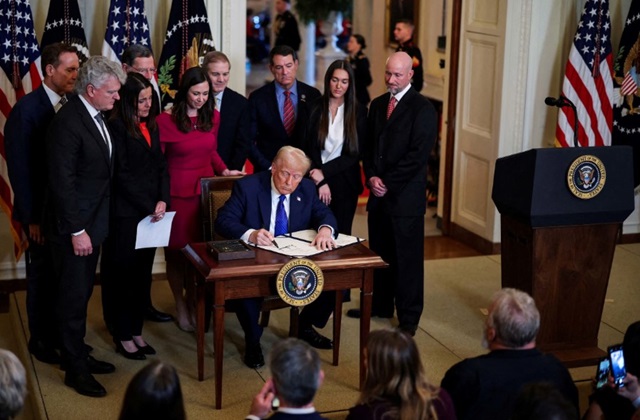
President Trump, just weeks into his second term, has initiated what he described as “the largest deportation program in American history.” On his first day back in office, he signed ten executive orders on immigration, including one expanding the powers of Immigration and Customs Enforcement (ICE). This move has facilitated rapid deportations, bypassing traditional immigration court processes.
According to Vera, a nonprofit focusing on criminal justice reform, deportation cases have surged, reaching 3.7 million by the end of 2024. Alarmingly, 2.5 million of those individuals are navigating their cases without legal representation.
Impact on the Workforce and Economy
Mass deportations are expected to have far-reaching economic consequences. The Center for Migration Studies estimates that approximately 1.5 million unauthorized immigrants work in construction, 1 million in restaurants, and 320,000 in agriculture. Experts warn that removing such a significant labor force will disrupt these industries, potentially leading to labor shortages and economic downturns.
Despite their contributions to the economy, immigrants are facing an increasingly hostile environment. Trump’s administration has emphasized enforcement, with thousands already deported to India, Guatemala, Peru, and Honduras. Even Colombia, after facing tariff threats from Trump, has agreed to accept deported nationals without restrictions.
India and China’s Response
India and China have cautiously responded to the U.S.’s deportation efforts. Their foreign ministries have stated they will accept repatriates upon verification of their nationality and documents, though details on the number of returnees remain unclear. The issue is expected to be a key discussion point when Indian Prime Minister Narendra Modi visits the White House next week and when Trump engages with Chinese President Xi Jinping.
However, the public reaction in India to the first deportation flight has been largely negative. Social media erupted with criticism, especially over reports that deportees were shackled and handcuffed during transport.
Fear and Uncertainty Among Immigrants
For many, the uncertainty surrounding their status has turned into daily fear. Chan, a 36-year-old Chinese asylum seeker who crossed into the U.S. from Mexico, now avoids leaving his home. “I hide at home and don’t open the door to strangers,” he said. “If I see the police nearby, I try to stay away from them.”
His concerns are not unfounded. Under the Trump administration, ICE has reinstated “collateral arrests,” where immigrants not originally targeted for deportation can still be detained if encountered during enforcement operations. This policy, previously banned under the Biden administration, has heightened anxiety within immigrant communities.
Legal and Humanitarian Concerns
Immigration lawyers and advocacy groups report a surge in inquiries from undocumented individuals desperate to understand their rights. Samuel’s attorney, Glen Raj, said many of his clients are stuck in an immigration backlog, waiting for their cases to be heard by a judge.
Meanwhile, resources are being diverted from the United States Citizenship and Immigration Services (USCIS) to ICE, further straining the already backlogged immigration system. The administration has also authorized the expansion of a migrant detention facility in Guantanamo Bay, which is expected to hold up to 30,000 people.
Policy Shifts and Impacts on Legal Immigrants
While Trump’s focus has largely been on unauthorized immigrants, his administration has also rolled back protections for some legal immigrants. Homeland Security Secretary Kristi Noem announced the end of an 18-month extension for certain Venezuelan migrants under Temporary Protected Status (TPS), affecting 350,000 people. This has raised fears that similar rollbacks could occur for other immigrant groups, including the nearly 15,000 Nepalis currently in the program.
Even immigrants with temporary protections, such as the 4,000 Hong Kongers on the Deferred Enforced Departure (DED) program, worry about their future. The Biden administration had extended the DED program for 24 months, but Trump could choose to end it, leaving them vulnerable to deportation to a politically volatile Hong Kong.
Future of U.S. Immigration Policy
Experts agree that while immigration reform is necessary, executive actions alone are not a long-term solution. Kathleen Bush-Joseph of the Migration Policy Institute argues that without comprehensive legislative changes, the U.S. will continue to struggle with its immigration system.
“But these are not systemwide fixes,” she said. “It’s not clear yet whether Congress will attempt to undertake a real update of the system and bring it into the 21st century.”
For now, immigrants like Samuel can only hope for relief. “I don’t have any other options,” he said. “I don’t want to leave Andrea alone. Her parents are sick, and I should be taking care of her. It’s very hard to think about the future.”
– With input from agencies