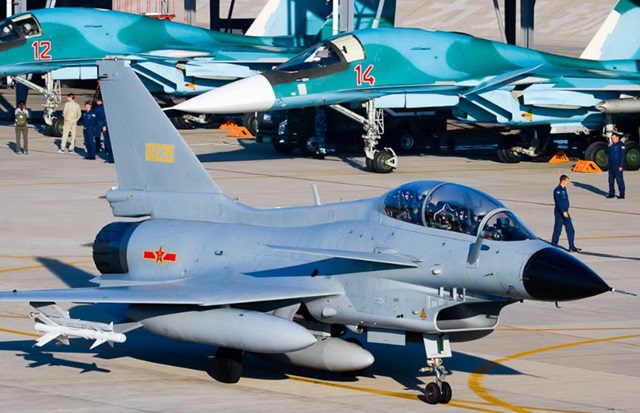
Chinese-made Pakistani fighter jets shot down at least two Indian military aircraft in an escalating aerial conflict this week, according to U.S. officials cited by Reuters, marking a significant moment for Beijing’s defense exports and raising alarm across the international community.
Two U.S. defense officials, speaking on condition of anonymity, confirmed to Reuters that Pakistan used J-10 fighter jets in an air-to-air engagement with Indian aircraft. At least one of the downed Indian jets was reportedly a French-made Rafale, they said. The use of Chinese-made platforms — and not U.S.-supplied F-16s — has drawn particular attention in Washington, where military analysts are closely monitoring how Chinese systems perform against Western technology.
India’s Air Force has not officially acknowledged any aircraft losses. In a brief response to queries about the incident, an Indian Air Force spokesperson declined to comment on the Reuters report. Instead, Indian authorities maintained that they had carried out successful strikes targeting what they described as terrorist infrastructure within Pakistani territory.
Pakistan’s Defense Minister, Khawaja Muhammad Asif, told Reuters that the J-10 was used to shoot down three Indian Rafales during the engagements, and claimed a total of five Indian aircraft were brought down in air-to-air combat.
The confrontation has intensified already simmering tensions in one of the world’s most volatile and heavily militarized regions, with both nations possessing nuclear arsenals. Blasts were reported late Thursday in Jammu, Indian-administered Kashmir, in what Indian military sources suspect was a Pakistani drone attack. In turn, Pakistan claimed it had shot down 25 Indian drones overnight. India countered that its air defense systems intercepted multiple drone and missile strikes.
The events are not only being followed with concern by world powers—including the U.S., China, and Russia—but are also being scrutinized for their military implications. Analysts say the skirmish could offer early insight into how future conflicts involving Chinese and Western-made jets may play out, particularly in contested regions like Taiwan or the South China Sea.
“This is a critical case study,” said Douglas Barrie, senior fellow for military aerospace at the International Institute for Strategic Studies. “The air warfare communities in China, the U.S., and Europe will be eager to analyze what was used, how it was used, and what proved effective.”
Both the Rafale and the J-10 are considered generation 4.5 fighter jets, placing them among the most capable in current service. Defense observers highlighted reports that Pakistan may have deployed China’s PL-15 air-to-air missile, while India is believed to have equipped its Rafales with European-made Meteor missiles. However, details on the specific munitions used remain unverified.
Western defense industry officials, while closely watching the situation, warned against drawing conclusions too soon. “At the moment it’s not possible to judge anything. We know so little,” one told Reuters, citing the fog of conflict and the lack of reliable information from either side.
Dassault Aviation, which manufactures the Rafale, and MBDA, the European consortium behind the Meteor missile, were not immediately available for comment due to a public holiday in France.