The United States on Monday officially revoked the “foreign terrorist organization” (FTO) designation for Hayat Tahrir al-Sham (HTS), a powerful Syrian faction formerly tied to al-Qaeda. The move comes just a week after Washington lifted decades-long sanctions on Syria, marking a new era of cautious reengagement with the war-torn nation.
The announcement was made by U.S. Secretary of State Marco Rubio, who cited the group’s formal dissolution and the Syrian government’s commitment to combating terrorism.
“In line with President Donald Trump’s May 13 promise to deliver sanctions relief to Syria, I am announcing my intent to revoke the FTO designation of al-Nusrah Front, also known as Hay’at Tahrir al-Sham,” Rubio said in a statement released Monday morning.
HTS, previously known as the al-Nusra Front, was once a prominent al-Qaeda affiliate. The group severed ties with the global jihadist network in 2016 and has since sought to portray itself as a nationalist movement. After leading a successful military campaign to oust former President Bashar al-Assad in December 2024, HTS transitioned into a political actor under the leadership of Ahmed al-Sharaa.
Sharaa, a former commander of HTS, was named Syria’s interim president following Assad’s ouster. His rise has been met with tentative approval from the U.S., Europe, and regional players, including Israel, which has reportedly opened backchannel discussions with the new government.
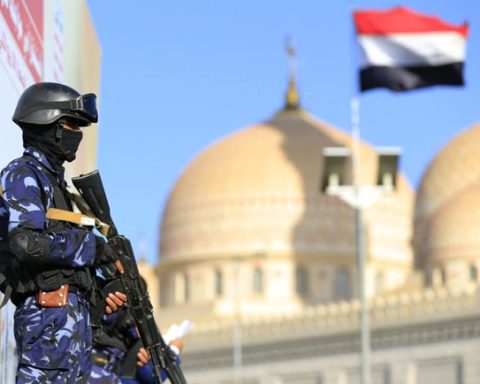
The U.S. decision to delist HTS as a terrorist group will take formal effect on Tuesday. It follows Syria’s move to disband all armed factions earlier this year, integrating elements of HTS into a newly established national police force. The restructuring came as part of a broader transition to civilian governance under a five-year provisional constitution.
Once branded a wanted jihadist, Sharaa has undergone a rapid transformation into an internationally recognized leader. The U.S. has already removed a multi-million-dollar bounty from his head, while the European Union last week eased restrictions on major Syrian economic sectors.
On Friday, Syria’s interim government signaled its willingness to reimplement the 1974 disengagement agreement with Israel, a development seen as part of a broader diplomatic thaw. The United Kingdom restored diplomatic ties with Syria on Saturday after more than a decade and lifted sanctions on key government ministries and media agencies.
Sharaa’s transitional government now faces the immense task of rebuilding a country devastated by 13 years of civil war. The conflict, which began in 2011 with mass protests against the Assad regime during the Arab Spring, left hundreds of thousands dead and millions displaced.
With growing international recognition and a gradual easing of sanctions, Syria’s new leadership is working to stabilize the economy and reestablish its place in the global community.
“This is a turning point,” said one senior U.S. official. “We’re not forgetting the past, but we’re choosing to invest in a future that has the potential for peace, accountability, and reconstruction.”
Still, human rights groups have expressed concerns over Sharaa’s consolidation of power under the temporary constitution, warning that his past cannot be ignored even amid promises of reform.