by Durga Velayudham
“We stand for organised terror—this should be frankly admitted. Terror is an absolute necessity during times of revolution.” Lenin’s words, coldly rational yet disturbingly candid, encapsulate a recurring paradox in human history: that in the fervour of political upheaval, ordinary men and women—driven by frustration, deprivation, and the intoxicating allure of ideological righteousness—transmute into instruments of monstrous violence. The Red Terror, unleashed in Petrograd following an assassination attempt on Lenin in 1918, saw over five hundred individuals executed within days, many without trial, as workers, soldiers, and peasants participated in massacres, purges, and pogroms under the aegis of revolutionary justice. This is not an isolated aberration; it is an archetype repeated across epochs, from the streets of Paris in 1793 to the barricades of 1848, the sieges of Nanjing during the Taiping Rebellion, the insurgent fervour of the Haitian Revolution, and the Red Guards’ persecution during China’s Cultural Revolution. In each instance, the ostensibly liberating revolution becomes a theatre in which the oppressed, motivated by anger and despair, assume monstrous agency.
The French Revolution offers a paradigmatic example. Amid famine, inequality, and the collapse of monarchical authority, peasants and urban poor enacted what Robespierre termed “an emanation of virtue”: the Reign of Terror. Mass executions, mob attacks on the nobility, and the guillotining of Queen Marie Antoinette became ritualistic expressions of collective rage, sanctioned by the moral authority of the revolution. Robespierre asserted, “To punish the oppressors of humanity is clemency; to forgive them is cruelty.” Within this logic, ordinary citizens—long constrained by law, custom, and morality—became instruments of terror, their monstrous acts legitimised as necessary for the survival of the republic. Similar dynamics unfolded during the revolutionary fervour of 1848, when urban workers and impoverished citizens, driven by resentment and political aspiration, erected barricades, engaged in street violence, and destroyed property, their passion blurring the line between insurgency and barbarity.
In Russia, the collapse of the Tsarist autocracy catalysed a more ideologically coherent, yet equally devastating, manifestation of mass monstrosity. Lenin’s explicit sanctioning of terror transformed discontented peasants, soldiers, and workers into agents of systemic violence. The Cheka’s swift executions, mass arrests, and purges were justified as protection of the revolution, yet they reveal a deeper truth: in the absence of moderating structures, collective emotion—anger, fear, and a desire for retribution—becomes self-perpetuating, legitimising atrocity in the guise of righteousness. Marxist theory frames such uprisings as historically inevitable struggles against oppression, yet the Russian example underscores a darker reality: the proletariat, when inflamed by ideology and frustration, can redirect its rage not only against elites but also against its own peers, producing monstrosities indistinguishable from the tyrannies it opposes.
Across Asia, the Taiping Rebellion offers a further lens on the interplay of frustration, zeal, and monstrous agency. Under the charismatic leadership of Hong Xiuquan, peasants imbued with religious fervour rose against the weakening Qing dynasty. The siege of Nanjing in 1853 saw mass killings and extreme militarisation, illustrating how systemic neglect, socioeconomic despair, and the promise of divine justice coalesce into a crucible of collective violence. Likewise, the Haitian Revolution demonstrates the paradox of liberation entangled with monstrosity: enslaved Africans, driven by centuries of oppression and rage, staged violent uprisings against colonists, simultaneously achieving emancipation while committing acts that terrorised both oppressors and perceived collaborators alike. These narratives reveal a persistent pattern: revolutionary energy, even when morally or politically justified, is intrinsically prone to excess when filtered through the prism of unrestrained emotion and mass mobilisation.
The Cultural Revolution in China (1966–1976) exemplifies this with chilling clarity. Mao’s ideological campaigns mobilised youth into Red Guards who were encouraged to destroy the “old culture” and target class enemies. As one Red Guard declared, “The purpose of the Great Proletarian Cultural Revolution is to destroy the old culture. You cannot stop us!” Students, untempered by experience or moral restraint, engaged in public humiliations, beatings, and purges of teachers, intellectuals, and peers. Jung Chang, reflecting on her own involvement, admitted, “I was not forced to join the Red Guards. I was keen to do so.” Here, the monstrous emerges not only in physical destruction but in the willing surrender of conscience to collective ideology, demonstrating that revolutions often summon a latent capacity for cruelty in those who perceive themselves as agents of justice.
Across continents and centuries, these episodes illuminate a stark geopolitical and sociological axiom: during times of societal shift, ordinary individuals, when inflamed by deprivation, ideology, and untempered passion, are capable of acts that exceed the bounds of moral imagination. Theories from Hobbes and Rousseau remind us that social contract breakdowns render humans vulnerable to the exigencies of collective survival or vengeance; Le Bon’s analyses of deindividuation explain how group identity can override personal morality; and Schmitt’s political theology clarifies how the friend–enemy distinction is weaponised to legitimise atrocities. Each of these frameworks illuminates why revolutions, while often conceived as vehicles for emancipation, frequently unleash monstrous manifestations of human behaviour.
The historical record, replete with verified instances from the guillotines of Paris to the Red Guards’ persecution in Beijing, challenges simplistic narratives of heroic revolution or unalloyed moral progress. It underscores the unsettling truth that monsters do not always reside in tyrants or oppressors; they often arise spontaneously from the collective psyche of the aggrieved and the mobilised. When social, economic, and political pressures converge, when ideology intoxicates the masses, and when ethical constraints dissolve under the weight of perceived necessity, the very agents of liberation can become its most formidable and monstrous instruments. The lesson, as haunting as it is imperative, is that the mask of revolution may conceal not only the promise of justice but the lurking potential for orchestrated and spontaneous monstrosity alike—a cautionary imperative for scholars, policymakers, and citizens alike to discern between righteous upheaval and the perils of unbridled collective fury.
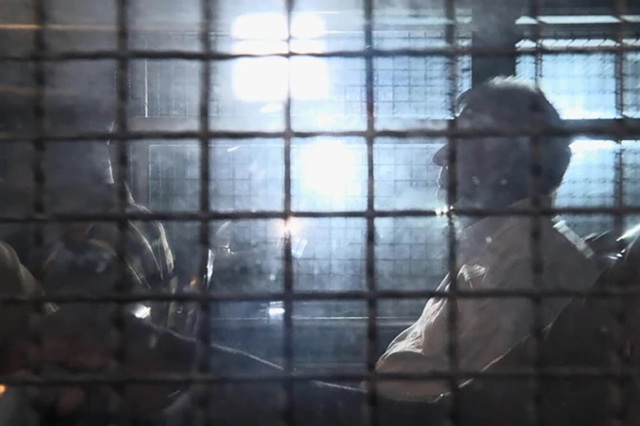
The arrest and detention of former President Ranil Wickremesinghe yesterday, until 26 August, initiated through an internal investigation by the President’s Secretary and precipitated by a complaint from an anonymous individual, starkly exemplifies the perilous interplay between symbolic justice and untempered collective frustration. The complaint’s swift transmission to law enforcement agencies, and the subsequent public spectacle, may offer a fleeting sense of satisfaction to constituencies from rural areas—long burdened by historical grievances against the Colombo elite—but it scarcely constitutes meaningful structural reform.
On the contrary, it is largely performative, a theatre of vengeance rather than a considered exercise in governance. No seasoned strategist or judicious statesman would sanction such an action; it is instead the product of a psychologically unbalanced actor, whose motives are inflamed by desperation, festering resentment, and an overweening sense of insecurity. Here, the apparatus of justice is co-opted as an instrument of symbolic assertion, converting what should be sober governance into a stage for monstrosity masquerading as righteousness.
In this context, they confirm a persistent sociopolitical axiom evident throughout history: in moments of societal tension, the revolutionary monster is not always an abstract insurgent but can emerge from the very heart of authority itself, propelled not by strategic foresight but by unmediated emotion, fear, and vindictive zeal.