by Durga Velayudham
In the mythos of Tamil nationalism, the Liberation Tigers of Tamil Eelam (LTTE) have long occupied a revered, if contested, space. To many in the diaspora, especially in the West, the LTTE are remembered as valiant warriors who stood up against Sinhala-Buddhist majoritarianism and a brutal state. But that is only half the story. The other half is darker, far more unsettling, and rarely spoken of openly. It is the story of how the LTTE not only waged war against the Sri Lankan state but simultaneously waged a quieter, more insidious war against their own people — the Tamils.
In the name of liberation, the LTTE systematically eliminated dissent, slaughtered moderate Tamil politicians, coerced child soldiers into battle, and crushed civil society under an iron boot. In doing so, they destroyed the pluralism and democratic traditions within Tamil political life, turning the struggle for Tamil rights into a monologue of militarised obedience. This, more than anything else, ensured that the Tamil people would pay a devastating price — not only during the war, but in the years that followed.
Consider the fate of A. Amirthalingam, a seasoned politician and the face of the Tamil United Liberation Front (TULF), once the largest Tamil political party advocating non-violent resistance. In 1989, he was assassinated in Colombo by the LTTE. His only crime was believing in democracy and attempting to represent Tamil aspirations through parliamentary means. With his death, the LTTE made it clear: there would be no room for alternate visions of Tamil liberation. Neelan Tiruchelvam, a constitutional scholar and architect of a proposed federal solution, met a similar end in 1999. His vision of compromise and coexistence was anathema to a group that viewed absolute control as a prerequisite for justice. “Violence will never deliver justice to our people,” Neelan once said. “It will only bury us deeper in fear.” The Tigers ensured he would never say it again.
The erasure of rival Tamil movements was equally brutal. In 1986, the LTTE turned on the Tamil Eelam Liberation Organisation (TELO), one of its main competitors, slaughtering over 400 of its cadres in a matter of weeks. Other groups such as the Eelam People’s Revolutionary Liberation Front (EPRLF) and PLOTE were similarly neutralised. By the end of the 1980s, the LTTE had forcibly established itself as the sole voice of Tamil resistance. But this was not unity; it was monopoly through massacre.
The Tiger’s war on the Tamil people was not limited to the political elite. Ordinary civilians bore the brunt of their authoritarianism. In LTTE-controlled areas, forced conscription became a terrifying reality. Thousands of children were abducted, trained, and sent to the front lines, often after a few weeks of military drilling. Families who resisted were threatened, beaten, or killed. In one haunting testimony, a mother from Kilinochchi recounted how her 15-year-old son was taken in 2006. “They said he was a traitor because he didn’t want to fight,” she said. “My only child. They didn’t even return his body.” The LTTE referred to these children as Maaveerar — Great Heroes. But what sort of heroism is forced at gunpoint?
Perhaps the most chilling aspect of the LTTE’s regime was its treatment of those who tried to leave or criticise it. Rajani Thiranagama, a lecturer at the University of Jaffna and a co-author of The Broken Palmyra — a rare text that documented violence by both the state and the Tigers — was gunned down in 1989. She had called out the LTTE’s human rights abuses, its misogyny, and its cult of martyrdom. “When people are being crushed between two armed forces, you cannot remain neutral,” she wrote. She did not remain neutral, and for that she paid with her life.
The killing of journalists, academics, priests, and aid workers by the LTTE has left deep scars on Tamil civil society. The Catholic priest Father Karunaratnam, who was active in human rights work, died in a suspected LTTE landmine explosion in 2008. His crime? Documenting the suffering of civilians caught between the Tigers and the Sri Lankan army. “When you silence the voice of justice, you dig your own grave,” he once said. Those words now read like an epitaph for an entire generation of Tamils who dared to speak out.
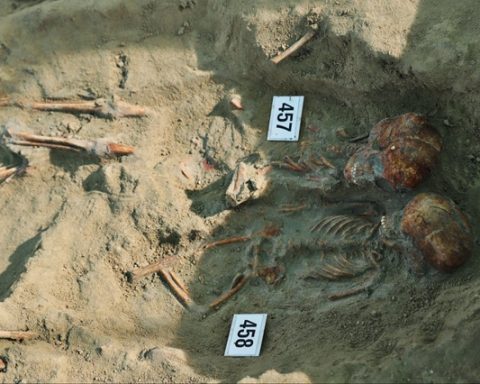
And then there are the invisible victims: the unnamed, uncounted civilians executed for being informants, or for breaking curfew, or for simply disagreeing. During the final stages of the war, when the LTTE was retreating and the Sri Lankan army was closing in, the Tigers corralled tens of thousands of Tamil civilians into so-called “No Fire Zones” and refused to let them leave. Those who tried to flee were shot. These zones became both human shields and mass graves. The UN Panel of Experts in 2011 confirmed that the LTTE was responsible for “hundreds, if not thousands, of civilian deaths” during this period — not merely through battle, but through deliberate executions and reckless endangerment.
There is, of course, no denying the state’s responsibility in the brutal destruction of Tamil lives. The Sri Lankan military’s actions in the North and East — from massacres to indiscriminate shelling to disappearances — constitute war crimes and possibly crimes against humanity. But recognising this does not absolve the LTTE of its own barbarity. If anything, the Tigers mirrored the state’s violence within their own community, becoming not just victims of state oppression, but oppressors in their own right.
This duality — liberators and destroyers — is something many in the Tamil community still struggle to reconcile. In the diaspora, where many are free from the trauma of living under LTTE rule, the narrative often collapses into romanticism. The Tiger flag is waved at protests. Martyrs are remembered. The darker truths are buried in the name of solidarity. But solidarity built on silence is not justice. It is complicity.
The LTTE’s final act — its refusal to surrender, its use of civilians as shields, its forced conscription of children until the very end — ensured the war would end not in negotiated peace but in blood and annihilation. In trying to save the Tamil people, the LTTE burned down every bridge that could have led to a just future. It is not the state alone that destroyed Tamil aspirations. The Tigers themselves turned Tamil politics into a death cult, Tamil children into cannon fodder, and Tamil dissent into a death sentence.
In the post-war years, the absence of the LTTE has not led to Tamil empowerment, but the lingering effects of its rule are everywhere. Tamil politics remains fractured and fearful. A generation of moderates was wiped out, and civil society is still rebuilding. The ghosts of the Tigers haunt not just the jungle graves but the collective psyche of a people who were betrayed by those who claimed to protect them.
The Tamil cause for dignity and justice remains legitimate. But it cannot be built on the ruins of lies, nor on the pedestal of those who made our community suffer as much as it fought. To honour the Tamil struggle is not to defend the LTTE — it is to tell the truth, in full. Even when it hurts. Especially when it hurts.