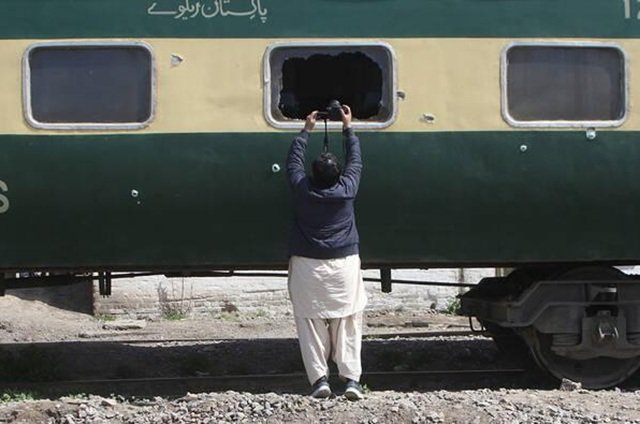
Last year, in 2025, 354 civilians were killed in terrorist attacks across Pakistan, while overall terrorist violence rose by about a third. In Balochistan alone, terrorists carried out 254 attacks. In March 2025, the Balochistan Liberation Army (BLA) hijacked the Jaffar Express and held hundreds of passengers hostage. Most of those killed in this violence were ordinary Pakistanis: labourers, travellers and families on their way home.
That is the backdrop against which a new report from the Clooney Foundation for Justice should be read. Its TrialWatch programme monitored the trial of lawyers Imaan Mazari and Hadi Ali Chattha, who were convicted in January under the Prevention of Electronic Crimes Act (PECA) over posts on X. The report questions how the trial was conducted and argues that the posts amounted simply to political criticism. These concerns deserve a serious response.
Start with free speech. Article 19 of the Constitution protects it, and rightly so. The same article allows reasonable limits in the interests of Pakistan’s security and defence, public order, and the prevention of incitement to crime. Many democracies draw a similar line. Criticising the government is lawful. The legal question in this case is narrower: did the specific posts go further and glorify, or help advance, the aims of banned terrorist groups?
That is what PECA’s provisions on glorifying an offence and cyber terrorism address. The report notes that some of the posts cited in the judgment never named the BLA. A message does not need to carry a group’s name to serve its purpose, though. Courts everywhere read speech in context, including what was said, when it was said, to whom it was directed, and alongside what else was being communicated. A post that repeats a terrorist group’s justification for its attacks can serve that group’s interests without ever mentioning it.
This is where the security situation matters. Armed groups in Balochistan and Khyber Pakhtunkhwa rely on more than weapons. They depend on a narrative in which the state is the sole aggressor and their violence is merely a response. When that narrative is repeated by a well-known public figure with a large following, it reaches audiences that terrorists could never reach on their own, while lending a degree of respectability to a cause that has not earned it. In a year when hundreds of civilians were killed, the state cannot treat such content as harmless online noise. A prominent public profile should bring greater responsibility, and it cannot be a shield against the law.
Whether these particular posts crossed that line is for the courts to decide, and that process is still under way. The trial court found that they did. The Islamabad High Court has admitted the appeals, and the Supreme Court is considering whether the sentences should be suspended in the meantime. This is the system working as designed.
The report’s procedural complaints also need to be considered in full. It says some evidence was recorded while the accused and their lawyers were absent. Yet the Islamabad High Court intervened and ordered that the evidence be recorded again, after which witnesses were recalled and the defence was given an opportunity to question them. A legal system that identifies a problem and takes steps to remedy it is doing its job.
The report objects to lawyers being appointed by the court. Article 10 does protect the right to a lawyer of one’s choice. It does not, however, allow a criminal trial to be paused indefinitely whenever a preferred lawyer is unavailable or decides not to appear. Appointing counsel ensures that the accused are never left without a defence.
The report also describes the trial as too quick, pointing to 49 hearing days over roughly five months. Speed and fairness are separate questions. Article 10-A guarantees a fair trial, but it sets no minimum length, and the report itself records that many requests for adjournments were granted. Pakistan’s courts are usually criticised for being too slow. Criticising them for moving quickly seems a strange complaint.
Finally, the report leans heavily on international human rights standards. These can help Pakistani judges interpret the Constitution, and they often do. They do not replace the Constitution, the country’s statutes or the rulings of its superior courts. A criminal case in Islamabad has to be decided under Pakistani law and on the basis of Pakistani evidence.
The state is not above scrutiny. Criticism of the security forces, questions about missing persons and objections to government policy all remain lawful. The law protects the critic. It draws the line at knowingly spreading false claims likely to cause fear or unrest, which is what Section 26-A of PECA covers, and at lending a public voice to groups that kill civilians.
Foreign observers are welcome to watch Pakistan’s courts. They should also allow those courts to finish their work. The families of last year’s victims are owed a state that takes the online side of this conflict seriously, and a justice system that decides, on the complete record, where the line falls.